The Ultimate Guide to Swapping Out Squeaky Garage Door Rollers
Why Your Garage Door Rollers Are Making That Awful Noise
Replace garage door rollers by following these core steps:
- Disconnect the garage door opener and clamp the door in place
- Work on one roller at a time — never all at once
- Unbolt the hinge bracket, slide out the old roller, insert the new one
- Re-secure the bracket and move to the next roller
- For bottom rollers, ensure spring tension is relieved first
- Test the door manually before reconnecting power
That grinding, squeaking, or shuddering your garage door makes every morning? Nine times out of ten, the culprit is worn-out rollers. These small wheels carry the full weight of a door that can weigh anywhere from 130 to 400 pounds — opening and closing over 1,500 times a year. At that pace, even quality rollers eventually wear down.
The good news: replacing garage door rollers is a job most homeowners can handle themselves with basic tools. The bad news: a few specific steps — especially around the bottom rollers and spring tension — can be genuinely dangerous if you skip the safety precautions.
This guide walks you through everything clearly and safely.
I’m Andrew Hopson with Matrix Garage Doors, a residential garage door specialist serving homeowners throughout the greater Columbus, Ohio area, where I’ve helped hundreds of homeowners safely replace garage door rollers as part of our repair and maintenance services. Let’s get your door running quietly and smoothly again.
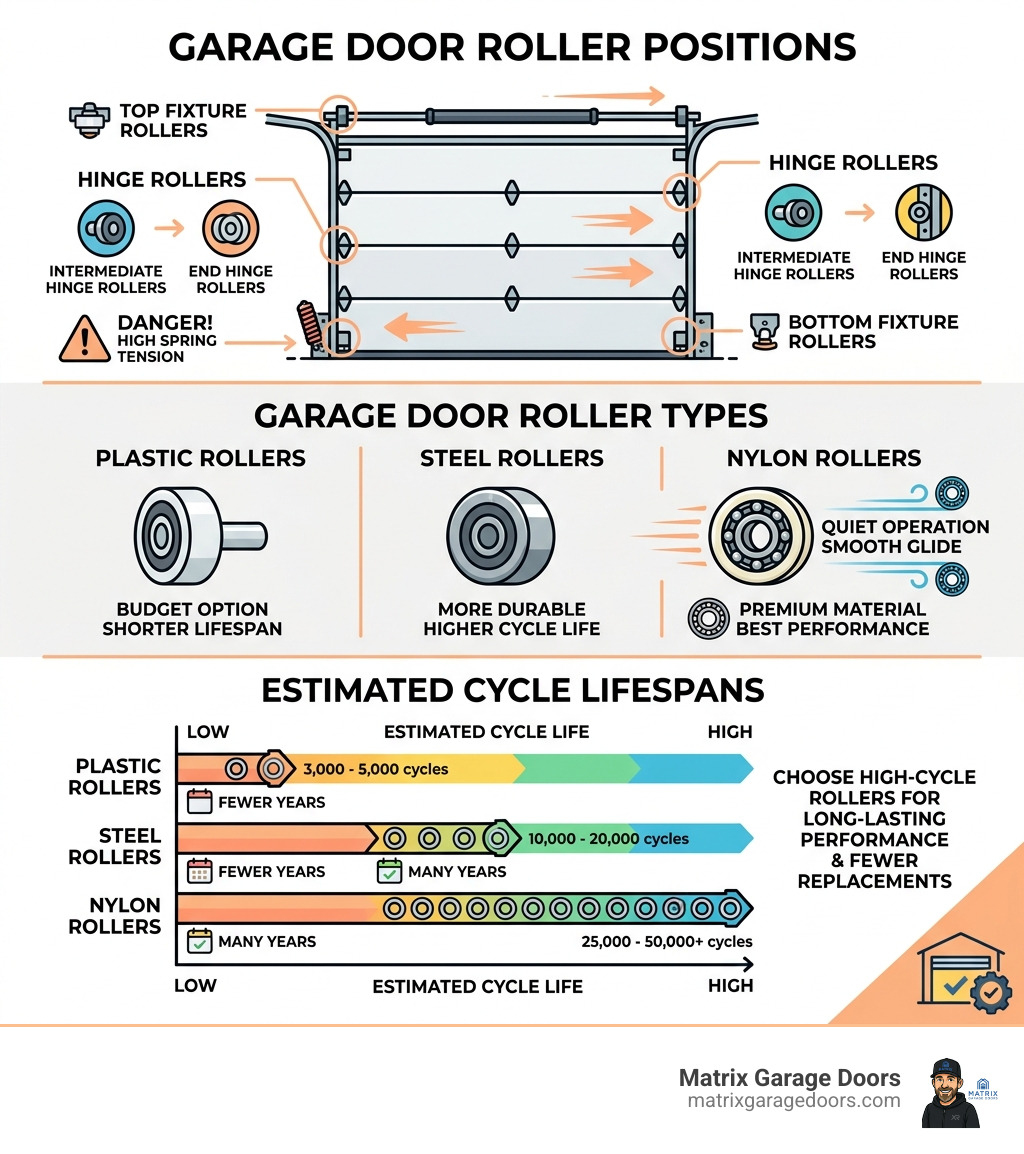
Replace garage door rollers vocab explained:
Identifying Signs and Choosing the Best Replacement Rollers
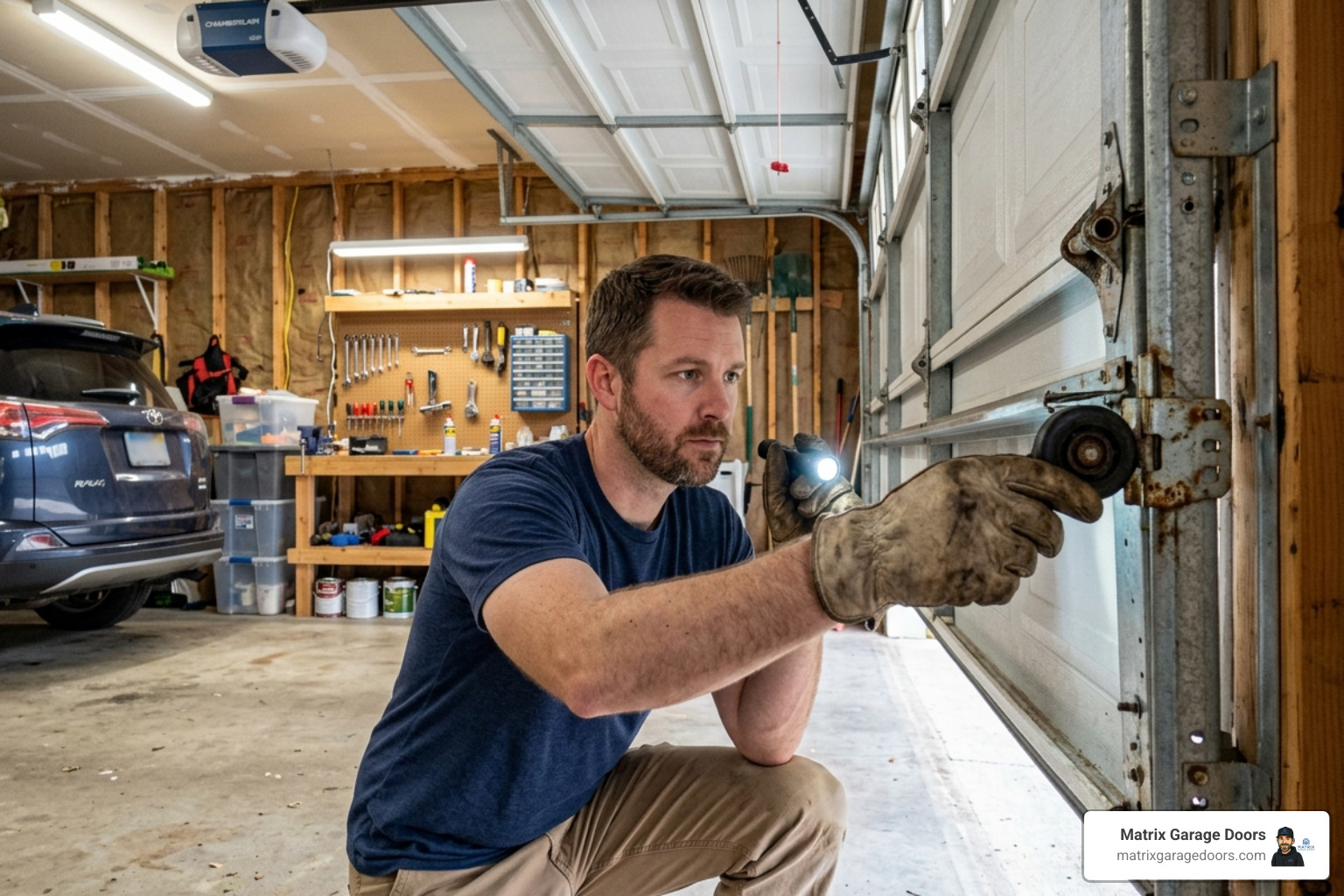
Before you grab your toolbox, you need to be sure that the rollers are actually the problem. Think of your garage door rollers like the tires on your car. If the tread is gone, or if the rubber is cracked, you’re going to have a bumpy, noisy ride. In the garage door world, bad rollers don’t just make noise; they can actually damage your tracks or burn out your opener motor by creating excessive friction.
When we visit homes in places like Westerville or Upper Arlington, we often see rollers that have completely flat-spotted. This happens when the internal bearings seize up, and instead of rolling, the wheel just slides along the metal track. This “shaving” effect leaves behind a tell-tale black residue that looks like soot all over your tracks.
If you are hearing a persistent grinding noise or seeing the door move in a jerky, “stop-and-start” motion, it is time for an inspection. You can find more detailed advice on How to Replace Garage Door Rollers | GarageHowTo to help identify these early warning signs.
Signs You Need to Replace Garage Door Rollers
How do you know for sure? Here is a quick checklist we use during our professional inspections:
- The “Shopping Cart” Sound: If your door sounds like a rickety shopping cart with a bad wheel, the bearings are likely shot.
- Wobbling Wheels: Grab a roller (with the door off!) and wiggle it. There should be very little “play” between the wheel and the stem. If it’s loose, it’s failing.
- Cracked Plastic: Many builders install cheap plastic rollers. Over time, the April 2026 sun and temperature swings in Central Ohio cause that plastic to become brittle and crack.
- Excessive Vibration: If the door feels like it’s vibrating the whole house when it moves, the rollers are no longer smooth.
- Black Residue: As mentioned, that greasy black powder on the tracks is actually your rollers disintegrating.
If your door is making a racket but the rollers look okay, you might need to check out our More info about noisy garage door fixes for other potential culprits like dry hinges or loose hardware.
Comparing Roller Materials: Nylon vs. Steel
Not all rollers are created equal. When you decide to replace garage door rollers, you have a choice to make that will affect your door’s performance for the next decade.
| Feature | Plastic (Standard) | Steel (Standard) | Nylon (Premium) |
|---|---|---|---|
| Cycle Life | 2,000 – 5,000 | 5,000 – 10,000 | 15,000 – 20,000+ |
| Noise Level | Moderate | High (Metal on Metal) | Very Low (Quiet) |
| Maintenance | None (Replace often) | High (Needs oil) | Low (Sealed bearings) |
| Best For | Budget rentals | Heavy commercial doors | Residential homes |
Nylon rollers are the gold standard for residential doors in Columbus. They feature sealed ball bearings, meaning the “guts” of the roller are protected from the dust and dirt of your garage. They are significantly quieter because they eliminate the metal-on-metal contact between the roller and the track.
Steel rollers are incredibly durable and are often used for massive custom wood doors or commercial applications in Grove City, but they are much noisier. If your bedroom is located above the garage, we always recommend the nylon upgrade. For a better understanding of how these choices impact your wallet, check out our More info about garage door service prices.
How to Safely Replace Garage Door Rollers

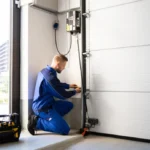
Safety is our number one priority at Matrix Garage Doors. Before you touch a single bolt, you must disconnect the power to your garage door opener. You don’t want a family member accidentally hitting the remote while your fingers are in the track!
Once the power is off, use a pair of vise grips or sturdy C-clamps to secure the door. If you are working on the door in the closed position, clamp the track just above the bottom roller. If the door is open, clamp it so it cannot move downward. This ensures the door stays put while you remove the hinges that hold it together.
A key rule: Work on one roller at a time. Never unbolt multiple hinges at once, or the door panels could shift, buckle, or fall out of the track entirely. For a deeper dive into the mechanics, see this Step-by-Step Guide: How to Replace Garage Door Rollers .
Step-by-Step Guide to Replace Garage Door Rollers
For the top and middle rollers, the process is fairly straightforward. These rollers are held in place by the hinges that connect your door panels.
- Position the Door: Most DIYers find it easiest to work on the middle rollers with the door closed.
- Unbolt the Hinge: Use a socket wrench (usually 7/16″) to remove the bolts from the hinge that holds the roller you are replacing.
- Remove the Hinge and Roller: Pull the hinge away from the door. The roller stem will slide right out of the hinge “sleeve.”
- Swap the Roller: Slide the old roller out of the track (you may need to angle it slightly). Slide the new roller into the track, then slide the stem back into the hinge sleeve.
- Re-attach: Line the hinge back up with the holes in the door and tighten the bolts. Do not over-tighten, as you can strip the metal on the door skin.
This “unbolting” method is much safer than trying to pry the track open with pliers, which can permanently deform your tracks. If you run into trouble with stripped bolts or bent hinges, our team can help with More info about garage door repairs.
Handling the Dangerous Bottom Roller Replacement
WARNING: The bottom rollers are a completely different beast. In almost all residential systems, the bottom roller bracket is the “anchor” for the garage door cables. These cables are under extreme tension from the torsion springs.
NEVER unscrew the bolts on the bottom bracket while the door is under tension. If you do, the bracket can fly off with enough force to cause serious injury or even death.
To safely replace garage door rollers at the bottom:
- Open the Door Fully: This puts the most slack into the cables (though they are still dangerous).
- The “Track Bend” Method: Instead of unbolting the bracket, many pros use heavy-duty pliers to slightly bend the lip of the vertical track outward at a point where the door is not currently resting.
- Swap and Restore: Slide the old roller out through the gap, pop the new one in, and then use your pliers (or a hammer and block of wood) to bend the track back to its original straight shape.
- The Vise Grip Trick: If you must unbolt the bottom, you must use winding bars to release the spring tension first—a task we strongly recommend leaving to professionals.
Maintenance is key to preventing these components from failing prematurely. See More info about garage door maintenance for more details.
Essential Safety Precautions and Maintenance Tips
When you replace garage door rollers, you are handling heavy components and sharp metal tracks. Always wear safety glasses and work gloves. If you are working on a ladder in your Dublin or Hilliard garage, have a helper hold the ladder and assist with the weight of the door panels.
One of the most common mistakes we see is homeowners using the wrong lubricants. Never use WD-40 (the blue and yellow can) as a lubricant; it’s a degreaser that will actually strip away the existing grease and make your problems worse. Instead, use a dedicated Garage Door Lubrication Service or a high-quality silicone or white lithium spray.
Lubrication After You Replace Garage Door Rollers
Once your new rollers are in, you need to keep them happy.
- For Steel Rollers: Spray the lubricant directly into the ball bearings in the center of the wheel.
- For Nylon Rollers: If they are “sealed” bearings, you don’t need to lubricate the wheel itself. Instead, put a drop of oil on the stem where it slides into the hinge.
- The Tracks: Do not lubricate the tracks. This is a common myth. Lubricant in the tracks just collects dust and hair, creating a “grime paste” that actually slows the door down. Just wipe the tracks clean with a damp rag.
For more pro tips, check out More info about garage door maintenance tips.
Establishing a 2026 Maintenance Schedule
Since it is now April 2026, it’s the perfect time to set up a recurring maintenance schedule. We recommend a “Spring and Fall” check-up for all Central Ohio homeowners.
- Annual Inspection: Visually check all 10-12 rollers for cracks or wobbling.
- Tighten Hardware: Garage doors vibrate. Use your socket wrench to ensure all hinge bolts are snug.
- Clean the Tracks: Use a vacuum or a rag to remove cobwebs and debris from the tracks in your Canal Winchester or New Albany home.
- Balance Test: Pull the red emergency release cord and lift the door halfway. If it stays put, your springs are balanced. If it falls or shoots up, call us immediately!
Frequently Asked Questions about Roller Replacement
Is it safe to replace garage door rollers myself?
Yes, for the top and middle rollers, it is a very manageable DIY project. However, because the bottom rollers are tied to the high-tension spring system, we recommend extreme caution. If you aren’t comfortable handling the tension of the cables, it is always safer to call a pro.
Should I replace all rollers at once or just the broken ones?
We always recommend replacing the full set (usually 10 or 12 rollers). If one has failed, the others are likely right behind it. Plus, mixing old steel rollers with new nylon ones will result in uneven movement and won’t give you that “silent” operation you’re looking for.
How long do nylon garage door rollers typically last?
High-quality nylon rollers with sealed ball bearings are rated for 15,000 to 20,000 cycles. For the average household in Gahanna or Reynoldsburg that opens the door 4 times a day, that translates to roughly 10 to 15 years of smooth operation.
Conclusion
At Matrix Garage Doors, we know that a noisy garage door is more than just a nuisance—it’s a sign that your home’s largest moving part needs some TLC. Whether you live in Bexley, Blacklick, or Grandview Heights, our family-owned team is here to help. We’ve spent two decades perfecting the art of garage door repair, and we’re available 24/7 for those emergencies when a roller pops out of the track at the worst possible time.
If you’re ready to ditch the “freight train” sound and enjoy a door that glides silently, we’re just a phone call away. For more help with your home’s entry points, explore our More info about professional garage services and repairs.
Matrix Garage Doors Serving Columbus, OH and surrounding communities. Prompt. Professional. Guaranteed.