In-Depth Guide to Garage Door Maintenance
Why Garage Door Maintenance Is Something Most Homeowners Overlook — Until It’s Too Late
Garage door maintenance is the regular practice of inspecting, lubricating, testing, and adjusting your garage door system to keep it running safely and reliably.
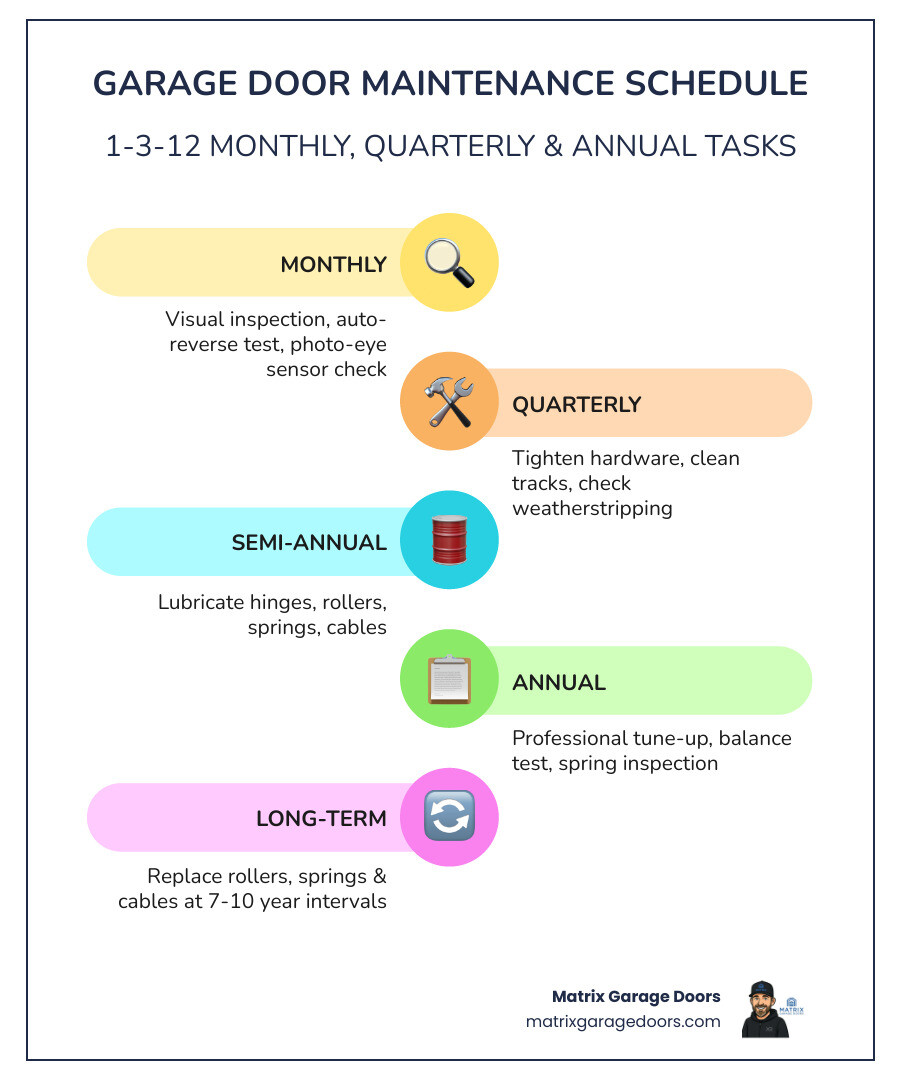
Here’s what a complete maintenance routine looks like:
| Frequency | Tasks |
|---|---|
| Monthly | Visual inspection, auto-reverse test, photo-eye sensor check |
| Every 6 months | Lubricate hinges, rollers, and springs; tighten hardware; clean tracks |
| Annually | Professional tune-up, balance test, cable and spring inspection |
Your garage door is likely the largest moving object in your home — weighing anywhere from 150 to 400 lbs and opening and closing more than 1,500 times a year. That’s a lot of wear on springs, rollers, cables, and hardware.
Most homeowners never think about it until something goes wrong. A spring snaps. The door stalls halfway. The opener strains and burns out. The frustrating part? Most of these failures are completely preventable.
A little routine care — often less than 30 minutes twice a year — can extend your garage door’s life to 20–25 years and help you avoid costly emergency repairs.
I’m Andrew Hopson from Matrix Garage Doors, a residential garage door company serving the greater Columbus, Ohio area with a focus on safety, reliability, and long-term value. With hands-on experience across hundreds of garage door maintenance inspections, installations, and repairs, I’ve seen what regular upkeep prevents — and what neglect costs. In this guide, I’ll walk you through everything you need to know, from simple DIY tasks to knowing when to call a pro.
Garage door maintenance helpful reading:
Essential DIY Garage Door Maintenance Tasks
Taking a proactive approach to your garage door doesn’t require a degree in engineering. In fact, many of the most impactful tasks are well within the reach of the average homeowner. According to The Ultimate Guide to Preventative Garage Door Care, consistency is the secret ingredient.
Start with a thorough visual inspection. Stand inside your garage with the door closed and look at the springs, cables, rollers, and pulleys. Look for signs of wear, such as frayed cables or rusted hardware. Listen as the door operates; a healthy door should move relatively quietly. If you hear grinding, scraping, or jerky movements, it’s the door’s way of crying out for help.
Next, focus on hardware tightening. Because your garage door vibrates every time it moves, nuts and bolts can loosen over time. Use a socket wrench to check the brackets that hold the tracks to the wall and the bolts that secure the opener to the frame. Be careful not to overtighten, which can strip the threads, but ensure everything is snug.
Track cleaning is another vital step. Over time, dust, pet hair, and debris can clog the tracks, forcing the rollers to work harder. Wipe the inside of the tracks with a damp cloth to remove buildup. Never apply grease inside the tracks; it will only attract more dirt and create a sticky mess that hinders movement.
Finally, don’t forget the weatherstripping. This rubber seal at the bottom of the door keeps out the Ohio elements, from Hilliard humidity to Westerville snow. If you see cracks or gaps, it’s time for a replacement. A well-sealed door improves energy efficiency and prevents pests from making your garage their new home. For a deep dive into these steps, check out Garage Door Maintenance: The Complete Annual Checklist | The Garage Guide.
Proper Lubrication for Garage Door Maintenance
If there is one “magic pill” for a long-lasting door, it is lubrication. Proper lubrication reduces friction, which in turn reduces the strain on your opener motor. However, using the wrong product can actually do more harm than good.
| Lubricant Type | Best Used For | Why? |
|---|---|---|
| Silicone Spray | Springs, bearings, and weatherstripping | Repels moisture and handles extreme temperature swings. |
| White Lithium Grease | Hinge pivot points and metal-to-metal contact | Thicker consistency that stays in place on moving parts. |
| WD-40 (Standard) | Cleaning only | Never use as a lubricant. It is a degreaser that strips away protection. |
When performing garage door maintenance tips, focus your lubrication efforts on the roller bearings (the small metal beads inside the wheel), the torsion springs, and the pivot points on the hinges. You should also apply a small amount to the arm bar and the lock mechanism.
According to our guide on how to silence the squeak with proper garage door lubrication, you should wipe off any excess drips with a clean rag to prevent a mess on your garage floor. If the job feels a bit too greasy for your liking, you can always opt for a professional garage door lubrication service to ensure every nook and cranny is covered.
Testing Safety Features and Garage Door Maintenance
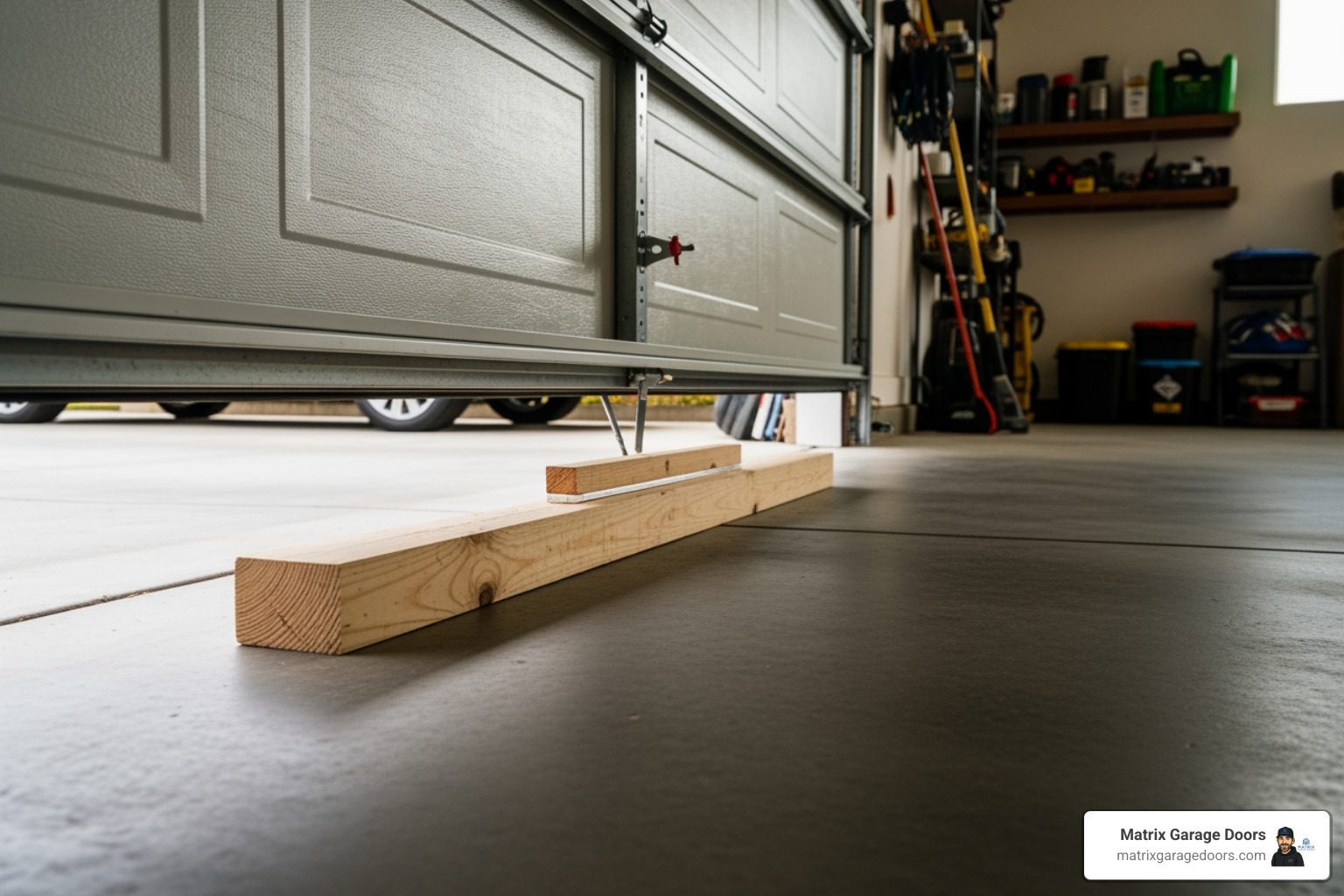
Safety is non-negotiable. Since 1993, federal law has required garage door openers to include safety reversal features. To ensure yours is working, perform the mechanical reversal test. Place a solid object, like a 2×4 board, flat on the ground where the door would touch. Close the door. When it hits the wood, it should reverse within two seconds. If it doesn’t, your opener’s force settings may need adjustment.
Next, check the photo-eye sensors. These are the small sensors located about six inches off the ground on either side of the door.
- Clean the lenses: Use a soft cloth to wipe away dust, cobwebs, or pollen.
- Check alignment: The lights on both sensors should be solid. If they are flickering, they are misaligned.
- The Wave Test: Close the door and wave a broomstick through the invisible beam. The door should immediately stop and reverse.
Adhering to UL 325 standards for safety is essential for protecting children and pets. For more detailed instructions on these tests, see our garage door maintenance tips.
How to Perform a Garage Door Balance Test
A door that is out of balance is a ticking time bomb for your opener. When a door is properly balanced, the springs do the heavy lifting, not the motor. If the springs lose tension, the motor has to pull the full weight of the door, leading to a premature (and expensive) burnout.
To check the balance, follow these steps from our guide on how to give your garage door a tune-up without losing your mind:
- Close the door completely.
- Pull the emergency release cord (the red handle) to disconnect the door from the opener.
- Manually lift the door to the halfway point and let go.
The Results:
- Balanced: The door should stay in place or move only an inch or two.
- Unbalanced (Weak Springs): The door slams shut.
- Unbalanced (Too much tension): The door snaps upward.
If your door fails this test, do not attempt to adjust the springs yourself. Torsion springs are under immense pressure and can cause severe injury if they snap. This is a task for a professional garage door company in Grandview Heights, OH or your local Columbus technician.
Seasonal Considerations and Part Replacement Cycles
In Central Ohio, our garage doors face a gauntlet of weather. From the freezing winters in Dublin to the humid summers in Pickerington, each season brings unique challenges. Our Annual Garage Door Service Guide highlights that winter is the most common time for springs to break because the metal becomes brittle in the cold.
Seasonal Checklist:
- Winter: Apply silicone spray to the bottom weather seal to prevent it from freezing to the driveway. Clear snow and ice from the path of the sensors.
- Summer: High humidity can cause metal parts to rust. Check for “bleeding” rust on your hinges and apply a rust-resistant lubricant.
- Spring/Fall: These are the ideal times for your semi-annual lubrication and tightening.
Part Replacement Intervals:
- Rollers: Plastic rollers last 2–3 years, while high-quality nylon rollers can last 12–15 years.
- Springs: A standard 10,000-cycle spring typically lasts about 7 years with average use (4 times a day). If you use your door 6 times a day, expect it to last under 5 years.
- Batteries: Replace the batteries in your remotes and keypad every year, and check your opener’s battery backup every two years.
When to Call a Professional for a Tune-Up
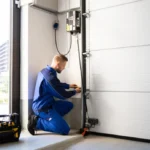
While DIY maintenance is great, some things are best left to the experts. A professional garage door maintenance visit usually includes a 25-point inspection that covers things the naked eye might miss.
Call a pro if you notice:
- Frayed Cables: These hold the weight of the door. If they snap, the door can fall.
- Broken Springs: If you hear a loud bang like a gunshot, your spring has likely snapped.
- Red-Coded Hardware: Any part of the door painted red is under high tension. Do not touch these!
- Track Realignment: If the tracks are bent or misaligned, the door could come off entirely.
There are many 5 reasons why you will love preventative maintenance for garage doors, but the biggest one is peace of mind. Knowing that a certified technician has cleared your door for safety is worth the investment.
Frequently Asked Questions about Garage Door Care
How often should I perform garage door maintenance?
We recommend the “1-3-12” rule. Perform a visual and safety test monthly. Every 3 to 6 months, do a deep lubrication and tighten all hardware. Once every 12 months, schedule a professional tune-up to catch hidden issues and ensure the system is perfectly balanced.
Can I use WD-40 on my garage door tracks?
No! This is the most common mistake we see. Standard WD-40 is a solvent, not a lubricant. It will strip away the existing grease and attract dust and hair, eventually turning into a sticky paste that grinds down your rollers. Use a dedicated silicone-based or lithium-based garage door spray instead.
What are the signs of a broken torsion spring?
A broken spring is usually obvious. You might hear a loud “pop” from the garage. When you try to open the door, the opener will groan but the door won’t move, or it will only lift a few inches. Visually, you will see a clear gap (usually 1–2 inches) in the coils of the spring located above the door.
Conclusion
At Matrix Garage Doors, we believe that a well-maintained garage door is the heartbeat of a functional home. As a family-owned company based right here in Columbus, OH, we’ve spent the last twenty years helping our neighbors in Bexley, Upper Arlington, Powell, and beyond keep their homes safe and secure.
Whether you need a quick lubrication tip or 24/7 emergency repair, our team is dedicated to providing prompt, professional service. Don’t wait for a breakdown to happen on a busy Monday morning. Schedule your professional garage door service today and let us help you keep your door moving smoothly for years to come.