What to Do When Your Garage Door Cable Comes Off the Track
What to Do Right Now If Your Garage Door Cable Came Off the Drum
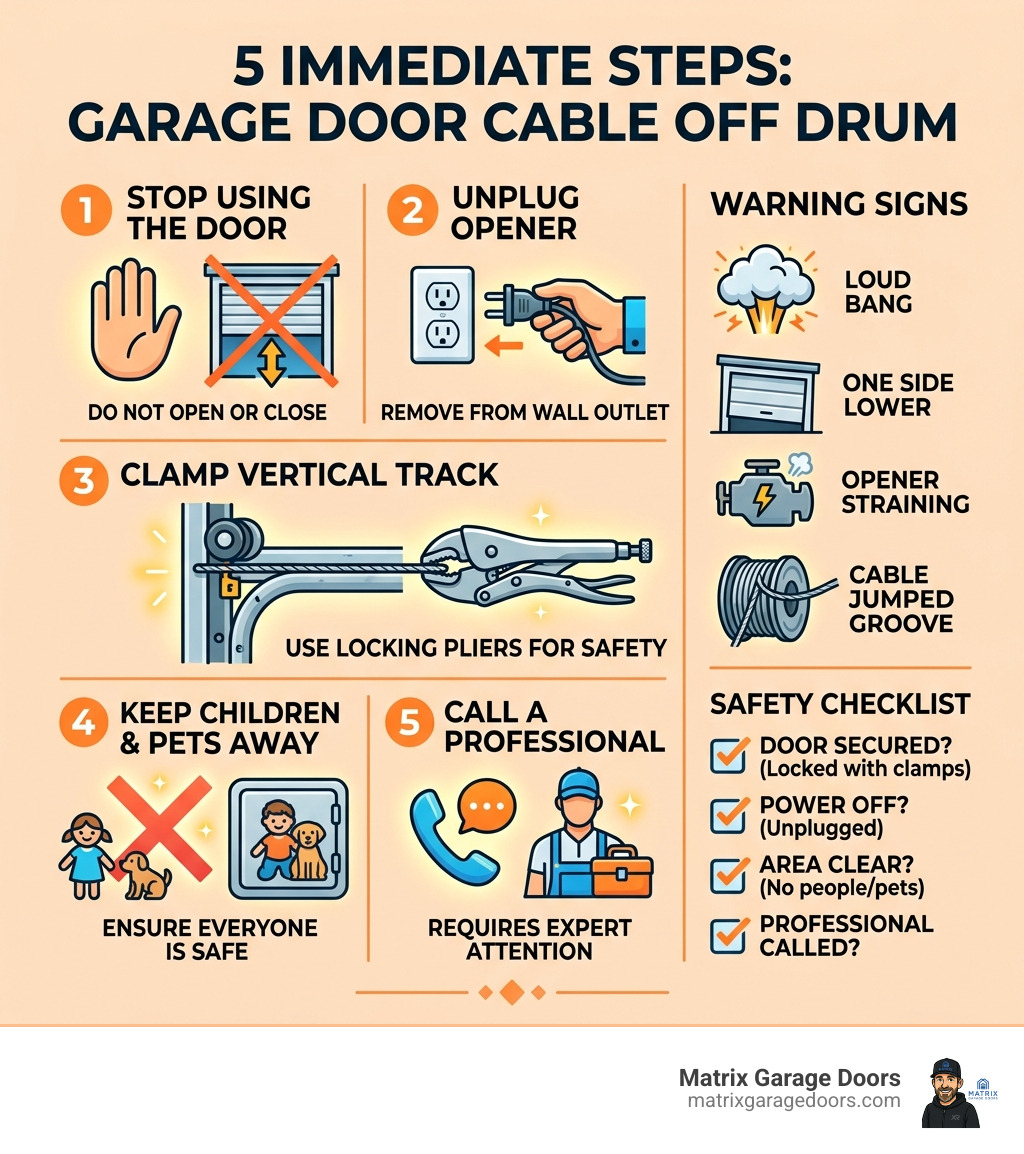
If your garage door cable came off drum, here is what to do immediately:
- Stop using the door – do not try to open or close it
- Unplug the garage door opener from the wall outlet
- Clamp locking pliers to the vertical track below the bottom rollers to secure the door
- Keep children and pets away from the garage
- Call a professional – this repair involves high-tension springs that can cause serious injury
A garage door cable slipping off its drum is more than a minor inconvenience. It means your door is out of balance, and operating it in that condition can bend tracks, damage panels, or cause the door to come crashing down.
You might have heard a loud bang. Or noticed one side of the door hanging lower than the other. Maybe the opener is straining and stopping mid-travel. These are all classic signs that a cable has jumped its drum groove.
The good news? In most cases, the door itself is not ruined. A professional can often fix this in a single visit — but only if you don’t make it worse by forcing the door first.
I’m Andrew Hopson with Matrix Garage Doors, and I’ve helped countless Columbus-area homeowners resolve exactly this problem — a garage door cable came off drum situation that looked catastrophic but turned out to be a straightforward repair when handled correctly. In this guide, I’ll walk you through why it happens, what you can safely do right now, and when to call in a pro.
Understanding the Mechanics of Cables and Drums
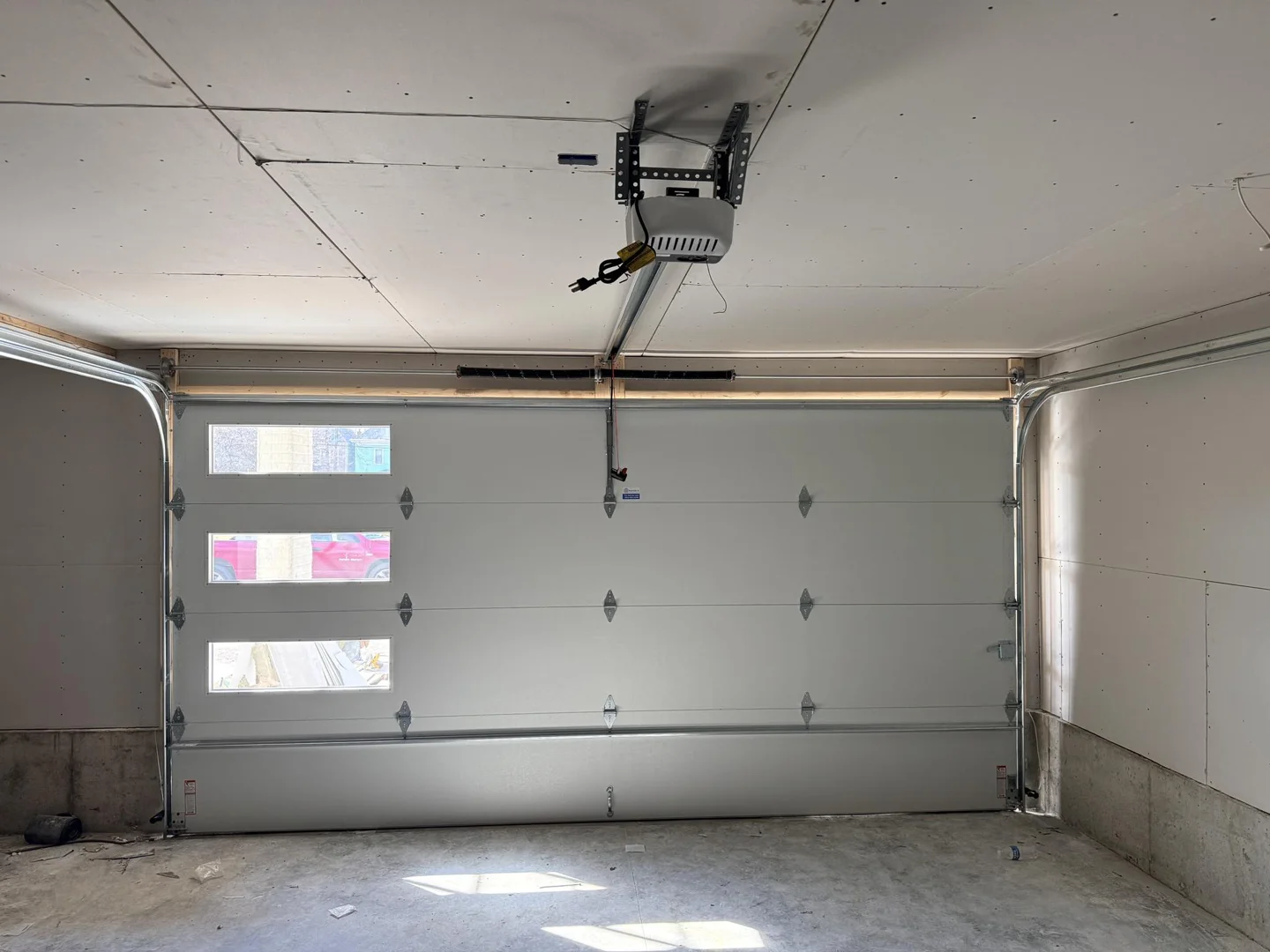
To understand why your garage door cable came off drum, we first need to look at how your door actually moves. Most people think the motor does all the heavy lifting, but the real muscle is the counterbalance system.
This system consists of lift cables, cable drums, and springs. The lift cables are heavy-duty aircraft-grade wires attached to the bottom brackets on either side of the door. These cables run up the sides and wrap around the cable drums, which are grooved wheels located at the ends of the torsion shaft.
When the springs (torsion or extension) provide tension, they turn the shaft, which turns the drums. As the drums spin, they wind up the cable, pulling the door upward. Because a standard residential door can weigh anywhere from 150 to over 400 pounds, the tension on these cables is immense.
There are three main types of spring systems you’ll find in Columbus homes:
- Torsion Springs: These sit on a bar above the door. They are the most common and use standard drums.
- Extension Springs: These run along the upper horizontal tracks. They use pulleys (sheaves) rather than drums to guide the cables.
- TorqueMaster Systems: A specialized Wayne Dalton system where the springs and cables are contained within a tube. These often use plastic drums.
For a deeper dive into the parts involved, check out our guide on Garage Door Cable Repair. Regardless of the system, the goal is the same: keep the door weight balanced so it can be moved with just a few pounds of force.
Why Your garage door cable came off drum
When a garage door cable came off drum, it’s rarely a random event. Usually, it’s the result of a “slack” event—a moment where the cable lost its tension, allowing it to slip out of the drum’s grooves.
Common causes include:
- Broken Springs: If a torsion spring snaps, the shaft stops turning. The door may drop suddenly, creating massive slack that causes the cable to unravel like a “bird’s nest.”
- Hitting an Obstruction: This is the #1 cause we see in places like Hilliard and Grove City. If the door closes onto a trash can, a bicycle, or even a thick layer of ice, one side stops while the other keeps moving. This creates slack, and the cable jumps the track.
- Worn Rollers: If a roller gets stuck in the track due to lack of lubrication, the door might “racked” (sit crooked), causing the cable on the high side to lose tension.
- Improper Installation: If the cables weren’t set with equal tension initially, one side will eventually fail. You can read more about The Importance of Cable Alignment to see why precision matters.
Identifying Why a garage door cable came off drum
Visual clues can tell you a lot. If you see the cable hanging like “spaghetti” or tangled around the torsion bar, you have a slack issue. If the door is racking—meaning one side is significantly higher than the other—the cable has likely slipped on just one side. We often find loose set screws on the drum itself, which allows the drum to slide on the shaft, causing immediate misalignment. This often leads to the Garage Door Off Track scenario that requires emergency intervention.
Environmental Factors and System Differences
It is currently April 2026, and as we transition out of the colder months in Ohio, temperature fluctuations can play a role. Metal tracks and cables contract in the cold and expand in the heat. If your door was already on the edge of failure, a chilly night in New Albany can be the final straw.
Furthermore, TorqueMaster systems use plastic drums that can warp or crack over time, unlike the cast aluminum drums found in standard torsion systems. If your cable has snapped entirely, you’ll need to follow The Ultimate Guide To Fixing A Snapped Garage Door Cable to ensure you get the right replacement thickness and length.
Immediate Safety Steps and Warning Signs
The moment you realize your garage door cable came off drum, safety becomes the only priority. A door with a loose cable is a falling hazard.
Warning Signs to Watch For:
- A Loud Bang: Often sounds like a gunshot; this is usually a spring breaking.
- Crooked Door: The door looks slanted in the opening.
- The “Bird’s Nest”: Cable is tangled in a chaotic mess at the top of the door.
- Jerky Movement: The door moves in starts and stops.
What You Must Do:
- Unplug the Opener: Do not use the remote. If the motor tries to pull a crooked door, it can burn out the logic board or rip the arm right off the door.
- Clear the Area: Move cars and bikes out of the “fall zone.”
- Secure the Door: If the door is partially open, use vice grips or locking pliers on the tracks directly under the rollers to prevent it from sliding down.
- Do Not Cut the Cables: Even a tangled cable might still be under some tension. Cutting it can cause the spring to release violently.
For more on handling these high-tension components, see our article on how to Fix Garage Door Spring Cable issues safely.
How to Safely Reinstall a Slipped Cable
If you are a highly experienced DIYer with the proper tools, you might consider reseating the cable. However, we must emphasize that this involves working with torsion springs that can lift 400 lbs—they do not care about your fingers.
Required Tools:
- Proper winding bars (never use screwdrivers!)
- Vice grips
- 7/16 wrench or socket
- Stepladder
The Process (General Steps):
- Release Tension: You must use winding bars to safely unwind the torsion spring. This is the most dangerous part.
- Reset the Cable: Once tension is gone, you can guide the cable back into the grooves of the drum. Ensure there are no kinks or frays.
- Tighten Set Screws: Ensure the drum is flush against the bearing plate and the set screws are tightened (usually 1/2 to 3/4 turn past finger-tight).
- Re-tension Springs: Wind the springs back to the manufacturer’s specifications (usually 7.5 to 8 turns for a 7ft door).
- Balance Check: Disconnect the opener and lift the door halfway. It should stay in place. If it falls or shoots up, the tension is wrong.
For a complete walkthrough on track alignment, see The Ultimate Guide To Getting Your Garage Door Back On Track.
Professional Repair vs. DIY: Costs and Risks
While DIY is tempting, the statistics are sobering. Over 13,000 emergency room visits every year are attributed to garage door injuries, according to data from the U.S. Consumer Product Safety Commission. Most of these happen when homeowners attempt to work on high-tension parts like cables and springs without the right training.

Risks of Fixing a garage door cable came off drum Yourself
Beyond physical injury, there are financial risks. If you improperly install a cable and the door falls, you could crush the bottom panel—turning a $200 repair into a $1,200 door replacement. Furthermore, many homeowners’ insurance policies and manufacturer warranties are voided if work is performed by an unlicensed individual.
For a detailed breakdown of what you might expect to pay, see Decoding Garage Door Cable Repair Costs A Comprehensive Guide. You can also find more Garage Door Cable Repair Cost And Diy Steps to help you decide if the risk is worth the reward.
Preventing Future Cable and Drum Failures
Once your door is fixed, you want to keep it that way. Prevention is much cheaper than emergency repair.
- Annual Tune-Ups: Have a pro look at your door once a year. We check for frayed cables, loose bolts, and spring fatigue.
- Lubrication: Use a silicone-based garage door lubricant on rollers, hinges, and the torsion spring every 6 months. Never use WD-40 or grease on the tracks, as this attracts dirt and causes binding.
- Clean the Tracks: Use a damp rag to wipe out the inside of the tracks. Debris here is a major cause of the door hitting an obstruction and throwing a cable.
- Monthly Balance Test: Every month, pull the red emergency release cord and lift the door manually. It should feel light and move smoothly. If it feels heavy, your springs are losing tension, which will eventually lead to a garage door cable came off drum situation.
Our Professional Maintenance Services are designed to catch these small issues before they become “bird’s nests” on your garage floor.
Frequently Asked Questions about Slipped Cables
Can I just push the cable back onto the drum?
No. Because the system is under tension, you cannot simply “pop” it back on. You have to release the spring tension first to get enough slack to seat the cable in the grooves correctly. Attempting to force it can cause the spring to release its energy all at once.
How much does it cost to fix a cable that came off the drum?
In the Columbus area, a professional service call to reset and rebalance cables typically ranges from $150 to $250. If the cables are frayed and need replacement, expect to add $30 to $50 for the parts. This is a small price to pay compared to the cost of a hospital visit or a new garage door.
How long do garage door cables typically last?
On average, garage door cables last 5 to 7 years. However, in Ohio’s humid summers and salty winters, corrosion can shorten that lifespan. By April 2026 standards, we recommend replacing them the moment you see a single frayed “hair” on the wire.
Conclusion
A garage door cable came off drum is a serious mechanical failure, but it doesn’t have to be a disaster. By following the immediate safety steps—unplugging the opener and securing the door—you protect your home and your family from further damage.
At Matrix Garage Doors, we’ve spent two decades serving the Columbus, OH community. Whether you’re in Dublin, Westerville, or Upper Arlington, our family-owned team is available 24/7 for emergency repairs. We don’t just put the cable back; we find out why it fell off and ensure your entire system is balanced and safe.
Don’t risk a DIY disaster. More info about garage door services and repairs is just a click away, or you can call us anytime to get your door back on track!