How to Repair Garage Door Components in 5 Simple Steps
Why Garage Door Component Repair Matters More Than You Think
Garage Door Component Repair is the process of diagnosing, fixing, or replacing the individual parts that keep your garage door running safely and smoothly — including springs, cables, rollers, hinges, tracks, drums, and openers.
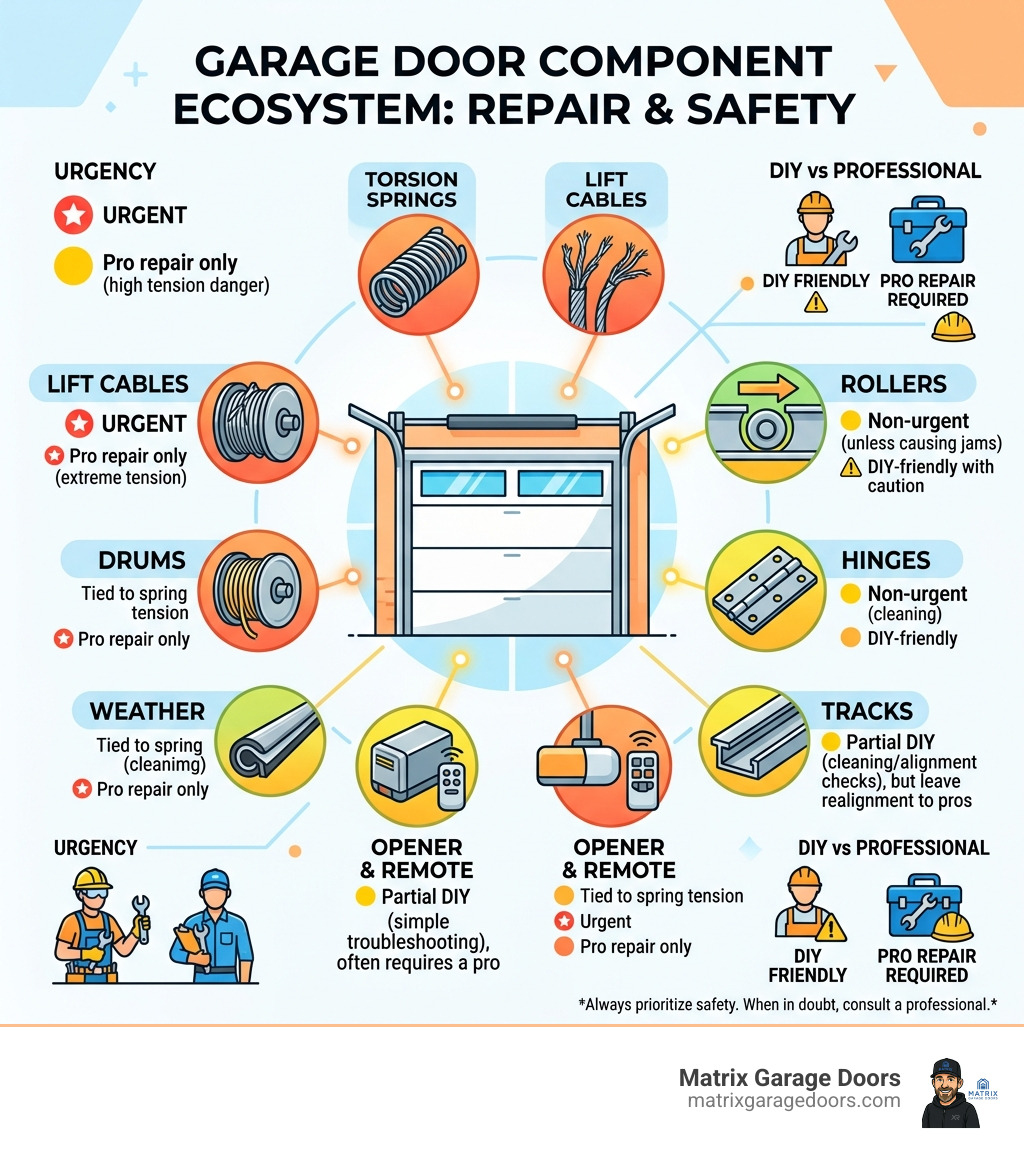
Here’s a quick look at the most common components that need repair and what to watch for:
| Component | Common Problem | DIY-Friendly? |
|---|---|---|
| Torsion/Extension Springs | Loud snap, door won’t open | No — high danger |
| Lift Cables | Fraying, door hangs unevenly | No — extreme tension |
| Rollers | Noisy, jerky movement | Yes — with caution |
| Hinges | Popping sounds, visible cracks | Yes |
| Tracks | Door wobbles or scrapes | Partial — leave realignment to pros |
| Opener | Won’t respond, strains to lift | Partial |
| Drums | Grinding noise, cable slipping | No — tied to spring tension |
| Weather Seals | Drafts, visible wear | Yes |
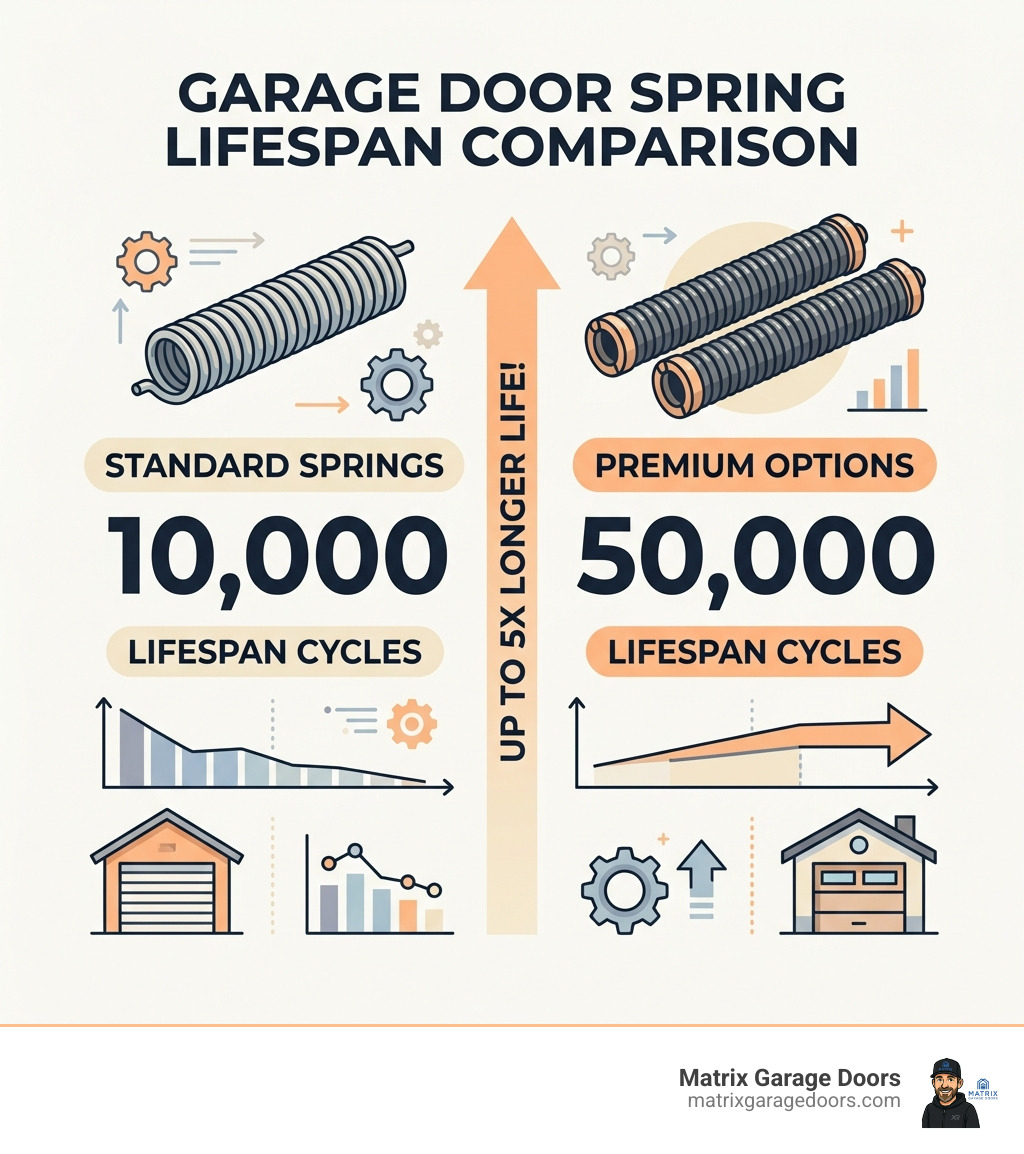
Your garage door goes through thousands of open-and-close cycles every year. Most residential springs are rated for around 10,000 cycles — roughly 6 to 7 years of typical use. When one part wears out, it puts stress on everything else. A worn roller makes the opener work harder. A misaligned track can fray a cable. Small problems compound fast.
The good news? Many issues have clear warning signs before they become emergencies. Catching them early saves money and keeps your family safe.
I’m Andrew Hopson from Matrix Garage Doors, a residential garage door company serving the greater Columbus, Ohio area — and garage door component repair is what my team does every day, from urgent spring replacements to full system tune-ups. In this guide, I’ll walk you through a straightforward 5-step approach to identifying, addressing, and preventing the most common garage door problems.
Related content about Garage Door Component Repair:
Anatomy of a Modern Garage Door System
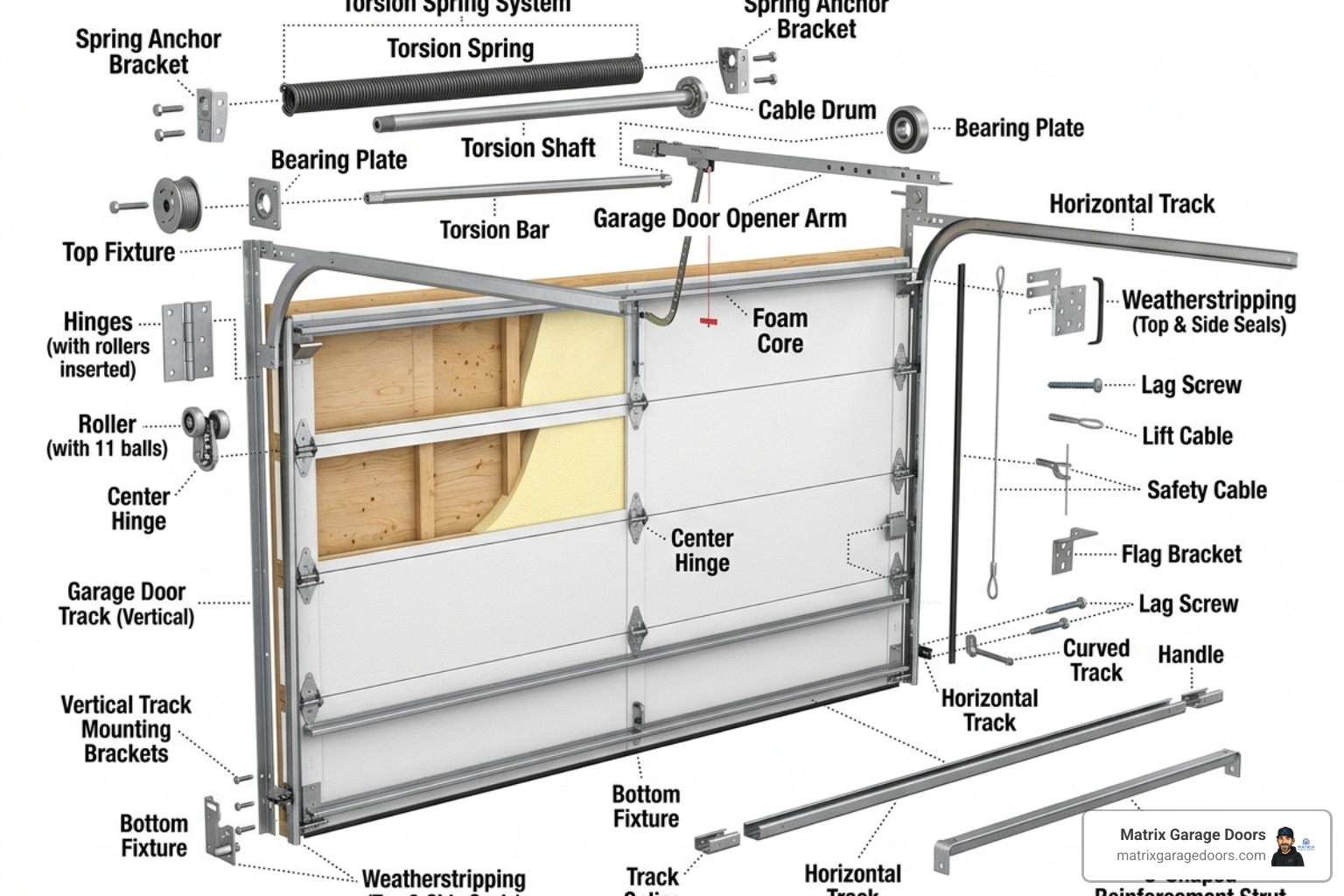
To master Garage Door Component Repair, we first need to understand the “skeleton” and “muscles” of the door. A modern garage door is a complex counter-balance system designed to make a 150-pound (or heavier) door feel like it weighs only 8 to 10 pounds when lifted by hand.
The Powerhouse: Springs and Cables
The most critical parts of the system are the springs. Torsion springs are mounted horizontally on a bar above the door. They use torque to lift the weight. Extension springs run alongside the horizontal tracks and stretch as the door closes. Working in tandem with these are the lift cables, which wrap around cable drums at each end of the torsion shaft. These drums, like the Torque Force 400-96, have weight capacities ranging from 265 to 375 pounds per drum.
The Movement: Rollers, Tracks, and Hinges
Rollers are the wheels that allow the door to travel along the tracks. While standard black nylon rollers are common, we often recommend upgrading to nylon-coated rollers with 13 ball bearings for a Noisy Garage Door Fix. These are rated for 25,000 cycles and significantly quiet the operation. Hinges hold the panels together; if you hear a popping sound, it’s likely a hinge with a stress fracture.
The Safety and Seal
The system is rounded out by photo-eye sensors, which prevent the door from closing on objects, and weather seals (astragals) that keep out the Ohio elements. Proper track alignment ensures the door doesn’t wobble or scrape against the jambs.
| Spring Type | Standard Lifespan | Best For |
|---|---|---|
| Extension Springs | 5,000 – 10,000 cycles | Low headroom, lighter doors |
| Standard Torsion | 10,000 cycles | Most residential doors |
| High-Cycle Torsion | 25,000 – 50,000+ cycles | High-frequency use (3+ times/day) |
Identifying Symptoms of Component Failure
How do you know when it’s time for Garage Door Component Repair? Your door usually tells you long before it stops moving entirely.
- Unusual Noises: A loud bang like a firecracker usually means a spring has snapped. Squeaking or “screaming” sounds often point to unlubricated rollers or bearings. A popping sound is a classic sign of a failing hinge.
- Jerky Movement: If the door shakes or moves in fits and starts, your tracks might be misaligned, or the rollers might be flat-spotted.
- Slow Operation: If the opener is straining or the door takes longer than usual to open, the springs may have lost their tension.
- Visible Fraying: Look at your cables. If they look “fuzzy,” they are fraying and could snap at any moment.
- Uneven Door: If one side of the door hangs lower than the other, a cable may have slipped off the drum or one extension spring has stretched more than the other.
- Dented Panels: Even a small dent from a wayward basketball can throw off the door’s balance, forcing other components to overwork.
If you are dealing with a broken spring, you might want to read about how to Safely Swap Your Garage Door Springs And Save A Bundle, though we always urge caution.
The 5-Step Guide to Garage Door Component Repair
We follow a systematic approach to ensure nothing is missed during a repair. Whether you’re in Dublin, OH or Reynoldsburg, OH, these steps apply to every residential door.
Step 1: Safety and Inspection
Before touching anything, pull the emergency release cord (the red handle) to disconnect the opener. Try to lift the door manually. If it feels heavy, the springs are the problem. Visually inspect all hardware for loose bolts, rust, or cracks.
Step 2: Troubleshooting Opener and Sensors
Sometimes the “repair” is as simple as wiping a spiderweb off the photo-eye sensors or replacing the batteries in your remote. Ensure the sensors are aligned; the lights on both should be solid, not flickering.
Step 3: Hardware Tightening and Track Cleaning
Garage doors vibrate constantly, which loosens nuts and bolts over time. Use a socket wrench to tighten the hinges and track brackets. Clean the tracks with a rag and a bit of brake cleaner to remove grease and debris. Never lubricate the tracks themselves, as this causes the rollers to slide rather than roll, leading to flat spots.
Step 4: Lubricating Moving Parts
Apply a lithium-based spray or a specialized garage door gel to the hinges, metal rollers (on the bearings), springs, and bearing plates. This reduces friction and prevents rust. If you have nylon rollers, do not lubricate the wheels, only the stem where it enters the hinge. To learn more, check our guide on how to Fix Noisy Garage Door.
Step 5: Identifying Parts for Professional Replacement
If the inspection reveals a snapped spring, a frayed cable, or a cracked drum, this is the point where you stop. These parts are under extreme tension and require specialized tools to replace safely. If your door is Garage Door Off Track, professional realignment is necessary to prevent the door from falling.
High-Tension Garage Door Component Repair Safety
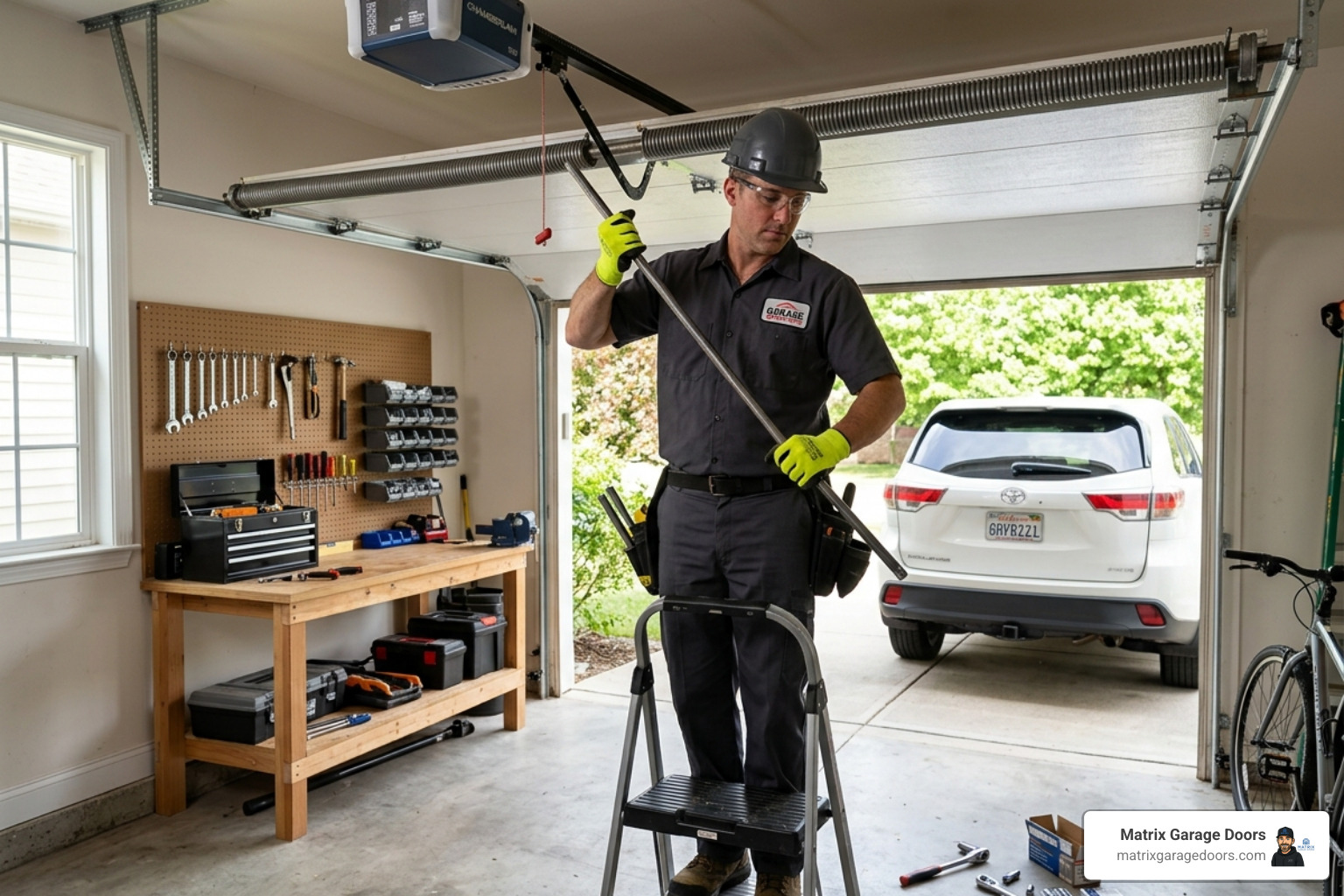
Safety is the most important part of any Garage Door Component Repair. Torsion springs are under enough tension to cause fatal injuries if they let go unexpectedly.
- Winding Bars: Never use screwdrivers or pliers to adjust a torsion spring. Professionals use solid steel winding bars designed for the task.
- The 10,000 Cycle Rule: Most springs fail right around the 10,000-cycle mark. If one breaks, the other is usually days or weeks behind. We always recommend replacing both at once to keep the door balanced.
- Cable Danger: Cables are attached to the bottom brackets, which are under the full tension of the spring. Never unscrew the bottom bracket while the door is under tension.
- Drum Replacement: If a drum is cracked or the grooves are worn, the cable can jump off, causing the door to crash down. This repair is strictly for those with the right training.
For residents in Etna, Ohio or Blacklick, Ohio, local experts are always available to handle these high-risk tasks.
Professional vs. DIY Garage Door Component Repair
While homeowners can easily handle lubrication and tightening, other tasks are better left to us.
- Specialized Tools: Beyond winding bars, professionals use cable swaging tools and high-lift jacks that the average DIYer doesn’t have in their garage.
- Warranty Protection: Many high-quality parts, like our 25,000-cycle springs, come with warranties that are only valid if installed by a certified technician.
- Structural Integrity: Replacing a single panel might seem easy, but if not done correctly, it can compromise the door’s “skeleton.” A professional ensures the new panel is reinforced properly. You can learn more about Garage Door Panel Replacement costs and procedures here.
If your goal is to Stop The Squeak With A Simple Garage Door Roller Replacement, that is a great DIY weekend project. However, for a Garage Spring Fix, calling a pro is the smarter move.
Preventive Maintenance for Component Longevity
The best Garage Door Component Repair is the one you never have to do. Routine maintenance can double the life of your system.
- Annual Inspection: At least once a year, perform a full balance test. With the door disconnected from the opener, it should stay in place when lifted halfway. If it falls or shoots up, the tension needs adjustment.
- Upgrade Your Bearings: Standard nylon bushings only last 10,000 cycles. Upgrading to a long-life steel center bearing can increase that to 45,000 cycles and support up to 400 pounds.
- Choose High-Cycle Rollers: If you use your garage as your primary entrance, standard rollers won’t cut it. A 25,000-cycle nylon-coated roller is a fantastic investment in peace and quiet.
- Weatherstrip Replacement: Replace your bottom seal every 2-3 years. A brittle seal allows moisture in, which can rust your bottom brackets and tracks.
- Lubrication: We recommend lubricating your door every six months—once in the spring and once in the fall—to prepare for Ohio’s temperature swings.
Frequently Asked Questions about Garage Door Component Repair
How much does it cost to replace a garage door panel versus the whole door?
Replacing a single panel typically costs about 30% to 40% of the price of a brand-new door. If your door is relatively new and the manufacturer still makes that model, panel replacement is a great way to save money. However, if the door is over 15 years old, matching the color and style can be difficult, and a full replacement might be a better long-term investment for energy efficiency and warranty coverage.
What are the signs that my garage door springs need immediate replacement?
If you see a visible gap in the coils of your torsion spring, it is already broken. Other signs include the door only opening a few inches before stopping, a heavy feeling when trying to lift the door manually, or the door falling much faster than it should when closing. If you hear a loud “bang” from the garage, don’t try to operate the door until you’ve checked the springs. You can find more details on how to Replace Garage Door Spring here.
Can I perform garage door cable repair as a DIY project?
We strongly advise against DIY Garage Door Cable Repair. Cables are under extreme tension from the springs. If a cable snaps or a bracket is loosened incorrectly during a DIY attempt, the door can fall or the cable can “whip,” causing severe injury. This is one of the most dangerous repairs in the industry. For more on the risks and process, read The Ultimate Guide To Fixing A Snapped Garage Door Cable.
Conclusion
At Matrix Garage Doors, we believe that a little knowledge goes a long way in keeping your home safe. Garage Door Component Repair doesn’t have to be a mystery. By understanding the anatomy of your door and keeping an eye (and ear) out for early warning signs, you can prevent minor issues from turning into major headaches.
Whether you need a quick Garage Door Spring Repair in Galena, Ohio or a full system overhaul in Worthington, our family-owned team is here to help. We’ve been serving the Columbus area for two decades, providing 24/7 emergency service to ensure you’re never stuck behind a broken door.
Don’t wait for a total system failure. Keep your system running smoothly with professional garage services and repairs and enjoy the peace of mind that comes with a perfectly balanced door.
Our Service Locations: Bexley, Blacklick, Canal Winchester, Columbus, Dublin, Etna, Galena, Grandview Heights, Grove City, Groveport, Hilliard, New Albany, Pickerington, Powell, Reynoldsburg, Upper Arlington, Westerville, and Worthington, OH.