Stop the Reversal: A Guide to New Garage Door Sensors
Why Garage Door Safety Sensors Are Critical for Every Home
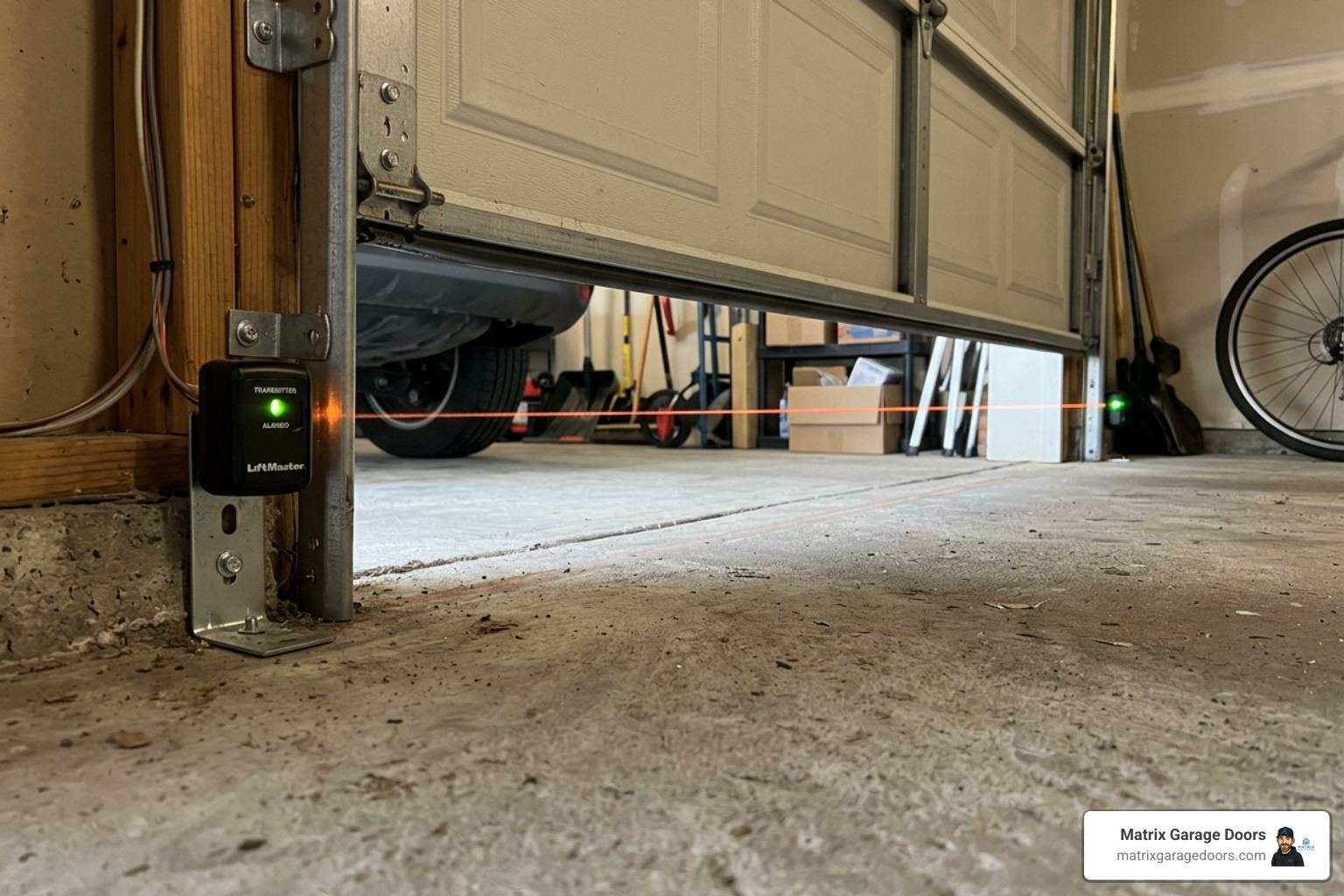
Garage door safety sensors are small infrared devices mounted near the bottom of your garage door that detect obstructions and automatically reverse the door before it can cause injury or damage.
Here’s what you need to know at a glance:
- What they do: Send an invisible infrared beam across the door opening. If anything breaks that beam while the door is closing, the door immediately reverses.
- Where they’re mounted: 4–6 inches above the floor on both sides of the door frame.
- Are they required by law? Yes. Federal law has mandated safety sensors on all automatic residential garage doors since 1993.
- How long do they last? With regular maintenance, 10–15 years.
- Warning signs of failure: Blinking LED lights, door reversing without an obstruction, or door refusing to close at all.
Your garage door can weigh anywhere from 150 to 400+ pounds. Without working sensors, that weight has nothing stopping it from coming down on a person, a pet, or your car. It’s a simple device doing a very important job — and most homeowners never think about it until something goes wrong.
That’s exactly what this guide is for. We’ll walk you through how sensors work, how to troubleshoot and maintain them, when to replace them, and which replacement parts work for the most common brands.
I’m Andrew Hopson with Matrix Garage Doors, and I’ve spent years helping Columbus-area homeowners diagnose and repair garage door safety sensors across a wide range of opener brands and configurations. Let’s make sure yours are doing their job.
The Science and History of Garage Door Safety Sensors
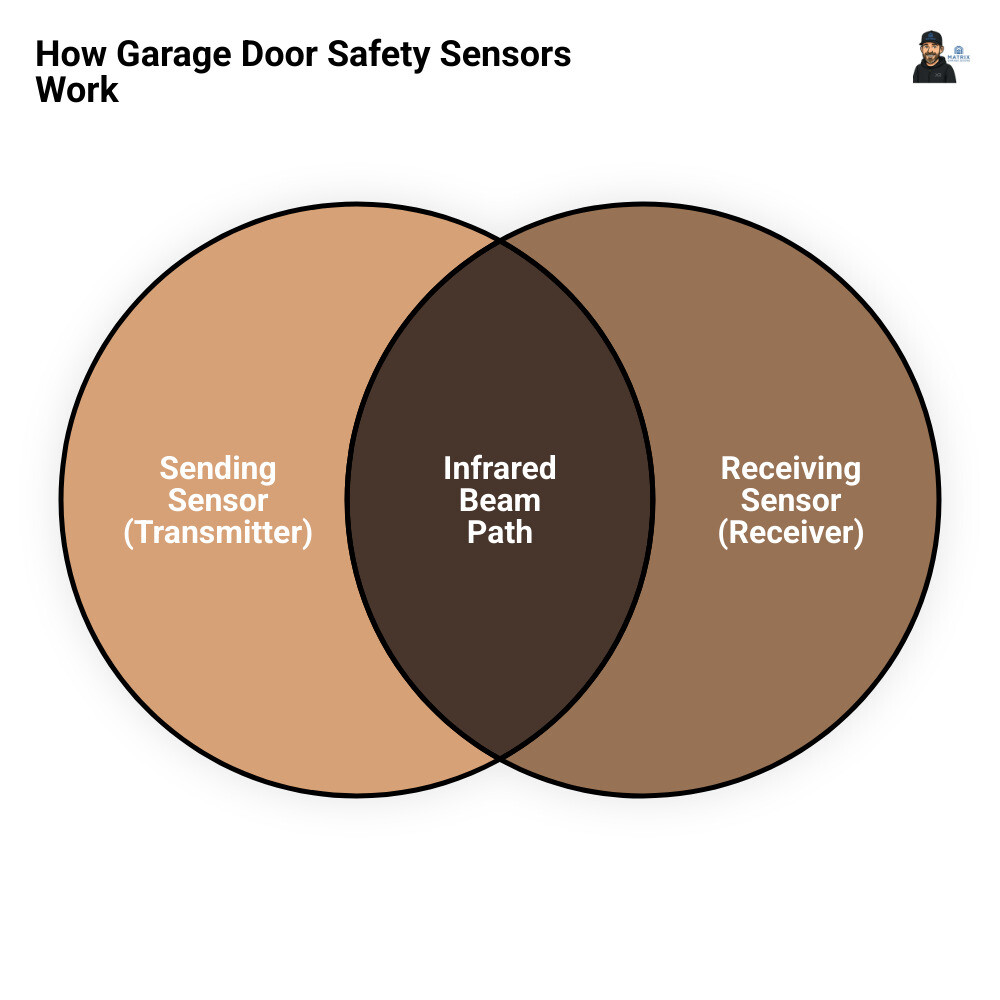
To understand how to fix them, we first need to look at how they work. Most modern residential systems use photoelectric garage door safety sensors. These consist of two units: a “sending” sensor (transmitter) and a “receiving” sensor.
The sending unit emits an invisible infrared beam of light. Think of it like a never-ending game of laser tag. As long as the receiving unit “sees” that beam, the garage door opener assumes the path is clear. If a child, a pet, or even a stray trash can breaks that beam while the door is closing, the circuit is interrupted. The motor receives a signal to stop and reverse in less than a second.
A Brief History of Safety Laws
This wasn’t always the standard. Before the early 90s, many garage doors relied on mechanical friction or didn’t have auto-reverse features at all, leading to tragic accidents.
- 1990: The Consumer Product Safety Improvement Act was passed, requiring all residential openers to reverse upon contact with an obstruction.
- 1991: This law went into effect on January 1st.
- 1993: The U.S. Consumer Product Safety Commission published final rules mandating that all openers manufactured after January 1, 1993, include a non-contact primary entrapment protection device—most commonly, these photo-eye sensors.
The 6-Inch Mounting Rule and UL 325 Standards
Under UL 325 safety standards, garage door safety sensors must be mounted no higher than 6 inches from the garage floor. We usually recommend a height of 4 to 6 inches. Why? This specific height is designed to detect the smallest vulnerable “objects”: a crawling toddler, a small pet, or even the tire of a car that hasn’t pulled in quite far enough. If they are mounted too high, a small child could crawl underneath the beam undetected.
Troubleshooting Common Garage Door Safety Sensors Issues
When your garage door starts acting up—specifically if it opens fine but refuses to close unless you hold down the wall button—it’s almost always a sensor issue. Here are the most common culprits we see in the Columbus and Hilliard areas.
1. Misalignment
This is the “Have you tried turning it off and on again?” of the garage door world. Because sensors are mounted low to the ground, they are easily bumped by trash cans, bicycles, or feet. Even a deviation of a few millimeters can break the connection.
- The Fix: Check the LED lights on both sensors. If one is flickering or out, gently loosen the wing nut on the bracket and nudge the sensor until the light glows steady.
2. Dirty Lenses
Since they live near the floor, sensors collect dust, spider webs, and dirt. In dusty areas like Galena or rural New Albany, this is very common. A dirty lens acts like a physical obstruction.
- The Fix: Wipe the lenses with a soft, dry microfiber cloth. Avoid harsh chemicals that could cloud the plastic.
3. Sunlight Interference
Infrared sensors work with light. On bright, sunny Ohio mornings, direct sunlight hitting the receiving lens can “blind” the sensor, making it think the beam is broken.
- The Fix: You can buy or DIY small sun shields (cardboard tubes work in a pinch) to shade the lens, or swap the sending and receiving units so the receiver is on the darker side of the garage.
4. Blinking LED Indicators
Most brands use a color-coded system to tell you what’s wrong. For example, on many Genie systems, you should see one solid red and one solid green light. If you see a blinking pattern, you can check this diagnostic chart here to identify the specific error.
Common Diagnostic Patterns
| Light Status | Meaning | Potential Fix |
|---|---|---|
| Both Solid | System Healthy | None needed |
| One Off | No Power | Check wiring/staples |
| One Blinking | Misalignment | Re-aim sensors |
| Rapid Blinking | Interference | Clean lens/Check sunlight |
For more detailed preventative steps, check out our garage door maintenance tips to keep your system running smoothly year-round.
Maintenance and Replacement: Ensuring a 15-Year Lifespan
With proper care, your garage door safety sensors should last between 10 and 15 years. However, they aren’t invincible. Moisture in garages in places like Westerville or Worthington can eventually lead to corrosion, and Ohio rodents have a notorious habit of chewing through the low-voltage bell wire.
Monthly Maintenance Routine
We recommend a quick “health check” every month:
- Visual Inspection: Look for cobwebs or debris.
- The Cardboard Box Test: This is the gold standard for safety. Place a box in the path of the door and try to close it. The door should reverse immediately upon the beam being broken.
- Clean the Lens: Use a soft cloth to remove film or dust.
- Check the Wires: Look for “nicked” or frayed wires. If you see copper showing, it’s time for a repair.
When to Replace
If your sensors are over a decade old and you’ve already tried realigning and cleaning them to no avail, replacement is the safest bet. Signs it’s time for a new kit include:
- Cracked sensor housings.
- Water damage inside the lens.
- Indicator lights that won’t turn on despite having power at the motor head.
While many homeowners find sensor replacement to be a manageable DIY project, wiring issues can be tricky. If you’re uncomfortable with electrical work or if your opener is an older model, we always suggest looking for professional installation and repair recommendations to ensure the safety system is calibrated perfectly. You can also dive deeper into long-term care with our ultimate guide to preventative garage door care.
Frequently Asked Questions about Garage Door Safety Sensors
Can I bypass garage door safety sensors temporarily?
Technically, yes, but we strongly discourage it. Most openers allow you to override the sensors by pressing and holding the wall console button until the door is fully closed. You can also pull the red manual release cord to operate the door by hand.
However, bypassing these sensors removes the only thing preventing a 400-pound door from crushing whatever is underneath it. According to NFPA safety guidelines, any malfunction in a life-safety system should be addressed immediately rather than bypassed. Never bypass sensors if children or pets are present.
Why is my garage door sensor blinking red?
A red blinking light is the sensor’s way of crying for help. On most brands (like Genie or Overhead Door), a blinking red light indicates that the sensor is powered but cannot “see” its partner. This is usually due to:
- Obstruction: Something as small as a hanging leaf or a spider web.
- Alignment Failure: The “eyes” aren’t looking directly at each other.
- Wiring Short: A staple might be driven too deep into the wire, or the wire might be pinched.
If you’re seeing persistent blinking, our annual garage door service guide can help you determine if it’s a simple fix or a sign of a larger system failure.
Are all garage door safety sensors universal?
No. This is a common misconception. While the technology (infrared) is similar, the voltage and communication protocols vary by brand.
- Genie/Overhead Door: Generally use the Safe-T-Beam® system. Kits like the OSTB-BX or GSTB-R are compatible with most models made after 1993.
- LiftMaster/Chamberlain/Craftsman: Usually require specific sensors based on the color of the “learn button” on your motor (e.g., the 41A5034 kit).
- Legacy Systems: If your opener was made before 1993, it might not support modern sensors at all, and it’s likely time for a full opener upgrade.
For a breakdown of what these parts might cost, you can view our garage door service price guide.
Conclusion
Your garage door safety sensors are the unsung heroes of your home. They work silently in the background, ensuring that one of the heaviest moving objects in your house doesn’t become a hazard. Whether you’re in Dublin, Gahanna, or downtown Columbus, keeping these “eyes” clean and aligned is one of the simplest ways to protect your family.
If you’ve tried the troubleshooting steps above and your door is still reversing or refusing to close, don’t risk your safety by leaving it broken. At Matrix Garage Doors, we are a family-owned company with two decades of experience serving the Greater Columbus area. We offer 24/7 emergency residential garage door repair and maintenance to ensure your home stays secure.
From New Albany to Grove City and everywhere in between, our team arrives fully equipped to diagnose sensor issues, repair damaged wiring, or install brand-new, high-quality replacement kits. We guarantee your satisfaction and prioritize your family’s safety above all else.
Ready to stop the reversal? Contact Matrix Garage Doors today for professional garage door services and repairs. We’re here to help you get your door back on track!