Garage Door Lubrication Service: Essential 5 Benefits
Why Your Garage Door Needs Regular Professional Care
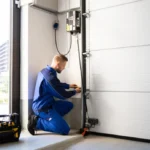
A garage door lubrication service is a professional maintenance procedure that typically costs between $75 and $150 for a complete tune-up, which includes lubricating all moving parts, balancing the door, and performing a safety inspection. Most experts recommend scheduling this service every six months to prevent costly repairs and extend your door’s lifespan.
What’s typically included in a professional garage door lubrication service:
- Application of manufacturer-recommended lubricants to hinges, rollers, springs, and bearings
- Cleaning and inspection of all moving components
- Door balance test and adjustment
- Safety feature inspection (auto-reverse sensors, emergency release)
- Professional diagnosis of potential issues before they become major problems
- Cost: $75-$150 for a complete tune-up vs. $2,700+ for premature door replacement
Your garage door is the largest moving object in your home, and it relies on dozens of moving parts working together smoothly. Without proper lubrication, friction builds up. Metal grinds against metal. Springs rust. Rollers stick. The opener motor strains under the extra load.
The result? That familiar symphony of squeaks, groans, and grinding noises that echo through your house every time you open or close the door. More importantly, that friction accelerates wear on expensive components like springs and cables, which can fail suddenly and dangerously.
Regular lubrication reduces this friction dramatically. It protects metal surfaces from rust and corrosion, keeps rubber seals flexible, and ensures your door glides open and closed like it did when it was new. Most garage doors can easily last a decade or more with proper maintenance, but neglect this simple task and you’re looking at premature component failure and repair bills that can climb into the thousands.
I’m Andrew Hopson, and at Matrix Garage Doors, we’ve seen how regular garage door lubrication service prevents the majority of emergency repair calls we receive in the Columbus area. A small investment in preventative maintenance today saves homeowners from much larger headaches tomorrow.
Why Lubrication is a Non-Negotiable Maintenance Task
Think of your garage door as a finely tuned machine, much like your car. Just as your car needs oil changes to keep its engine purring, your garage door needs lubrication to keep its many moving parts working in harmony. This isn’t just about silencing annoying noises; it’s about safeguarding your investment and ensuring the safe, reliable operation of one of your home’s most frequently used features.
The importance of lubrication cannot be overstated. Every time your garage door opens or closes, its hinges, rollers, springs, and cables move and rub against each other. Without a proper garage door lubrication service, this constant friction leads to increased wear and tear. Our experience providing garage door lubrication service across Columbus, including areas like Dublin, Hilliard, and Westerville, consistently shows that well-lubricated doors simply last longer.
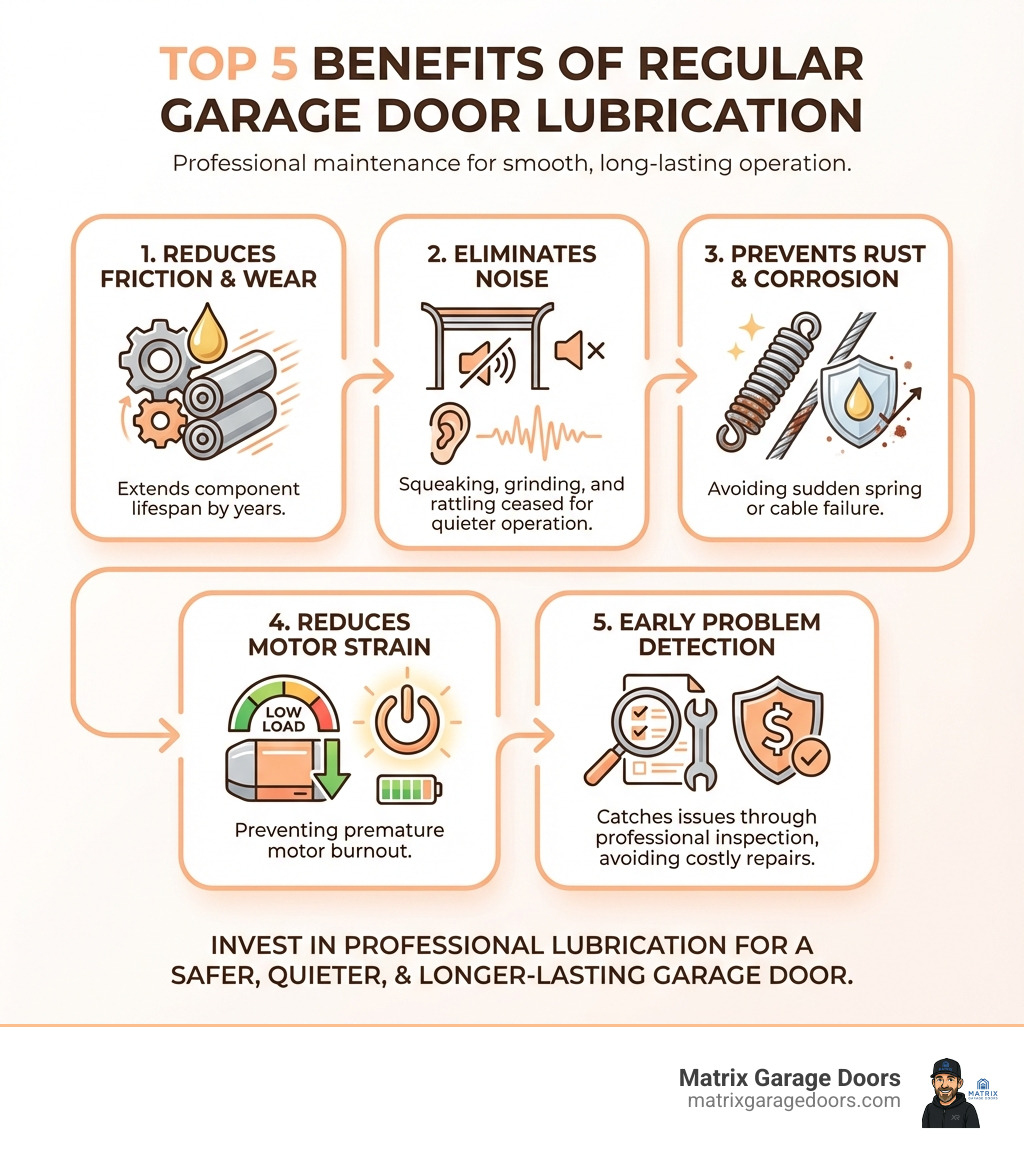
Here’s why lubrication is a non-negotiable part of garage door maintenance:
- Reduced Friction and Wear: Lubrication creates a protective barrier between moving metal parts, preventing grinding. This reduces friction, minimizes wear, and extends component lifespan by years.
- Noise Reduction: A squeaky or grinding door is often the first sign lubrication is needed. Applying the right lubricant eliminates these sounds, ensuring quiet and smooth operation. For more tips, see our guide on Squeaky Garage Door Fix: How to Quiet a Noisy Garage Door and When to Call a Pro.
- Smooth Operation: Lubricated parts glide effortlessly, so your door opens and closes without jerky movements. This smooth operation reduces strain on both the user and the garage door opener.
- Prevents Rust and Corrosion: Metal components are susceptible to rust. Quality lubricants contain rust inhibitors that form a protective coating, shielding parts from moisture. This is crucial for springs, which are under high tension and can snap if corroded.
- Extends Component Lifespan: Regular lubrication is a cost-effective way to prevent premature wear and rust. This helps parts like hinges, rollers, and springs reach their full lifespan, delaying costly replacements.
- Reduces Strain on Opener Motor: Stiff parts force the opener motor to work harder, which can cause it to overheat or burn out. A well-lubricated door allows the opener to operate efficiently with less effort, preventing expensive replacement.
- Avoids Costly Repairs: Preventative maintenance with a garage door lubrication service prevents major breakdowns, saving you hundreds or thousands in emergency repairs. We’ve seen in Grove City and Reynoldsburg how a simple lubrication could have prevented a larger issue.
Choosing the Right Product: A Lubricant Showdown
One of the most common mistakes homeowners make when attempting DIY garage door maintenance is using the wrong type of lubricant. Not all lubricants are created equal, and applying the incorrect product can actually do more harm than good. Just like you wouldn’t put diesel in a gasoline engine, you shouldn’t use just any oil or spray on your garage door.
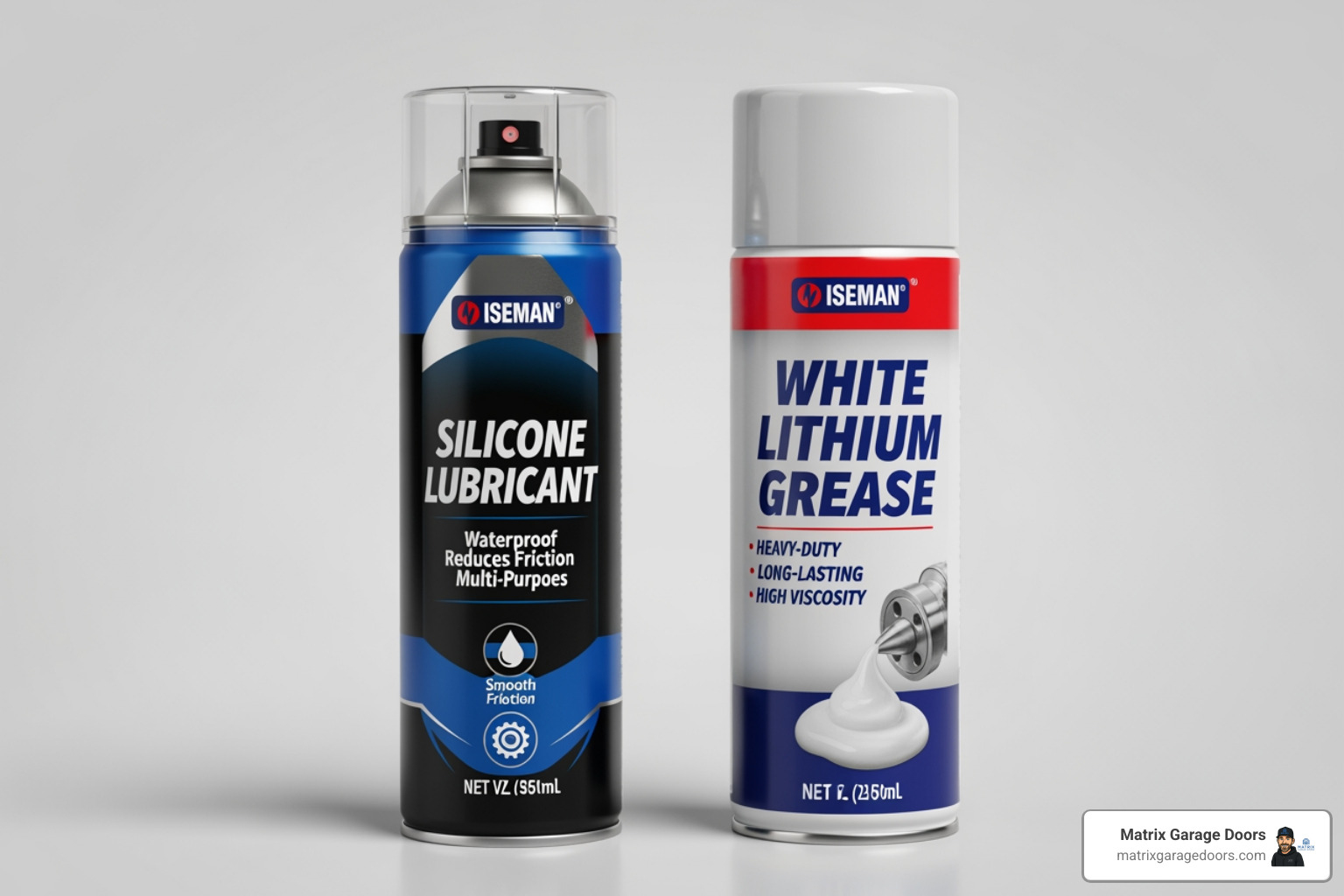
The market offers various lubricants, but for garage doors, we generally focus on two champions: silicone-based sprays and white lithium grease. Understanding their unique properties is key to a successful garage door lubrication service.
We also often encounter homeowners who have made the common mistake of using the wrong product or over-lubricating. Using a lubricant that attracts dirt, for example, will quickly turn your smooth-running door into a sticky, gritty mess. Over-lubricating can also lead to excess product dripping, attracting debris, and creating a build-up that hinders rather than helps.
To help clarify, here’s a quick comparison of common lubricant types:
| Lubricant Type | Best For | Pros | Cons | Avoid On |
|---|---|---|---|---|
| Silicone Spray | Plastic, rubber, metal, weatherstripping | Resists water & heat, non-toxic, non-reactive, doesn’t attract dust, good for low temps | Not ideal for heavy metal-on-metal contact requiring thick coating | N/A |
| White Lithium Grease | Metal-on-metal contact (hinges, springs) | Heat & water resistant, excellent for heavy-duty metal parts, protects from rust, long-lasting | Can attract dirt if over-applied, not suitable for plastic/rubber, can coagulate over time | Plastic parts, rubber seals, tracks |
| Penetrating Oils (WD-40) | Loosening rusted parts, cleaning | Excellent for breaking down rust and grime, temporarily reduces squeaks | Not a long-term lubricant, solvent-based, attracts dirt, dries out parts, can damage plastic/rubber seals | Garage door parts as a lubricant, especially springs and rollers |
| Household Oils | Very light lubrication (e.g., door hinges) | Readily available | Attracts dust & debris, breaks down quickly, not designed for heavy loads or extreme temps | Garage door parts |
Silicone-Based Lubricants
Silicone-based lubricants are often our go-to choice for many parts of a garage door, especially when dealing with a mix of materials. They are a fantastic all-rounder for a comprehensive garage door lubrication service.
- Ideal for: Plastic parts, rubber parts (like weather stripping), and even many metal components. Silicone spray is also excellent for smaller, more intricate parts and can be used on roller bearings.
- Weather Resistance: Silicone is highly resistant to water and can withstand a wide range of temperature fluctuations, making it suitable for our diverse Ohio weather, from the cold winters in Powell to the humid summers in Canal Winchester.
- Key Benefit: It doesn’t attract dust or dirt, which is crucial for preventing grime buildup that can impede door operation. It’s also non-toxic and non-reactive, making it safe for various materials.
White Lithium Grease
When it comes to heavy-duty metal-on-metal contact points, white lithium grease steps up to the plate. This thick, durable lubricant is designed for components that bear significant weight and friction.
- Best for: Metal-to-metal contact points like hinges, springs (both torsion and extension), and metal rollers. Its robust nature provides long-lasting protection.
- Heat and Water Resistance: Lithium-based lubricants are heat- and water-resistant, making them ideal for parts that experience high friction and are exposed to varying environmental conditions. They also excel at protecting metal from rust and corrosion.
Lubricants to Avoid
This is perhaps the most critical section for DIY enthusiasts. While some products are household staples, they are detrimental to your garage door’s health.
- Penetrating Oils (like WD-40): This is the biggest culprit. Classic WD-40 is a fantastic rust penetrant and water displacer, but it is NOT a long-term lubricant for garage doors. Its solvent base can break down existing lubricants, attract dirt and dust, and ultimately dry out parts, leading to increased wear and tear. It can also damage plastic and rubber components over time. We’ve seen many garage doors in New Albany and Blacklick suffer from the well-intentioned but misguided application of WD-40.
- Degreasers: While cleaning is important, using degreasers on your garage door’s moving parts can strip away essential oils and leave components vulnerable to friction and rust.
- Household Oils: Products like motor oil or cooking oil are completely unsuitable. They quickly attract dirt, dust, and debris, turning your smooth-running door into a sticky, gritty mess. They also break down quickly and aren’t designed for the heavy loads and extreme conditions your garage door experiences.
Using the right product is fundamental to an effective garage door lubrication service. When in doubt, always opt for a product specifically labeled for garage doors, or better yet, consult with professionals like us at Matrix Garage Doors.
The Anatomy of Lubrication: What to Lube and What to Leave Alone
Knowing which lubricant to use is only half the battle; knowing where to apply it is equally crucial. A comprehensive garage door lubrication service targets specific components while carefully avoiding others. Applying lubricant to the wrong parts can create more problems than it solves.
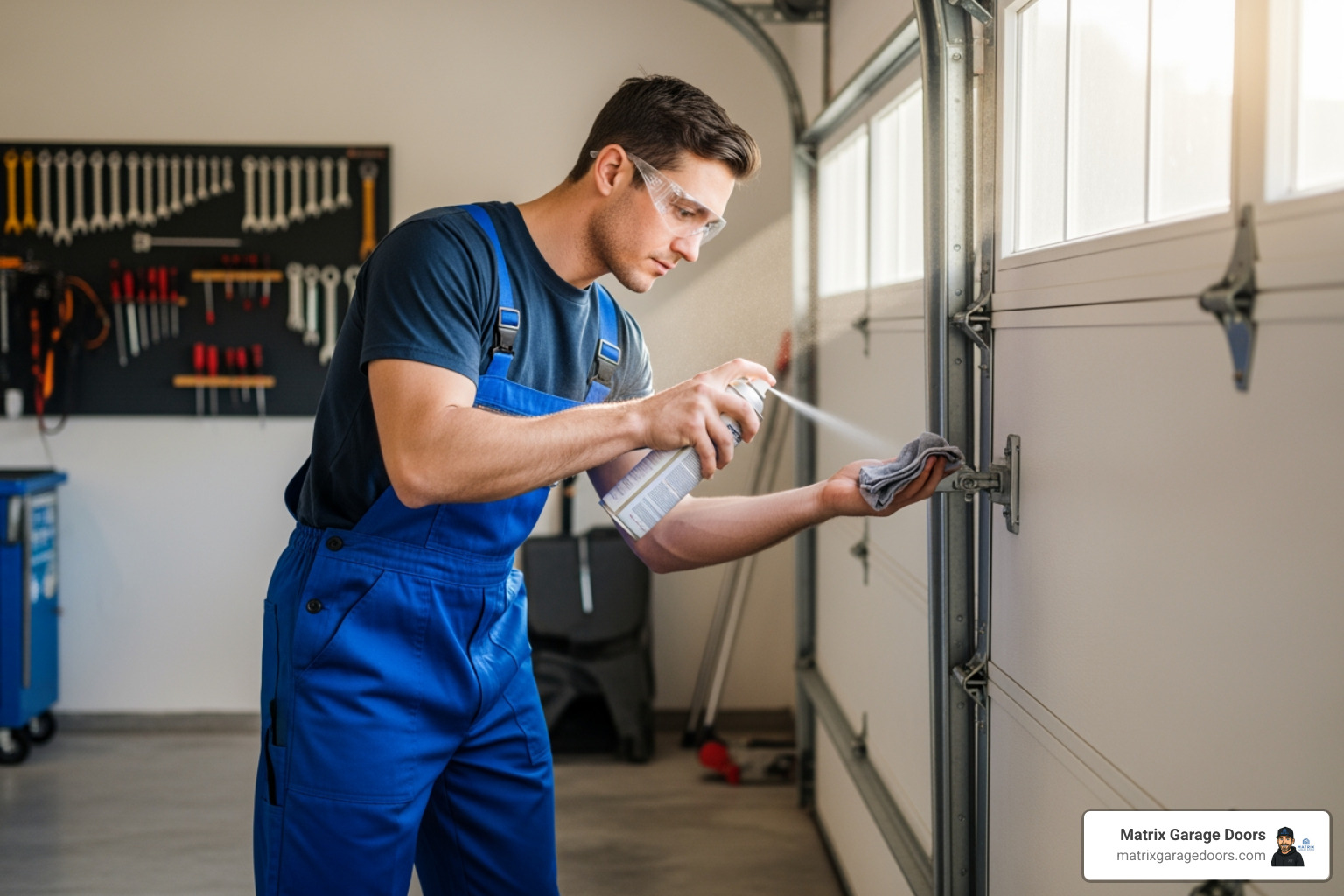
At Matrix Garage Doors, we follow a precise approach to ensure every necessary component receives attention, keeping your door running smoothly and extending its life. We also share valuable insights in our Garage Door Maintenance Tips to help homeowners understand the nuances of proper care.
Parts to Lubricate
Here’s a list of the key lubrication points that ensure your garage door operates at its best:
- Hinges: These are critical metal-on-metal contact points. We apply white lithium grease to the pivot points of all hinges, ensuring smooth articulation as the door moves.
- Rollers (Metal): Metal rollers, especially those with exposed ball bearings, benefit greatly from lubrication. We apply silicone spray directly to the bearings. For rollers with sealed bearings, lubrication isn’t necessary, as the lubricant is sealed within.
- Springs (Torsion & Extension): Garage door springs are under immense tension and are vital for lifting the door’s weight. Lubricating them with white lithium grease helps repel moisture, prevent rust, and reduce friction as the coils expand and contract. This extends their lifespan and ensures they function correctly.
- Pulleys: If your garage door uses extension springs, it will have pulleys. We lubricate the axle and bearings of these pulleys with a silicone-based spray to ensure they spin freely, reducing strain on the cables and opener.
- Lock Mechanism: For manual locks, a light spray of silicone lubricant can keep the internal mechanisms from seizing and ensure smooth operation.
- Opener Chain/Screw:
- Chain-drive openers: The chain should receive a light application of a heavy-duty lubricant or a specialized garage door opener lubricant.
- Screw-drive openers: The threaded rod requires a low-viscosity lubricant, such as a silicone spray or a specially formulated screw-drive lubricant. It’s important not to over-apply.
- Armbar: This connects the opener to the door. We lubricate the pivot points where it connects to the door and the opener with a silicone spray.
- Top of the Rail: For chain or screw drive openers, the top of the rail where the trolley moves should receive a light coating of lubricant (e.g., silicone spray or the same lubricant used on the chain/screw).
Parts to AVOID Lubricating
Just as important as knowing what to lubricate is knowing what not to lubricate. Applying lubricant to these areas can cause significant operational problems and even damage:
-
Garage Door Tracks: This is a huge “do not.” Lubricating the tracks themselves (the vertical and horizontal rails that guide the rollers) is a common misconception. Lubricant on the tracks will attract dirt and debris, creating a gritty paste that actually hinders roller movement. It can also cause the door to slip or become misaligned. The tracks should be kept clean and free of any lubricant.
-
Nylon Rollers: If your garage door has nylon rollers without exposed bearings, do not lubricate the nylon itself. The nylon is designed to provide smooth, quiet operation without external lubrication. Lubricating the nylon can cause it to degrade or become sticky, attracting dirt. Only lubricate the bearings if they are exposed.
- Sealed Bearings: Many modern garage door components, particularly some rollers, come with sealed bearings. These are designed to be maintenance-free and do not require external lubrication. Attempting to force lubricant into them is futile and can potentially damage the seal.
- Belt Drive Openers: If you have a belt-drive garage door opener, the belt itself should never be lubricated. These belts are designed to operate dry, and applying lubricant can cause them to slip, wear prematurely, and cease to function correctly.
By adhering to these guidelines, we ensure that our garage door lubrication service in areas like Etna, Galena, and Grandview Heights is effective and contributes positively to your door’s longevity and performance.
DIY vs. Professional Garage Door Lubrication Service
The question often arises: “Can I lubricate my garage door myself, or should I hire a professional?” You can handle basic lubrication if you’re handy, but a full garage door lubrication service is usually safer and more thorough when done by a pro. Garage doors are heavy, and key parts (springs, cables) are under high tension. For convenience and safety, many homeowners prefer professional help. At Matrix Garage Doors, we offer comprehensive Garage Door Services and Repairs and follow guidance from trusted sources like the Institute of Door Dealer Education and Accreditation.
Key Steps in a DIY Garage Door Lubrication Service
If you choose DIY, follow these essentials:
- Safety First: Disconnect power to the opener before starting. Wear safety goggles and gloves.
- Clean Components: Wipe down hinges, rollers, and springs with a clean rag. Wipe tracks clean only; do NOT lubricate them.
- Apply Lubricant Strategically:
- Hinges: Apply white lithium grease to hinge pivot points.
- Metal Rollers: Use silicone spray on the roller bearings.
- Springs: Lightly coat torsion and extension spring coils with white lithium grease.
- Pulleys: Use silicone spray on the axle and bearings.
- Opener Chain/Screw: Use the appropriate product noted in the “Choosing the Right Product” section.
- Wipe Excess: Remove drips and extra product to avoid attracting dirt.
- Test Door: Reconnect power and cycle the door to confirm quiet, smooth movement.
The Value of a Professional Garage Door Lubrication Service
A professional garage door lubrication service adds safety, precision, and longevity:
- Expert Diagnosis: Techs spot frayed cables, worn rollers, misalignment, and other issues a quick DIY may miss.
- Correct Products and Application: We use industry-approved lubricants and proper amounts, avoiding mistakes like WD-40-as-lube or over-application.
- Safety Inspection: Includes auto-reverse and emergency release checks plus a door balance test, adhering to relevant safety standards for automatic residential operators and the California state safety standards.
- Reduced Strain on Opener: Properly lubricated and balanced doors help prevent premature opener wear.
- Peace of Mind: Professional service ensures your door operates safely and efficiently, which is especially valuable for daily-use doors in Pickerington, Groveport, and Worthington.
Frequently Asked Questions about Garage Door Lubrication
We often hear similar questions from homeowners across Columbus, OH, regarding their garage door maintenance. Here are some of the most common inquiries about garage door lubrication service, along with our expert answers.
How often should a garage door be lubricated?
The general rule of thumb for garage door lubrication is at least every six months. This frequency helps maintain optimal performance and extends the lifespan of your door’s components. However, several factors can influence how often your door truly needs attention:
- Usage Frequency: If you use your garage door multiple times a day (e.g., more than four times), you might consider lubricating it every three to four months. High usage naturally leads to more wear and tear.
- Climate Factors: Our Ohio climate, with its temperature fluctuations, can impact lubricants. Cold weather can make metal components contract and stiffen, while humidity can accelerate rust. In extreme conditions or very dusty environments, more frequent lubrication (e.g., quarterly) might be beneficial.
- Seasonal Maintenance: Many homeowners find it helpful to perform lubrication as part of a seasonal maintenance routine, typically in the spring and again before winter sets in. This ensures your door is prepared for the changing weather conditions.
Consistent lubrication is an easy yet powerful method for ensuring your garage door runs quietly and smoothly.
What are the signs that a garage door needs lubrication?
Your garage door isn’t shy about telling you when it needs attention. Pay close attention to these warning signs that indicate it’s time for a garage door lubrication service:
- Squeaking, Grinding, or Scraping Noises: This is the most obvious and common indicator. Metal-on-metal friction creates these unpleasant sounds. If your door sounds like a rusty gate, it’s definitely time for lubrication.
- Jerky or Uneven Movement: A door that moves unevenly, shudders, or gets stuck during operation is struggling. This often points to rollers or hinges that aren’t gliding smoothly.
- Slow Operation: If your garage door is opening or closing noticeably slower than usual, it could be due to increased friction on the moving parts, forcing the opener to work harder.
- Visible Rust or Corrosion: Inspect your springs, hinges, and rollers for any signs of rust. Rust not only looks bad but also impedes movement and weakens components, making lubrication crucial for prevention.
- Stiffness: If the door feels unusually heavy or resistant when you try to open it manually (after disengaging the opener), it’s a strong sign that the springs and other moving parts need lubrication.
If you notice any of these signs, don’t delay. Addressing them promptly with a garage door lubrication service can prevent minor annoyances from escalating into major repair needs.
What are the risks of not lubricating a garage door?
Neglecting regular lubrication can lead to a cascade of problems, ranging from minor inconveniences to significant safety hazards and costly repairs. The risks of not lubricating your garage door include:
- Premature Wear and Component Failure: Without lubrication, friction rapidly wears down metal parts. Hinges can warp, rollers can seize, and springs can lose their tension or snap prematurely due to rust and stress. The average lifespan of garage door springs is 7-12 years, but lack of lubrication can drastically shorten this.
- Increased Strain on Opener: A garage door that doesn’t move smoothly forces the opener motor to overcompensate. This increased strain can lead to the motor burning out, requiring an expensive replacement of the entire opener unit.
- Sudden Breakdowns: Components weakened by friction and rust are far more likely to fail unexpectedly. Imagine your door getting stuck halfway up, trapping your car inside, or worse, failing to open when you’re in a hurry.
- Costly Garage Door Repair: A broken spring, a seized roller, or a burnt-out opener motor are all expensive repairs that could often be avoided with routine lubrication. Investing a small amount in prevention saves you from much larger repair bills down the line.
- Safety Hazards: This is perhaps the most serious risk. A garage door with compromised components can be extremely dangerous. Springs under tension can snap violently, cables can fray and break, and an unbalanced door can crash down unexpectedly, causing serious injury or property damage. Given that garage doors are the heaviest moving object in your home, safety is paramount.
We’ve seen these risks materialize far too often in Columbus and surrounding areas like Hilliard, New Albany, and Reynoldsburg. A simple garage door lubrication service is a small price to pay for the safety, longevity, and smooth operation of your garage door.
Keep Your Door Running Smoothly with Expert Help
Your garage door is an essential part of your home’s functionality and security. Investing in regular maintenance, particularly a professional garage door lubrication service, is one of the smartest decisions you can make as a homeowner. It’s not just about silencing a squeak; it’s about safeguarding your investment, extending the life of your door, and ensuring the safety of your family.
The long-term value of consistent lubrication cannot be overstated. It translates to fewer unexpected breakdowns, quieter operation, and significantly lower repair costs over the lifespan of your garage door. While DIY lubrication can be a temporary fix, the expertise of a professional ensures that the right lubricants are applied to the correct parts, every time, providing a comprehensive solution that homeowners often miss.
At Matrix Garage Doors, we understand the nuances of garage door systems. Our skilled technicians, serving Columbus, OH, and all the surrounding communities like Bexley, Dublin, Grove City, and Westerville, are equipped with the right tools and knowledge to provide a thorough garage door lubrication service. We don’t just lubricate; we inspect, adjust, and ensure every component is working optimally, giving you peace of mind and guaranteeing customer satisfaction.
Don’t wait for your garage door to start groaning or grinding. Be proactive and ensure your door runs smoothly for years to come. Schedule your garage door repair in Columbus, OH today!