The Ultimate Guide to Fixing a Stuck or Noisy Garage Door
Why a Noisy Garage Door Demands Immediate Attention
Noisy garage door fix is something most Columbus homeowners need at some point — and the good news is that most causes are straightforward to diagnose and resolve.
Here are the most common fixes, fast:
- Lubricate moving parts — Apply silicone spray or white lithium grease to rollers, hinges, and springs every six months.
- Tighten loose hardware — Use a wrench to snug up bolts, nuts, and bracket screws on hinges and tracks.
- Replace metal rollers with nylon — Nylon ball-bearing rollers can cut noise by 50–80%.
- Align your tracks — Loosen mounting brackets, straighten any bends, then retighten.
- Upgrade your opener — Switch from a chain-drive to a belt-drive or direct-drive model for dramatically quieter operation.
- Call a professional — For broken springs, snapped cables, or an unbalanced door, stop and call an expert immediately.
A garage door rarely gets loud all at once. It usually starts with a small squeak or rattle, then gradually builds into a grinding, banging racket that wakes up the whole house. That progression isn’t just annoying — it’s your door warning you that something needs attention.
Garage doors are the largest moving object in most homes, with over 100 nuts, bolts, and screws holding the system together. Every time the door cycles, those parts wear just a little bit more. Left unchecked, a minor squeak can turn into a costly repair.
I’m Andrew Hopson from Matrix Garage Doors, and I’ve spent years diagnosing and repairing noisy garage doors across Columbus, Ohio — from simple lubrication jobs to full system overhauls — making a noisy garage door fix one of the most common and rewarding calls we handle. In this guide, I’ll walk you through exactly how to identify what’s causing your door’s noise and how to fix it, safely and permanently.
Identifying the Culprits Behind Your Noisy Garage Door
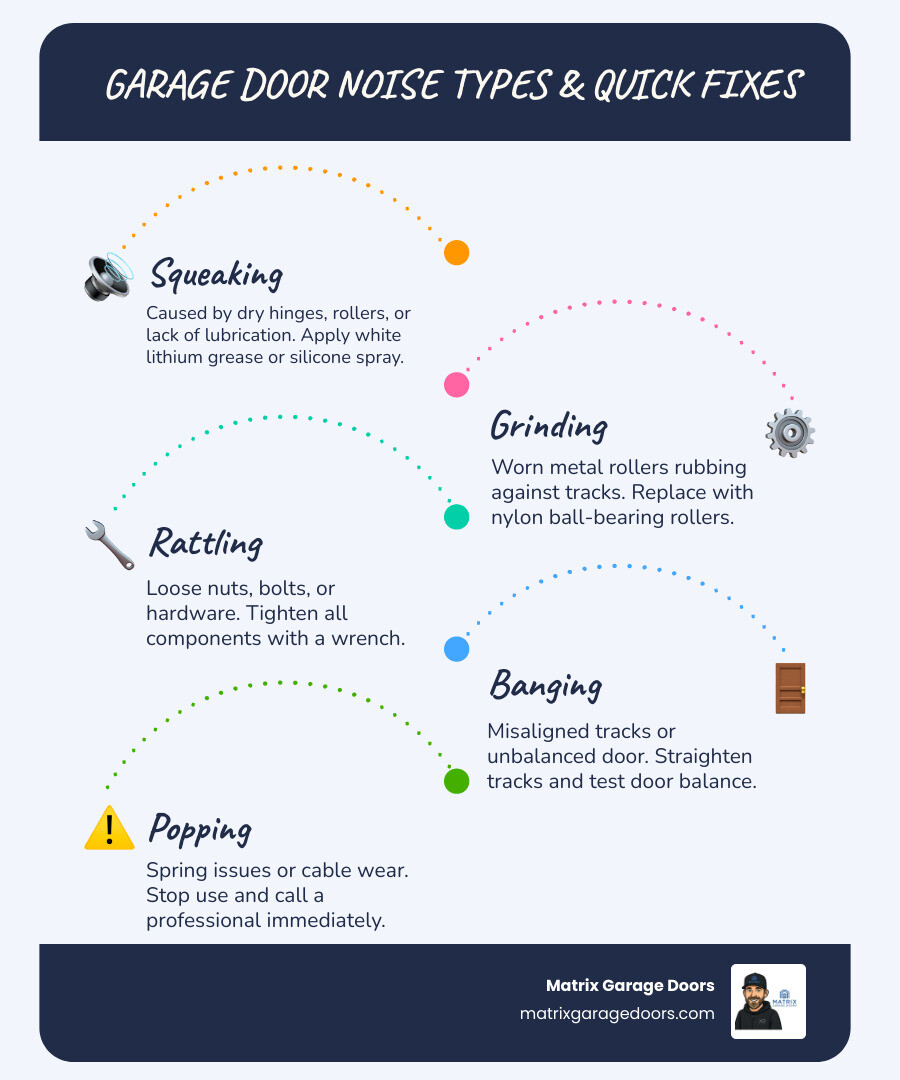
Before we grab the toolbox, we need to play “garage door whisperer.” Different sounds point to different mechanical failures. If your door is crying out for help, you need to know what its specific vocabulary means.
Common Causes of the Racket
Most noise issues stem from metal-on-metal contact, vibration, or parts that are simply past their prime. Here are the usual suspects:
- Loose Hardware: Over time, the constant vibration of the door opening and closing loosens the nuts and bolts. This leads to a rhythmic rattling or clicking.
- Worn Rollers: Standard steel rollers have a lifespan of about 5–7 years. When the bearings start to fail, they produce a harsh grinding or clattering sound.
- Track Misalignment: If the tracks aren’t perfectly parallel or have developed a slight bend, the rollers will “rub” against the metal, causing a high-pitched squeal or a rubbing sound.
- Lack of Lubrication: This is the #1 cause of noise. Dry springs, hinges, and rollers will screech like a chalkboard under pressure.
Decoding the Noise: A Diagnostic Table
To help you narrow down your noisy garage door fix, use this table to match the sound to the likely problem:
| Sound Type | Potential Cause | Urgency |
|---|---|---|
| Squeaking/Screeching | Lack of lubrication on hinges or rollers | Routine Maintenance |
| Rattling/Vibrating | Loose nuts, bolts, or mounting brackets | DIY Fix |
| Grinding | Worn-out rollers or misaligned tracks | Moderate |
| Banging/Clunking | Broken spring or loose opener chain | High – Call a Pro |
| Popping | Torsion spring friction or track obstruction | Moderate |
Step-by-Step Noisy Garage Door Fix: DIY Maintenance
Most homeowners in areas like Dublin, OH or Westerville can handle basic maintenance that solves roughly 80% of noise issues. Follow these steps to restore peace and quiet to your home.
1. Hardware Inspection and Tightening
Start by closing the garage door and disconnecting the power to the opener. Using a socket wrench or adjustable wrench, check every visible nut and bolt. Focus on the hinges that hold the door sections together and the brackets that attach the tracks to the wall and ceiling.
Pro Tip: Tighten them until they are “snug.” Do not over-tighten, as you can strip the screw holes or warp the metal tracks.
2. Cleaning the Tracks
Grinding sounds often come from debris trapped in the tracks. Use a damp cloth to wipe out the inside of the vertical and horizontal tracks. Avoid using lubricant inside the tracks; this actually attracts dust and grime, creating a sticky “sludge” that makes the motor work harder.
3. Component Lifespans
Understanding how long parts last helps you decide if you need a noisy garage door fix or a full replacement.
- Rollers: Up to 20 years (Nylon) vs 5-7 years (Steel).
- Hinges: 15–25 years.
- Tracks: 10–30 years.
- Torsion Springs: 10,000 to 20,000 cycles (about 7–10 years for most families).
How to Properly Lubricate Your Garage Door
Lubrication is the secret sauce of a quiet door. However, using the wrong product can actually damage your system.
- What to Use: High-quality silicone-based spray or white lithium grease. These stay slick in the cold Ohio winters and don’t attract as much dirt.
- What to Avoid: WD-40. While great for loosening a stuck bolt, WD-40 is a solvent, not a permanent lubricant. It will actually strip away existing grease and leave the metal vulnerable to rust.
- Where to Spray:
- Hinge Pivots: Spray the points where the hinge bends.
- Rollers: Lubricate the ball bearings inside the roller (but not the outside of the wheel if it’s nylon).
- Springs: Lightly coat the entire length of the torsion spring to reduce “friction “popping.”
- Bearing Plates: Located at either end of the spring bar.
Upgrading to Nylon Rollers for a Permanent Noisy Garage Door Fix
If you still have the original steel rollers that came with your door, replacing them with high-quality nylon rollers is the single best investment you can make for a quiet garage.
Why Nylon?
- Vibration Reduction: Nylon absorbs the vibrations that steel rollers transfer directly into the tracks (and your walls).
- Ball Bearings: Most nylon rollers come with sealed ball bearings, meaning they require zero lubrication and glide like silk.
- Noise Reduction: Homeowners typically see a 50–80% reduction in noise immediately after the switch.
DIY Roller Replacement Steps:
- Open the door and clamp it securely.
- One by one, unscrew the hinge or bracket holding the roller.
- Slide the old metal roller out, slide the new nylon one in.
- Reattach the bracket and move to the next. Note: Never attempt to remove the bottom roller bracket yourself; it is under extreme tension from the cables.
Advanced Solutions for a Whisper-Quiet System
Sometimes the door itself is fine, but the “heart” of the system — the garage door opener — is the culprit. If you live in a home with a bedroom above the garage in New Albany or Upper Arlington, these upgrades are life-changers.
Reducing Noise from the Garage Door Opener
Older openers often use a heavy metal chain, which acts like a bicycle chain. It clanks, slaps against the rail, and vibrates the ceiling joists.
- Belt Drive Openers: These replace the chain with a steel-reinforced rubber belt. They are widely considered “whisper-quiet” and are the gold standard for attached garages.
- DC Motors: Modern openers often use DC motors, which allow for “soft start” and “soft stop” technology. Instead of the door jerking into motion with a loud bang, it gradually accelerates and decelerates.
- Vibration Damping: If your opener is bolted directly to the ceiling joists, every sound is amplified through the house. Installing a vibration isolator kit (rubber bushings that sit between the opener and the mounting brackets) can cut noise transfer by half.
The Role of Insulation in a Noisy Garage Door Fix
Did you know that an uninsulated steel door acts like a giant drum? Every vibration is echoed and amplified by the hollow panels.
- Damping the “Drum Effect”: Adding polystyrene or polyurethane insulation panels adds mass to the door. This extra weight (which may require a spring adjustment by a pro) dampens the metal’s ability to vibrate.
- Soundproofing: Insulation doesn’t just keep your garage warm in the winter; it creates a sound barrier that keeps the mechanical noise inside the garage rather than letting it bleed into the street or your living room. Check out our garage door opener installation services if you’re ready to upgrade to a modern, silent system.
When to Put Down the Wrench and Call a Professional
While we love a good DIY project, garage doors are dangerous. They are heavy, under massive spring tension, and can cause serious injury if handled incorrectly.
The Danger Zone: Springs and Cables
Do not attempt to repair or adjust garage door springs yourself. Torsion springs (located above the door) and extension springs (along the tracks) are under enough tension to break bones or worse. If you hear a loud “bang” like a gunshot, your spring has likely snapped.
The Door Balance Test
A noisy door is often an unbalanced door. To check this:
- Pull the emergency release cord (the red handle) to operate the door manually.
- Lift the door halfway and let go.
- The Result: If it stays in place, it’s balanced. If it slams shut or shoots upward, the spring tension is wrong. This requires a professional garage door service to fix safely.
Professional Labor Costs: Typically, expert labor ranges from $75 to $150 per hour. Given that a professional can often complete a full “tune-up” in an hour, it’s a small price to pay for safety and peace of mind.
Frequently Asked Questions about Garage Door Noise
What is the best lubricant for a noisy garage door fix?
We always recommend a dedicated silicone-based spray or white lithium grease. These are designed to withstand the temperature fluctuations we see here in Columbus. Avoid heavy axle grease, as it becomes thick and “gummy” in the winter, actually causing the door to stick.
How often should I perform garage door maintenance?
We suggest a semi-annual schedule (every six months). A great way to remember is to do it when you change your clocks for Daylight Savings. At a minimum, perform a quarterly visual inspection to check for loose bolts or frayed cables.
Is a noisy garage door dangerous?
It certainly can be. While a squeak might just mean you need some spray, a grinding or banging sound often indicates that a part is about to fail. If a roller pops out of the track or a cable snaps while the door is moving, it can cause the door to fall or become wedged, creating a major safety hazard for your family and vehicles.
Conclusion
A noisy garage door fix doesn’t have to be a daunting task. By following a regular maintenance schedule of tightening, cleaning, and lubricating, you can extend the life of your door to 30 years or more. Whether you’re in Hilliard, Grove City, or Gahanna, taking care of these small issues today prevents the “emergency” calls of tomorrow.
At Matrix Garage Doors, we’ve been the trusted name in Columbus, OH for over two decades. As a family-owned company, we take pride in offering 24/7 emergency service and professional maintenance that keeps your home safe and quiet.
Don’t let a noisy door disrupt your peace. Schedule your professional garage door service today and let our expert technicians give your system the “whisper-quiet” tune-up it deserves!