Steel Garage Door Installation: Top 5 Benefits
Why Steel Garage Door Installation Is a Smart Choice for Your Home
Steel garage door installation is a popular home improvement project that combines durability, energy efficiency, and curb appeal. Here’s what you need to know:
Quick Answer: Steel Garage Door Installation Steps
- Prepare the opening – Ensure jambs are plumb and the header is level
- Assemble and stack door panels – Start with the bottom section and work up
- Install vertical and horizontal tracks – Secure tracks while ensuring proper alignment
- Mount the torsion spring system – Follow manufacturer instructions carefully (this step requires extreme caution)
- Test and adjust – Check door balance and make final adjustments
- Time: 8-12 hours for DIY installation
- Weight: Doors typically weigh 200-500 pounds, requiring at least one helper
Steel insulated garage doors are a popular choice for homeowners seeking a balance of strength and energy efficiency. Whether replacing a weathered door or upgrading for better insulation, steel doors offer an excellent return on investment—garage door replacement ranks among the top home improvements for ROI. The installation process requires careful attention to safety, especially when handling heavy panels and high-tension springs.
I’m Andrew Hopson of Matrix Garage Doors. With years of experience helping Columbus-area homeowners, I’ve created this guide to walk you through the steel garage door installation process, from preparation to final adjustments, helping you decide between a DIY approach and professional service.
Key steel garage door installation vocabulary:
Project Overview: Is a Steel Garage Door Right for You?
Choosing a new garage door is about functionality, security, and long-term value. For many homeowners in areas like Columbus, OH, a steel insulated garage door is an excellent investment. Let’s explore why.
Benefits of Steel Insulated Garage Doors
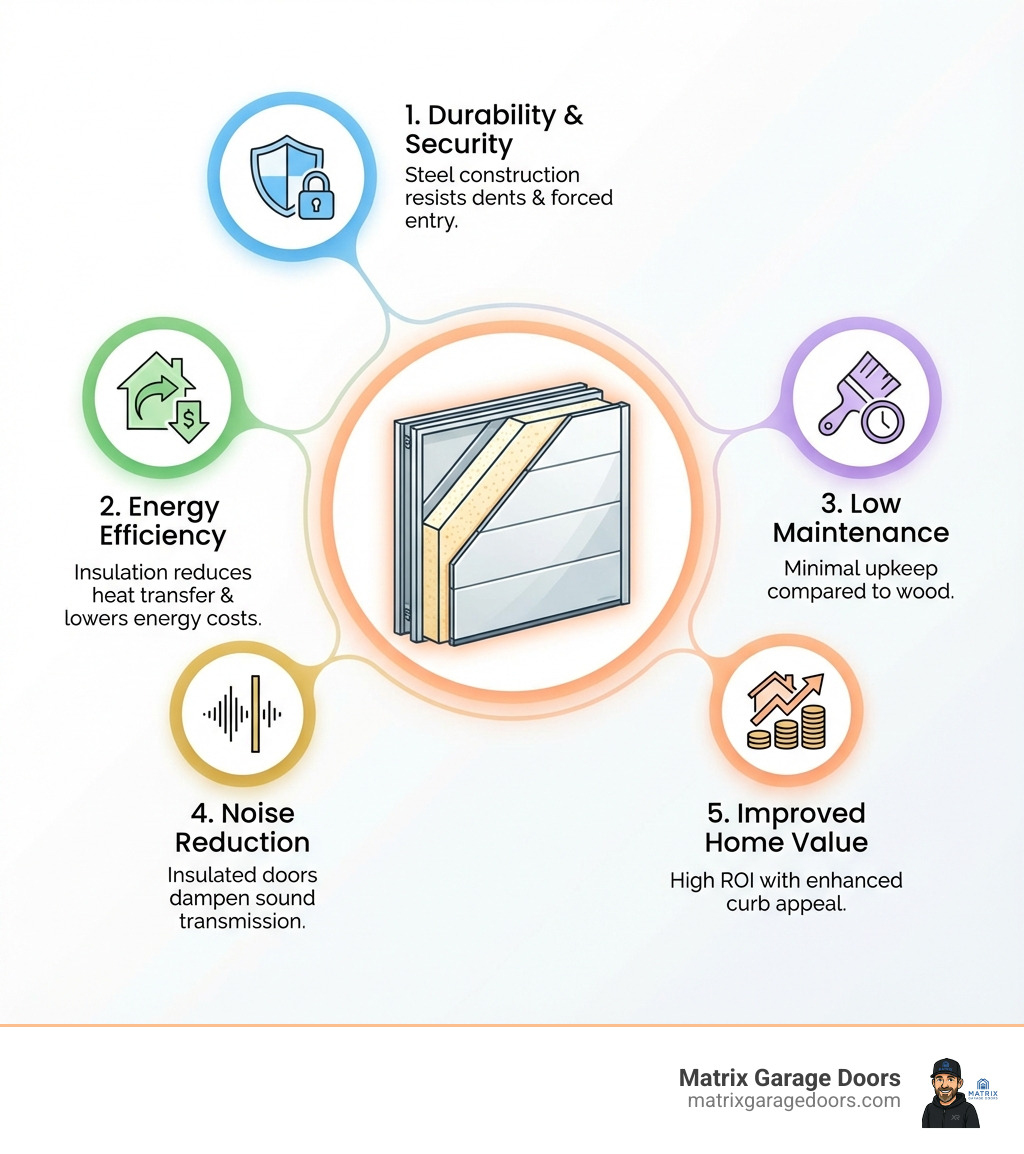
Steel insulated garage doors offer a compelling blend of advantages:
- Durability and Security: Steel is inherently strong, providing robust protection against impacts, dents, and forced entry—a major security plus.
- Energy Efficiency: An insulated steel door improves temperature control in your garage. This is especially beneficial for attached garages, as it reduces heat transfer, potentially lowering energy bills and increasing comfort if you use the space as a workshop or gym.
- Noise Reduction: The insulation within steel doors also helps dampen sound, meaning less outside noise getting in and less garage noise getting out.
- Return on Investment (ROI): Garage door replacement consistently ranks as a top home improvement project for ROI. According to the Cost vs. Value Report from Remodeling Magazine, the return can exceed 100%. Since the door can be 30% of your home’s facade, a new one significantly boosts curb appeal and property value.
Types of Insulation Used in Steel Garage Doors
When we talk about insulation in steel garage doors, we’re typically referring to two main types:
- Polyurethane Foam: Injected between steel layers, polyurethane foam fills the entire cavity. It creates a dense core with superior thermal resistance (higher R-value), improving strength and energy efficiency. It’s the premium option for durability.
- Polystyrene Panels: These are pre-cut foam boards fitted into the door’s steel frame. While they provide good insulation and are more affordable, they generally offer a lower R-value than polyurethane. They’re a great budget-friendly choice.
Estimated Time and Cost for Steel Garage Door Installation
A DIY steel garage door installation is a substantial project. A single-car door might take a dedicated homeowner 8 to 12 hours, assuming they have all the necessary tools and a competent helper. Professional installation is often completed much faster, typically within a single day.
The estimated cost for a steel garage door installation can vary widely based on door size, insulation type (R-value), style, hardware, and whether you need a new automatic opener.
For a personalized estimate and to explore options for your home in Columbus, OH, and surrounding areas, you can find More info about new garage door installation services on our website.
Tools and Materials Required
Having the right tools and materials laid out beforehand makes the steel garage door installation process smoother and safer.
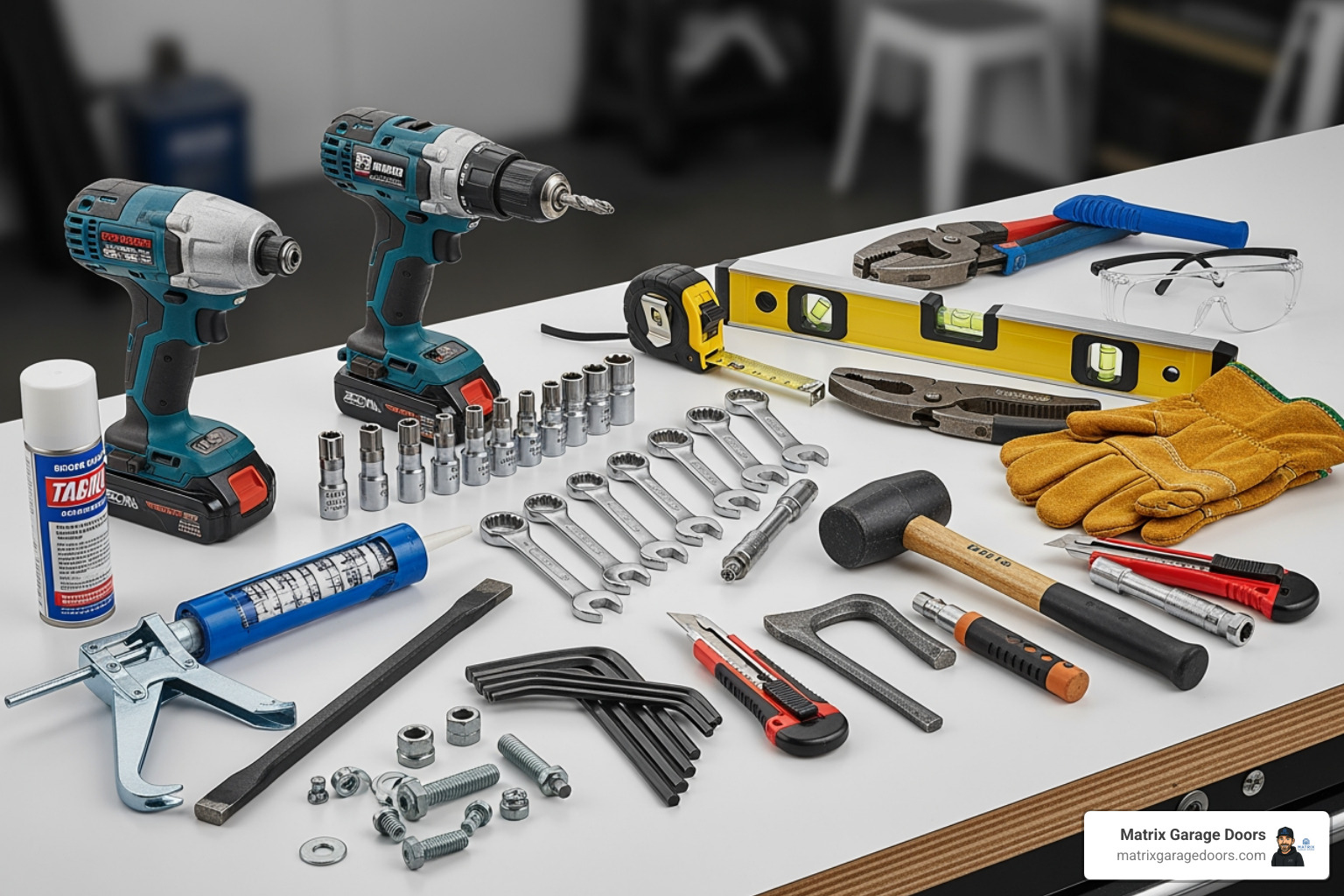
Essential Tools:
- Drill with various bits
- Level
- Wrenches & Screwdrivers
- Measuring Tape
- Sturdy Ladder
- Safety Glasses & Work Gloves
- C-Clamps or Locking Pliers
- Socket Set
- Impact Driver (Optional)
- Sledgehammer & Pry Bar (for old door removal)
- Winding Bars (Absolutely critical for torsion springs)
Required Materials (Typically included with your new door kit, but verify):
- Door Panels
- Tracks (vertical, horizontal, curved)
- Rollers & Hinges
- Torsion Springs & Lift Cables
- Fasteners (lag screws, bolts, nuts)
- Weatherstripping/Seals
- Angle Iron (for reinforcement)
- Wood Bucks/Shims
Key Safety Precautions for Steel Garage Door Installation
Safety is a requirement when undertaking a steel garage door installation. This is a heavy-duty project with significant risks if not approached with extreme caution.
- Working with a Partner: This is non-negotiable. Steel doors are heavy (200-500+ pounds), and lifting panels alone is dangerous. A helper is essential for positioning and securing sections.
- Torsion Spring Danger: This is the most critical safety concern. Torsion springs are under immense tension. If mishandled, they can cause serious injury or death. Never attempt to adjust these springs without proper training and specialized tools (solid steel winding bars). If you’re unsure, call a professional.
- Securing the Door: When working on tracks or springs, always use C-clamps or locking pliers to secure the door in place to prevent it from accidentally falling.
- Personal Protective Equipment (PPE): Always wear safety glasses and work gloves.
- Electrical Safety: If installing or removing an opener, disconnect power at the circuit breaker first.
- Pinch Points: Be aware of pinch points between door sections and along the tracks. Keep fingers clear, especially when the door is moving.
Improper installation voids warranties and creates a dangerous situation. Prioritizing safety ensures a successful and injury-free steel garage door installation.
The Step-by-Step Steel Garage Door Installation Process
Installing a steel garage door is a meticulous process, but breaking it down into manageable steps makes it achievable. Always follow the manufacturer’s instructions precisely. For specific models, you can refer to detailed manufacturer guides. Installation Guides – Matrix Garage Doors
Before You Begin: Removing the Old Door and Preparing the Opening
- Remove the Old Door (if applicable): This takes 1-3 hours. It involves disconnecting the opener, safely releasing spring tension (a task for professionals if you’re inexperienced), and disassembling the old door and tracks.
- Prepare the Opening: This is a crucial step for a proper fit.
- Measure Accurately: Measure the width and height of your rough opening.
- Check Clearance: Ensure you have adequate sideroom (typically 3-3/4″+), headroom (10″+), and backroom (door height plus 18″).
- Jambs and Header: Your door jambs must be plumb (vertical) and the header level. Shim any uneven areas to create a square opening. For masonry, you may need to install a wood casing (2×4 or 2×6) for a secure mounting surface.
- Weatherstripping: Temporarily nail new stop molding to the wood jambs for the weatherstripping later.
Step 1: Assemble and Position the Bottom Panel
This is where your new door starts to take shape.
- Prepare the Bottom Panel: Attach the bottom brackets, rollers, and weather seal to the bottom door section.
- Position the First Section: With a helper, lift the bottom panel and center it in the opening. It should be snug against the floor and level. Use C-clamps to temporarily secure it to the door jambs.
Step 2: Stack the Panels and Install Vertical Tracks
Now we start building upwards.
- Connect Panels: Stack the next panel, connect the sections with hinges, and attach the rollers. Repeat for all remaining panels.
- Install Vertical Tracks: Attach the vertical track sections to the brackets on the door jambs, inserting the rollers into the tracks. Loosely secure the tracks with lag screws, allowing for later adjustments. Ensure the tracks are plumb and have a consistent gap from the door sections, using shims if needed.
Step 3: Install Horizontal Tracks and Reinforce the Door
The tracks guide your door’s smooth journey up and down.
- Assemble Curved and Horizontal Tracks: Connect the curved track sections to the top of the vertical tracks, then attach the horizontal track sections.
- Attach Back Hangs: Secure the horizontal tracks to the ceiling using angle iron supports, ensuring they are fastened to ceiling trusses or joists. The horizontal tracks should be level (or have a slight upward slope to the rear) and parallel.
- Reinforce the Door: Depending on the door size or if you’re adding an opener, you may need to install reinforcement struts across the door sections. This is critical for preventing bowing, especially on the top section where an opener attaches, and failure to do so can void your warranty.
Step 4: Install the Torsion Spring System
This step is critical and requires extreme caution.
- Mount the Spring Anchor Bracket: Securely fasten the spring anchor bracket to a structural wood member above the header.
- Assemble the Torsion Tube, Drums, and Springs: Slide the springs, cable drums, and center bearing onto the torsion tube and position the assembly in the anchor bracket.
- Attach Lift Cables: Connect the lift cables from the door’s bottom brackets to the cable drums, ensuring they are taut and properly wound.
- Winding the Springs (Extreme Caution Required): This is the most dangerous step. Using solid steel winding bars, wind the springs to the exact number of turns specified by the manufacturer. This process stores immense energy. Improper winding can lead to catastrophic failure and severe injury. Professional help is strongly recommended for this step.
Once the springs are wound, make final adjustments to ensure the door is balanced and the tracks are aligned. Then, install your automatic garage door opener, if applicable. Remember to remove any pull ropes from the door once the opener is installed.
Post-Installation: Maintenance and Troubleshooting
Your steel garage door installation is complete, but proper maintenance is key to ensuring it operates safely and lasts for years.
Initial Checks:
- Test Door Balance: Disconnect the automatic opener. The door should stay in place when lifted halfway. If it sags or flies up, the springs need professional adjustment.
- Check Auto-Reverse Mechanism: Test your opener’s auto-reverse feature monthly by placing an object in the door’s path. The door should reverse on contact. Also, ensure photoelectric eyes are aligned and functioning.
For more detailed information on maintaining your garage door, you can visit our Resources – Brochures and maintenance | Matrix Garage Doors page. We also have More info about our resources available for our Columbus, OH clients.
Routine Maintenance for Your Steel Garage Door
Your garage door needs a little TLC to keep it running smoothly.
- Annual Lubrication: Annually, lubricate moving metal parts (hinges, rollers, springs) with a silicone-based lubricant. Do not use grease and avoid lubricating the tracks.
- Inspecting Cables and Rollers: Every few months, visually inspect lift cables for fraying and check rollers for damage or wear.
- Tightening Hardware: Vibrations can loosen hardware over time. Periodically check and tighten all nuts and bolts.
- Cleaning Door Panels: Wash the door panels with a mild detergent and water a couple of times a year to preserve the finish. For painting, always use a high-quality 100% acrylic latex exterior grade paint.
Common Issues and How to Address Them
Even with proper installation, issues can arise. Here’s how to address them:
- Noisy Operation: This is often resolved by lubricating the rollers and hinges. If noise persists, it could indicate worn rollers or a misaligned track.
- Door Not Closing Properly: First, check the photoelectric safety sensors for misalignment or obstruction. If the sensors are fine, the issue might be the opener’s travel limits or a track obstruction.
- Minor Dents: Small dents can sometimes be carefully worked out, but larger ones might require panel replacement.
- Addressing Rust Spots: To prevent spreading, clean small rust spots, sand lightly, and apply a rust-inhibiting primer before touching up with exterior-grade paint.
For any complex issues, especially involving springs or opener mechanisms, it’s always best to call a professional.
DIY vs. Professional Installation: Making the Right Choice
Deciding whether to DIY a steel garage door installation or hire professionals is a significant decision. It’s crucial to weigh the pros and cons carefully.
| Factor | DIY Installation | Professional Installation |
|---|---|---|
| Cost | Lower upfront cost (materials only) | Higher upfront cost (labor + materials) |
| Time | 8-12 hours for a single door, potentially longer for double/complex setups | Typically 4-8 hours for a complete installation |
| Safety | High risk of injury, especially with heavy panels and high-tension springs | Minimized risk due to experienced technicians and specialized tools |
| Tools | Requires a comprehensive set of tools, some specialized (e.g., winding bars) | Technicians arrive with all necessary tools and equipment |
| Warranty | Improper installation can void manufacturer’s warranty | Often includes an installation warranty (e.g., 1-year installation warranty from authorized dealers) |
| Expertise | Requires mechanical aptitude, detailed understanding of instructions, and problem-solving skills | Years of experience, training, and knowledge of various door systems |
| Convenience | Requires significant personal time and effort | Hassle-free, quick, and efficient |
Complexity of Spring Systems: As noted, torsion springs are under extreme tension and dangerous to handle without proper training and tools. This is a primary reason to hire a professional.
Door Weight: Steel doors weigh 200-500+ pounds. Safely lifting and maneuvering these panels requires at least one helper and proper technique.
Warranty Considerations: Improper DIY installation can void the manufacturer’s warranty. A professional installation ensures the job is done to spec and is often backed by an additional labor warranty, protecting your investment.
For more details on our services, including professional steel garage door installation, visit More info about garage door installation services.
When to Call a Professional
While DIY is possible for the experienced, calling an expert is the smarter, safer choice in many cases. We strongly recommend professional installation if:
- You lack experience with complex mechanical tasks.
- The installation involves torsion springs and you lack specialized training.
- You have an oversized, heavy, or custom door.
- You don’t have 8-12+ hours and a helper available.
- You want to ensure safety and protect your warranty.
- You’re in our Service Area: If you’re in Bexley, Blacklick, Columbus, Dublin, Etna, Grandview Heights, Grove City, Groveport, Hilliard, New Albany, Pickerington, Powell, Reynoldsburg, Upper Arlington, Westerville, Worthington, or Galena, we’re here to help! Visit More info about our service locations to see our full service area.
Frequently Asked Questions about Steel Garage Doors
We often get questions from homeowners in the Columbus area about steel garage door installation and maintenance. Here are some of the most common ones we hear. For more questions and answers, check out More info about our FAQs.
How long does a steel garage door installation take?
A DIY installation typically takes 8 to 12 hours. Professional installation is often faster, completed within a single day. The exact time depends on the door size, complexity, and whether an old door needs removal. For instance, removing an old door alone can add 1-3 hours to the project. Double doors, or those with custom features, naturally take longer than standard single doors.
What is the R-value and why does it matter for a steel garage door?
R-value measures thermal resistance. A higher R-value means better insulation, and this is especially important for our climate in Ohio. For steel doors, injected polyurethane foam provides a higher R-value (typically R-12 to R-18+) compared to polystyrene panels (R-6 to R-9). This difference significantly impacts energy efficiency and temperature control in your garage. If your garage is attached to your home or used as a living space, a higher R-value can lead to lower energy bills and greater comfort.
Can I reuse my old garage door tracks or springs?
No. We strongly advise against reusing old components. New garage doors are a complete system, and the new hardware, tracks, and springs are specifically engineered for the weight and configuration of your new steel door. Reusing old parts can cause safety hazards, poor performance, and will absolutely void the manufacturer’s warranty. The slight cost savings are simply not worth the risk or the potential for expensive repairs down the line. Always use the new hardware supplied with your door.
Get Your Steel Garage Door Installed with Confidence
A steel garage door installation is a fantastic investment, offering durability, energy savings, and improved curb appeal. While a DIY installation is possible, the weight of the panels and the extreme danger of torsion springs make professional installation the safest path for most homeowners.
At Matrix Garage Doors, we pride ourselves on providing prompt, professional service for all garage door types across Columbus, OH, and surrounding communities. As a family-owned company with two decades of experience, we guarantee customer satisfaction with every installation. Whether you’re ready to tackle the project yourself or prefer the peace of mind that comes with expert installation, we’re here to support you.
Don’t let an old, inefficient garage door detract from your home’s value and comfort any longer. Contact us for professional garage door services today, and let’s get your new steel garage door installed with confidence!