Garage Door Off Track: Master Fix 2025
When Your Garage Door Goes Sideways: Understanding the Off-Track Problem
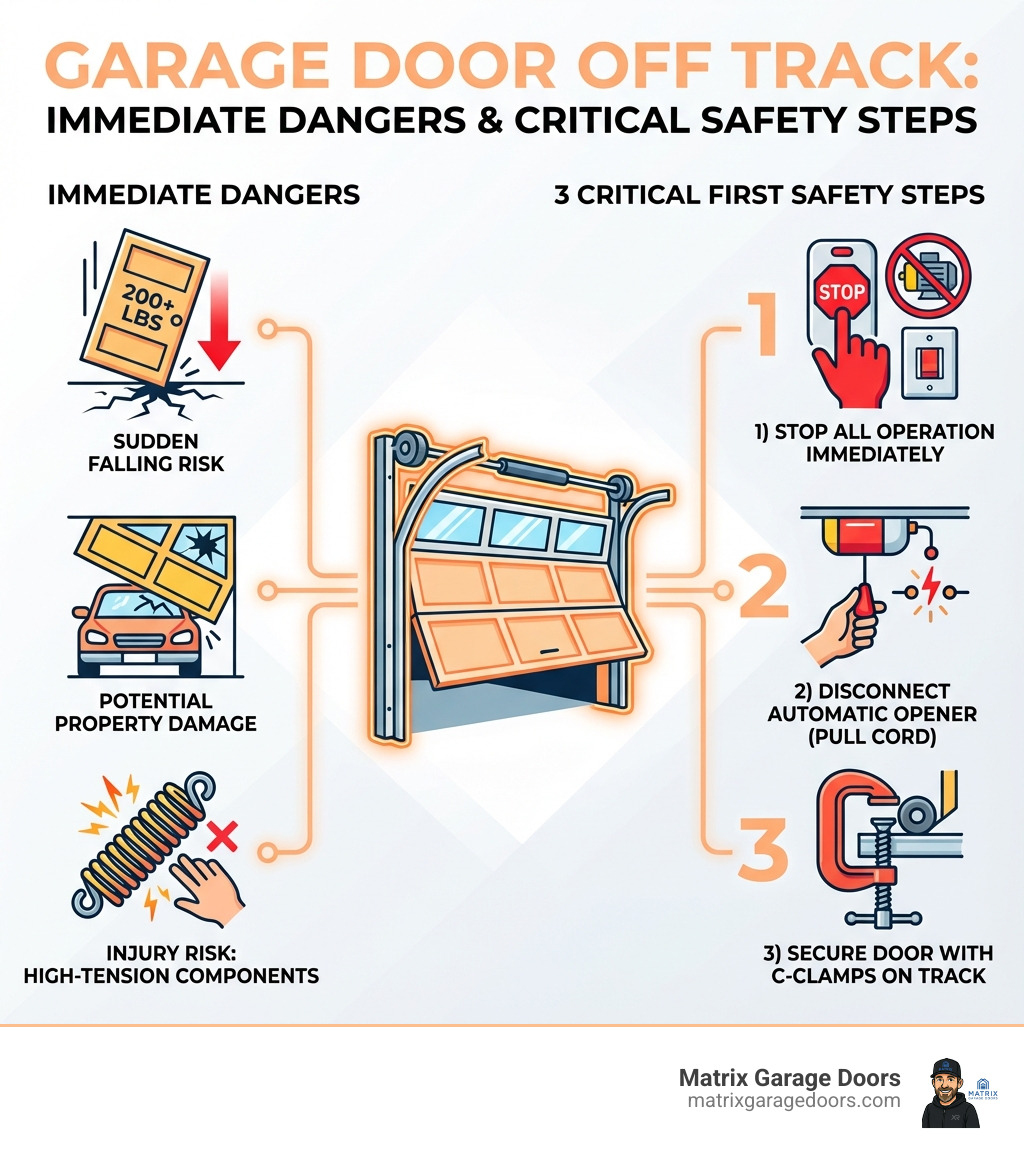
A garage door off track is more than just an inconvenience—it’s a legitimate safety hazard that demands immediate attention. When your door jumps its rails, you’re looking at a system that can weigh over 200 pounds hanging in an unstable position, putting your family, vehicles, and property at serious risk.
Quick Answer: What to Do If Your Garage Door Is Off Track
- Stop using the door immediately – Don’t press the button or try to force it closed
- Disconnect the opener – Pull the red emergency release cord to prevent automatic operation
- Secure the door – Use C-clamps or locking pliers on the track below the lowest roller to prevent sudden movement
- Assess the damage – Look for bent tracks, broken rollers, or visible cable issues
- Call a professional – If tracks are severely bent, cables are broken, or springs are damaged
An off-track garage door happens when the rollers that guide your door along its metal tracks become dislodged. This can occur from a variety of causes: someone accidentally bumping the door with a car, debris blocking the track, worn-out rollers finally giving up, or even broken cables that can no longer keep the door balanced. Whatever the reason, the result is the same—your garage door stops working properly and becomes dangerous to operate.
The good news? Some minor off-track issues can be fixed with basic tools and careful attention to safety. The research shows that homeowners successfully tackle these repairs when they understand the risks and follow proper procedures. However, it’s equally important to know when a problem is beyond DIY—working with high-tension springs and cables, or attempting to fix severely damaged tracks, can lead to serious injury.
This guide will walk you through everything you need to know: what causes doors to go off track, how to spot the warning signs, the safety precautions you must take before attempting any repair, and step-by-step instructions for realigning a door when it’s safe to do so. We’ll also help you understand when it’s time to set down the tools and call in the experts.
I’m Andrew Hopson, and I’ve spent years helping Columbus homeowners diagnose and repair garage door off track issues through Matrix Garage Doors. I’ve seen how quickly a minor alignment problem can escalate into a major safety hazard—and how proper maintenance can prevent these issues entirely.
Why Your Garage Door Is Off Track and How to Spot It
When your garage door decides to take an unplanned detour, it’s usually not without reason. Understanding the root causes and recognizing the telltale signs can help us diagnose the problem accurately and decide on the best course of action. We’ve seen it all across Columbus, from Bexley to Westerville, and these are the most common culprits.
Common Reasons a Garage Door Comes Off Track
Garage doors operate on a delicate balance of components, and when one piece is out of sync, the whole system can falter. Here’s what usually sends your garage door’s rollers packing:
- Accidental Impact: This is probably the most common (and often most frustrating) reason. A car backing out a little too quickly, a child’s bike bumping into the door, or even a misplaced object hitting the track can cause enough force to dislodge rollers or bend the track. Even a minor bump can cause a roller to pop out, leading to a skewed door.
- Obstructed Tracks: Sometimes, the simplest things cause the biggest headaches. Dirt, dust, debris, or even small pebbles accumulating in the tracks can create a blockage. When a roller hits this obstruction, it can jump right out of its designated path. Imagine a tiny speed bump for your garage door rollers – they’re not designed for that!
- Worn or Broken Rollers: Like any hardworking component, garage door rollers have a lifespan. Over time, especially with repeated use, they can wear out, become loose, or even break. Old, worn-out rollers are less stable and more prone to slipping out of the tracks, especially if they haven’t been lubricated regularly.
- Misaligned Tracks: The metal tracks that guide your garage door need to be perfectly parallel and vertical. If the mounting bolts come loose, or if the tracks themselves get bent (perhaps from extreme weather or a minor impact), they can become misaligned. This creates an uneven path for the rollers, making it easy for them to derail. Horizontal tracks, for example, should be slightly angled towards the back of the garage for proper alignment.
- Broken Lift Cables: Garage doors are designed to carry an immense weight—up to two tons! Lift cables, connected to the springs, bear most of this load and ensure the door opens and closes evenly. If a cable frays, snaps, or comes loose from its drum, one side of the door loses its support. This causes the door to hang unevenly, often pulling the rollers right off the track on the unsupported side.
- Snapped Torsion Springs: The torsion springs are the unsung heroes of your garage door system, providing the counterbalancing force that makes opening a heavy door feel light. Most springs have a lifecycle of 7-10 years or 10,000 cycles. When one of these springs breaks (often with a loud, startling “bang!”), the door loses its balance and support. This sudden loss of tension can cause the door to drop, become lopsided, or send rollers flying off the tracks.
Telltale Signs of an Off-Track Garage Door
Before you even get close enough to inspect the tracks, your garage door might be giving you some clear signals that it’s in trouble. Learning to recognize these signs can help you address the problem before it escalates.
- Crooked or Uneven Door: This is often the most obvious sign. If your garage door looks like it’s leaning, hanging lower on one side, or is noticeably skewed when partially open or closed, it’s a strong indicator that one or more rollers have left their track. It’s like watching a tightrope walker lose their balance!
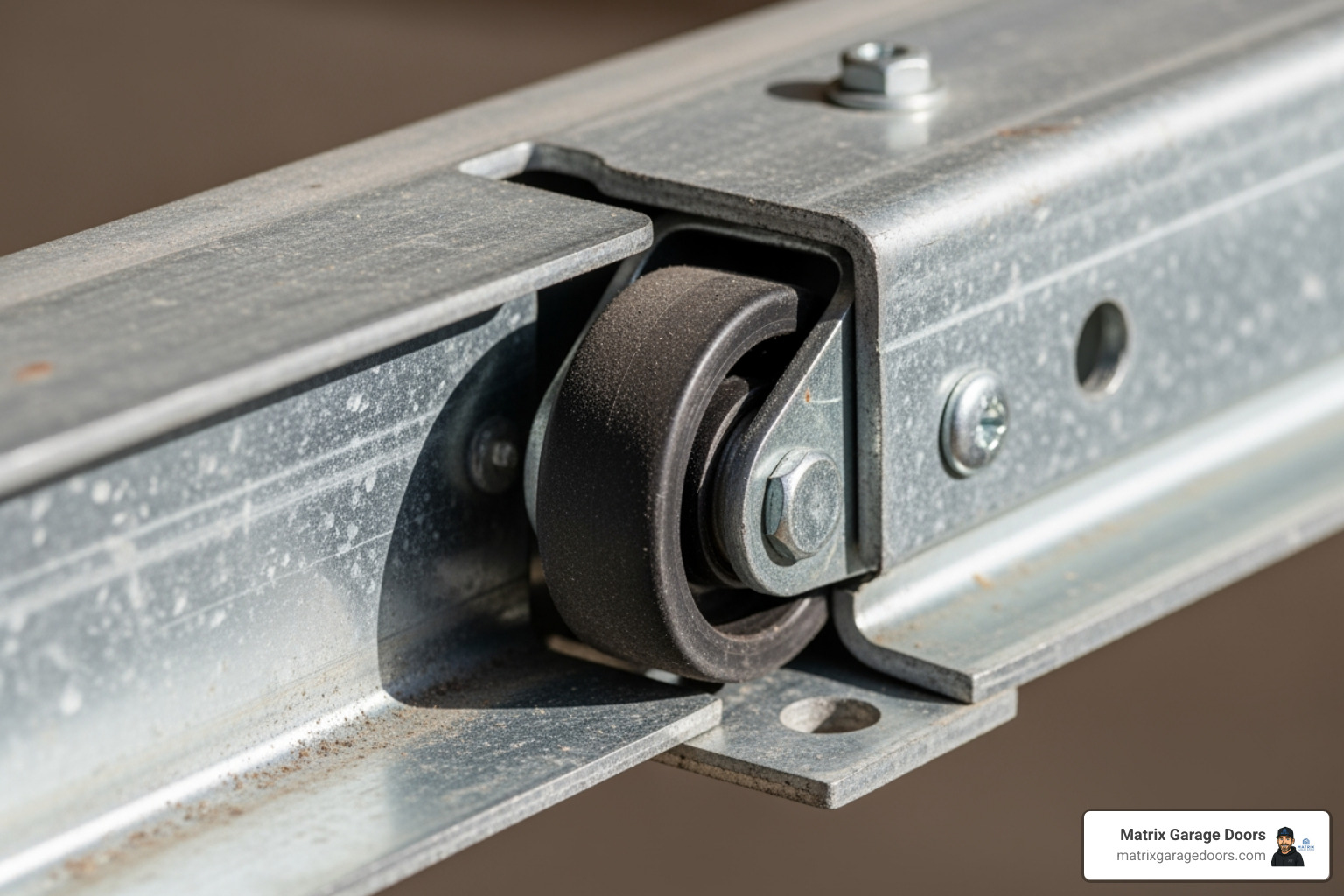
- Visible Gaps: Take a close look at the space between the rollers and the track. If you can see a noticeable gap where the roller should be snugly seated, or if a roller is completely outside the track, you’ve found your problem.
- Grinding or Popping Noises: A healthy garage door operates relatively smoothly. If you start hearing loud grinding, scraping, clunking, or popping noises when the door moves (or attempts to move), it means metal is rubbing against metal, or components are under strain. This is often the sound of a struggling roller or a misaligned track.
- Door Stops Moving: If your garage door stops abruptly midway through its operation, or struggles to open or close completely, a garage door off track issue could be the cause. The system detects an obstruction or misalignment and halts to prevent further damage.
- Jerky Operation: Instead of a smooth, consistent motion, an off-track door might move erratically, shaking, vibrating, or experiencing sudden jolts. This inconsistent movement indicates that the rollers aren’t gliding freely along their intended path.
Safety First: Pre-Repair Checklist for an Off-Track Garage Door
Before we even think about touching a wrench, we need to talk about safety. A garage door off track isn’t just inconvenient; it’s a heavyweight champion of potential hazards. Ignoring safety precautions can lead to serious injury or further damage. We’ve handled countless emergency repairs in areas like Dublin, Hilliard, and Powell, and we can’t stress this enough: safety first!
The Potential Dangers of an Off-Track Door
It’s not just a bent piece of metal; it’s a heavy, unstable object. According to data from the American Housing Survey, over 63% of homes in America had garages in 2017, and a typical garage door can weigh over 200 pounds. Some can even weigh up to two tons! When it’s off track, this immense weight can become incredibly dangerous.
- Falling Door Risk: The most immediate and terrifying danger is the door suddenly falling. Without the rollers guiding it and the cables balancing its weight, a heavy garage door can crash down, causing devastating injury or even death to anyone underneath. This is not a situation to take lightly.
- Property Damage: A falling or malfunctioning garage door can severely damage your vehicle, personal belongings stored in the garage, or even the structural integrity of your home. The repair costs for this kind of damage can far outweigh the cost of a professional repair.
- Serious Injury: Beyond the risk of a falling door, fingers can get pinched, limbs can be crushed, or you could be struck by flying debris if you try to force a malfunctioning door. The high-tension springs and cables, designed to handle hundreds of pounds of force, are especially dangerous if they snap or are mishandled.
- High-Tension Springs and Cables: These components are under extreme pressure. If you attempt to work on them without proper training and tools, they can release their energy violently, causing severe injury. Always remember that repairs involving these parts are best left to professionals.
Essential Safety Precautions
Before you even think about attempting a DIY fix, we urge you to follow these critical safety steps. These precautions are non-negotiable for your well-being and to prevent further damage to your garage door system.
- Disconnect the Opener: This is paramount. We need to ensure the door cannot accidentally activate while you’re working on it. Unplug the garage door opener from its power source. If you can’t reach the outlet, turn off the circuit breaker that controls the garage door opener. Don’t just rely on the remote or wall button; pull the emergency release cord (the red rope) to disengage the door from the motor.
- Secure the Door: If the door is partially open or appears unstable, you must secure it to prevent it from falling or shifting unexpectedly. Use sturdy objects like C-clamps or locking pliers directly on the track, just below a roller. You can also use wooden blocks to prop it up. Ensure the door is stable and cannot move before proceeding.
- Wear Safety Gear: Protect yourself! Put on heavy-duty work gloves to prevent cuts and scrapes from sharp metal edges. Safety glasses are also a must to shield your eyes from any debris or unexpected movements.
- Never Force the Door: If the door is stuck, tilted, or resisting movement, do NOT try to force it. Forcing an off-track door can bend tracks further, burn out your opener motor, snap a cable, or cause the door to collapse. This will only worsen the problem and potentially create a much more expensive and dangerous repair.
The DIY Fix: A Step-by-Step Guide to Realigning Your Garage Door
For those minor garage door off track issues—perhaps a roller simply popped out after a gentle bump, or a bit of debris caused a slight misalignment—a confident homeowner with the right tools can often realign the door safely. This guide provides the necessary steps for a safe DIY repair, but remember to always prioritize safety and know your limits.
Tools and Materials You’ll Need
Before we begin, gather your toolkit. Having everything at hand will make the process smoother and safer.
- Locking Pliers (Vice Grips): Essential for securing the door and for adjusting tracks.
- Rubber Mallet (or Hammer with Wood Block): For gently reshaping bent tracks.
- Wrench or Socket Set: To tighten loose bolts on tracks.
- Level: To check track alignment.
- Ladder: For reaching higher sections of the track and rollers safely.
- Safety Glasses: To protect your eyes from debris or metal fragments.
- Work Gloves: To protect your hands from sharp edges and grease.
- Garage Door Lubricant: A silicone-based or lithium-based spray is ideal for rollers and tracks.
Step-by-Step Instructions for Fixing a Garage Door Off Track
Once you’ve completed the safety checklist and gathered your tools, we can proceed with carefully bringing your garage door back to its senses.
- Disconnect Power & Secure the Door: We cannot stress this enough. Ensure the garage door opener is unplugged and the emergency release cord has been pulled. If the door is partially open, use your locking pliers or C-clamps to secure it firmly to the track, preventing any unexpected movement. This is your foundation for safety.
- Clean the Tracks: Take a moment to inspect the tracks for any accumulated dirt, dust, grease, or small debris. Use a damp cloth to wipe them clean. Sometimes, a simple obstruction is all it takes to derail a roller.
- Open Track with Pliers: Locate the roller that has jumped the track. Using your regular pliers, gently pry open the edges of the track just enough to create a small gap where the roller can be reinserted. Be careful not to bend the track too much, as this can cause more problems.
- Guide Roller Back into Track: With the track slightly open, carefully guide the roller back into its proper position inside the track. This might require a bit of finesse.
- Reshape Track with Mallet: Once the roller is back in, use your pliers to gently close the gap you created. If the track itself has any minor bends or dents that contributed to the problem, use your rubber mallet (or a hammer with a wood block to protect the metal) to gently tap the track back into its correct shape. The goal is to make it smooth and straight again.
- Check Track Alignment with Level: With the roller back in place and the track looking good, grab your level. Place it against the vertical and horizontal sections of the track to ensure they are perfectly straight and parallel. If you notice any misalignment, you might need to slightly loosen the mounting bolts that secure the track to the wall, adjust the track back into position, and then re-tighten the bolts.
- Tighten Bolts: Go along all the track mounting bolts and ensure they are snug. Loose hardware is a common culprit for track misalignment.
- Lubricate Parts: Now that everything is in place, it’s time for some TLC. Apply a garage door-specific lubricant to all the rollers, hinges, and the tracks themselves. This will ensure smooth operation and help prevent future derailments.
- Test Manually: Before reconnecting the opener, manually raise and lower the garage door several times. Listen for any grinding, sticking, or uneven movement. The door should glide smoothly and feel balanced. If it still feels off, repeat steps 3-8.
- Reconnect Opener: Once you’re satisfied with the manual operation, reconnect the garage door opener by plugging it back in.
- Test Automatically: Use your wall button or remote to test the automatic operation. Watch and listen carefully for any unusual noises or movements.
DIY vs. Professional Repair: Knowing When to Call for Help
We empower homeowners in Columbus, from New Albany to Grove City, with the knowledge to tackle minor issues. However, knowing when to put down the tools and call in the experts is just as crucial as knowing how to perform a DIY fix. Some problems are simply too dangerous or complex for the average homeowner.
When to Put Down the Tools and Call a Professional
While a simple roller realignment might be within your grasp, certain issues demand the expertise of a trained professional. If you encounter any of the following, it’s time to call us at Matrix Garage Doors:
- Severely Bent Tracks: If the tracks are significantly warped, twisted, or severely bent beyond a minor dent, attempting to straighten them yourself can cause more damage. Professionals have specialized tools and techniques for track repair or replacement.
- Broken Torsion Springs: These are under immense tension and can be incredibly dangerous to handle. If you see a gap in your spring or hear a loud “bang,” indicating a break, do not attempt to repair or replace it yourself. This is a job for experts.
- Snapped or Frayed Cables: Garage door cables support the door’s immense weight. If a cable is broken, frayed, or has come completely off its drum, the door is unbalanced and extremely dangerous. Attempting to reattach or replace cables without proper training can lead to serious injury.
- Multiple Rollers Off Track: If more than one or two rollers are off track, or if the door is heavily skewed and jammed, the underlying problem is likely more complex than a simple derailment. This often indicates significant track damage or a deeper mechanical issue.
- Warped or Damaged Door Panels: If the door panels themselves are bent, cracked, or warped, they can interfere with the rollers and tracks, making it impossible for the door to move smoothly. This often requires panel replacement or more extensive door repair.
- Door Is Too Heavy to Move: If the door feels excessively heavy or impossible to move manually even after disconnecting the opener, it’s a sign of a severe spring or cable issue. Do not force it.
- DIY Fix Fails: If you’ve followed our DIY steps carefully and the door still isn’t operating smoothly, or if you’re experiencing persistent issues, it’s a clear sign that a professional diagnosis is needed. We’re here to help when the DIY route reaches its limits.
The Difference Between a DIY Fix and a Professional Repair
Let’s weigh the options. When your garage door off track, you might be tempted to save a few bucks with a DIY approach. While that can work for minor issues, there’s a significant difference when you call in the pros.
| Factor | DIY Fix (Minor Issues) | Professional Repair |
|---|---|---|
| Cost | Minimal (tools, lubricant) | Moderate to High ($150-$350 average for off-track, potentially more for parts) |
| Safety | Moderate to High Risk (if not extremely cautious) | Low Risk (performed by trained experts) |
| Time | 1-3 hours (if successful) | 1-2 hours (often same-day service) |
| Tools | Basic hand tools (pliers, mallet, wrench, level) | Specialized tools, diagnostic equipment |
| Warranty | None | Often includes parts and labor warranty |
| Expertise | Relies on homeowner’s knowledge and skill | Years of training, experience, and certifications |
| Root Cause | Addresses immediate symptom, may miss underlying issues | Diagnoses and fixes the root cause, prevents recurrence |
| Components | Limited to visible, low-tension parts | Can safely handle high-tension springs, cables, and complex mechanisms |
For minor issues like a single roller out of a slightly bent track, a DIY fix can be a cost-effective solution. However, for anything involving high-tension springs, broken cables, severely damaged tracks, or persistent problems, the safety, expertise, and comprehensive solution offered by a professional repair are invaluable. We don’t just fix the symptom; we ensure your entire system is safe, balanced, and functioning optimally.
Preventative Maintenance: Keep Your Garage Door on the Right Path
The best way to deal with a garage door off track problem is to prevent it from happening in the first place! Just like your car needs regular oil changes, your garage door system benefits immensely from routine upkeep. Regular maintenance not only helps keep your door on its tracks but also extends the life of its components and ensures safe, smooth operation for years to come. We offer comprehensive maintenance services across our Columbus service areas, from Worthington to Pickerington.
How Regular Maintenance Can Help
Think of preventative maintenance as your garage door’s spa day – it keeps everything running smoothly and prevents little problems from becoming big headaches.
- Monthly Visual Inspections: Get into the habit of a quick visual check. Look for signs of wear and tear, rust, corrosion, frayed wires, misaligned tracks, or loose hardware. Is the door sitting evenly? Are the cables intact? Are the rollers looking good? This quick scan can catch issues before they escalate.
- Clean Tracks: Dirt, dust, and debris are the enemies of smooth operation. Regularly sweep or wipe out your garage door tracks to keep them free of obstructions. A clean path means happy rollers!
- Lubricate Moving Parts: This is crucial. Every few months, apply a silicone-based or lithium-based garage door lubricant to your rollers, hinges, and springs. This reduces friction and wear, ensuring components glide smoothly and quietly. Squeaky wheels get greased – and quiet wheels stay on track!
- Tighten Loose Hardware: Vibrations from daily use can cause nuts, bolts, and screws to loosen over time. Take a wrench and tighten any loose fasteners on the tracks, hinges, and opener mounting brackets. This helps maintain the structural integrity and alignment of your door system.
- Test Safety Features: Regularly test your garage door’s auto-reverse mechanism and clean the photo-eye sensors. These features are designed to prevent the door from closing on an obstruction, which can sometimes cause a derailment. Ensure the sensor lenses are clean and properly aligned (you’ll usually see a solid indicator light).
- Schedule Annual Tune-Ups: Even with your diligent DIY maintenance, a professional tune-up once or twice a year is invaluable. Our technicians can spot subtle issues, adjust spring tension, inspect high-tension components, and provide expert lubrication that might be missed during a homeowner’s check. This proactive approach can save you from costly and dangerous garage door off track emergencies.
Conclusion
A garage door off track is undoubtedly a serious safety hazard, capable of causing significant property damage and severe injury. We’ve explored the common culprits, from accidental impacts and obstructed tracks to worn-out rollers and broken cables or springs. Recognizing the telltale signs—like a crooked door, grinding noises, or jerky operation—is the first step toward addressing the problem.
While minor issues may be amenable to a careful DIY fix, armed with the right tools and a strict adherence to safety protocols, it’s crucial to understand the limitations of self-repair. High-tension components, severely bent tracks, or complex mechanical failures are best left to the seasoned expertise of professionals. Attempting to tackle these dangerous issues yourself can lead to further damage or, worse, serious injury.
For any complex issues, or if you’re in the Columbus, OH area, including Bexley, Blacklick, Canal Winchester, Dublin, Etna, Galena, Grandview Heights, Grove City, Groveport, Hilliard, New Albany, Pickerington, Powell, Reynoldsburg, Upper Arlington, Westerville, or Worthington, the experienced team at Matrix Garage Doors is ready to help 24/7. We pride ourselves on providing prompt, professional service for all garage door types, guaranteeing your satisfaction and, most importantly, your safety.
Don’t let an off-track garage door compromise your home’s safety and functionality. Ensure your peace of mind by scheduling a professional inspection or repair. Contact us today to learn more about our garage door services and let us keep your garage door rolling smoothly and safely.