Fix noisy garage door: 3 Quick Steps to Quiet!
Why That Grinding Screech Means It’s Time to Fix Your Noisy Garage Door
Fix noisy garage door issues quickly with these proven solutions: lubricate all moving parts with silicone spray or lithium grease, tighten loose nuts and bolts on tracks and hinges, replace worn metal rollers with quieter nylon ones, and check that your door is properly balanced. Most fixes take less than an hour and require only basic tools.
That grinding screech every morning isn’t just annoying—it’s your garage door crying out for help. Whether it’s a nail-on-chalkboard squeak, a rattling like a ghost chain, or a grinding noise that wakes the whole household, your garage door is trying to tell you something. The good news? The fixes for a garage door that makes a racket when it opens and closes are fairly easy and will take less than an hour.
Garage door noises typically stem from two main culprits: the door itself or the opener. Simple issues like dried-out moving parts, loose hardware, or worn rollers are easy DIY fixes. More complex problems—like broken springs, frayed cables, or a door that’s jumped its track—require professional attention for your safety.
I’m Andrew Hopson, and as the owner of Matrix Garage Doors serving the Columbus, OH area, I’ve helped hundreds of homeowners silence their noisy garage doors through proper maintenance and timely repairs. In this guide, I’ll walk you through how to fix noisy garage door problems, when to tackle them yourself, and when to call in the experts.
Decoding the Din: Common Garage Door Noises and Their Causes
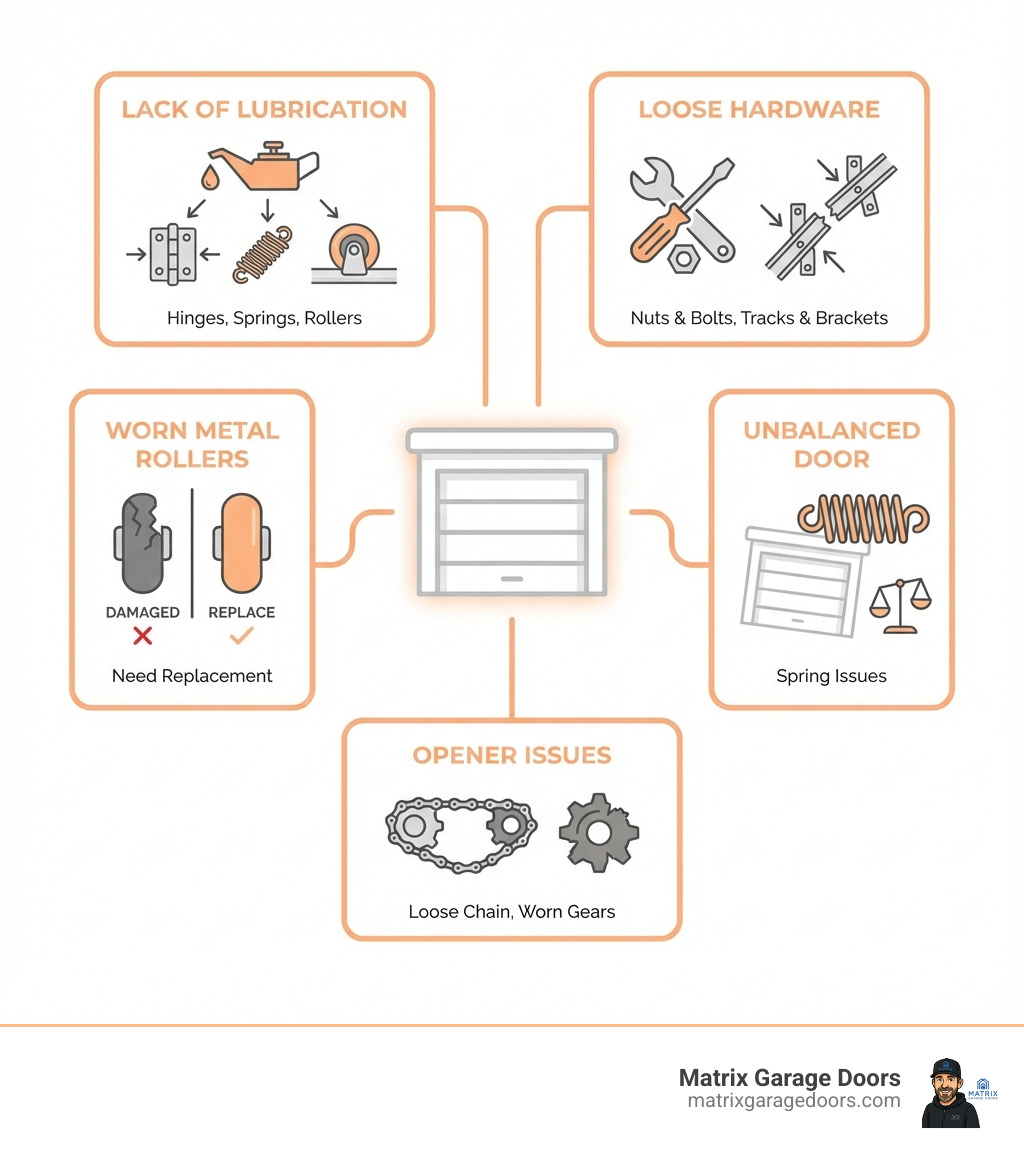
When your garage door starts to sound like a symphony of distress, it’s often trying to communicate a specific problem. Learning to decode these sounds can help us pinpoint the issue and find the right solution to fix noisy garage door troubles. From a high-pitched protest to a low rumble, each sound offers a clue.
Squeaking, Grinding, and Creaking
These are perhaps the most common and irritating sounds a garage door can make. They often indicate metal-on-metal contact where there shouldn’t be, or simply a lack of proper care.
- Metal-on-metal contact: This is the classic culprit for squeaks and grinding. When moving parts like hinges, rollers, or springs lack lubrication, they rub together, creating friction and noise. Imagine two pieces of sandpaper rubbing together – that’s essentially what’s happening on a microscopic level.
- Lack of lubrication: This goes hand-in-hand with metal-on-metal contact. If we haven’t lubricated all moving parts every six months, they dry out, leading to increased wear and tear, and, of course, those annoying squeaks and grinding sounds.
- Worn-out rollers: If your garage door is old, the rollers can start to squeak. Over time, rollers, especially those with unsealed bearings, can wear down, wobble, or accumulate dirt, leading to grinding or rumbling noises.
- Debris in tracks: Sometimes, the simplest explanation is the right one. Dirt, dust, small pebbles, or even spiderwebs in the garage door tracks can impede the smooth movement of the rollers, causing grinding or scraping sounds.
- Worn opener gears: If the grinding sound seems to come directly from the garage door opener unit, it could be a sign of worn gears within the motor.
Rattling, Banging, and Popping
These louder, more jarring noises often signal more significant issues that might require immediate attention.
- Loose hardware: This is a common source of rattling. Loose nuts, bolts, and brackets that hold your garage door in place and keep it working correctly can make a screeching or rattling sound when you operate your garage door. These are often found on the hinges, mounting brackets, or even the track supports.
- Loose opener chain: For chain-drive openers, a loose chain can cause a slapping or rattling sound as the door moves. This can also lead to jerky movements.
- Unbalanced door: A banging noise typically means the garage door is off-balance. This often points to issues with the springs, which are crucial components holding up your garage door and ensuring its weight stability. If the door isn’t balanced, the opener has to work harder, leading to banging. Popping sounds can also come from springs working harder than they should to lift a misaligned door.
- Broken spring: This is one of the most dramatic noises. A sudden, loud bang that sounds like a car backfiring almost certainly indicates a broken torsion or extension spring. This is a serious safety concern and requires immediate professional attention.
- Misaligned tracks: If the tracks are not perfectly parallel or have become bent, the rollers can bind or scrape, leading to banging or grinding noises. This can also cause the door to move unevenly.
Your DIY Toolkit: Simple Steps to Fix a Noisy Garage Door
Many common garage door noise issues can be resolved with a few simple tools and a little bit of time. In fact, the fixes for a garage door that makes a racket when it opens and closes are fairly easy and will take less than an hour. However, safety is always our top priority. Before we begin any DIY fixes, we must always disconnect the power to the garage door opener to prevent accidental operation. This simple step can prevent serious injury.
The Easiest Way to Fix a Noisy Garage Door: Lubrication
Lubrication is often the unsung hero in keeping your garage door quiet and running smoothly. It’s one of the most effective and easiest ways to fix noisy garage door problems.
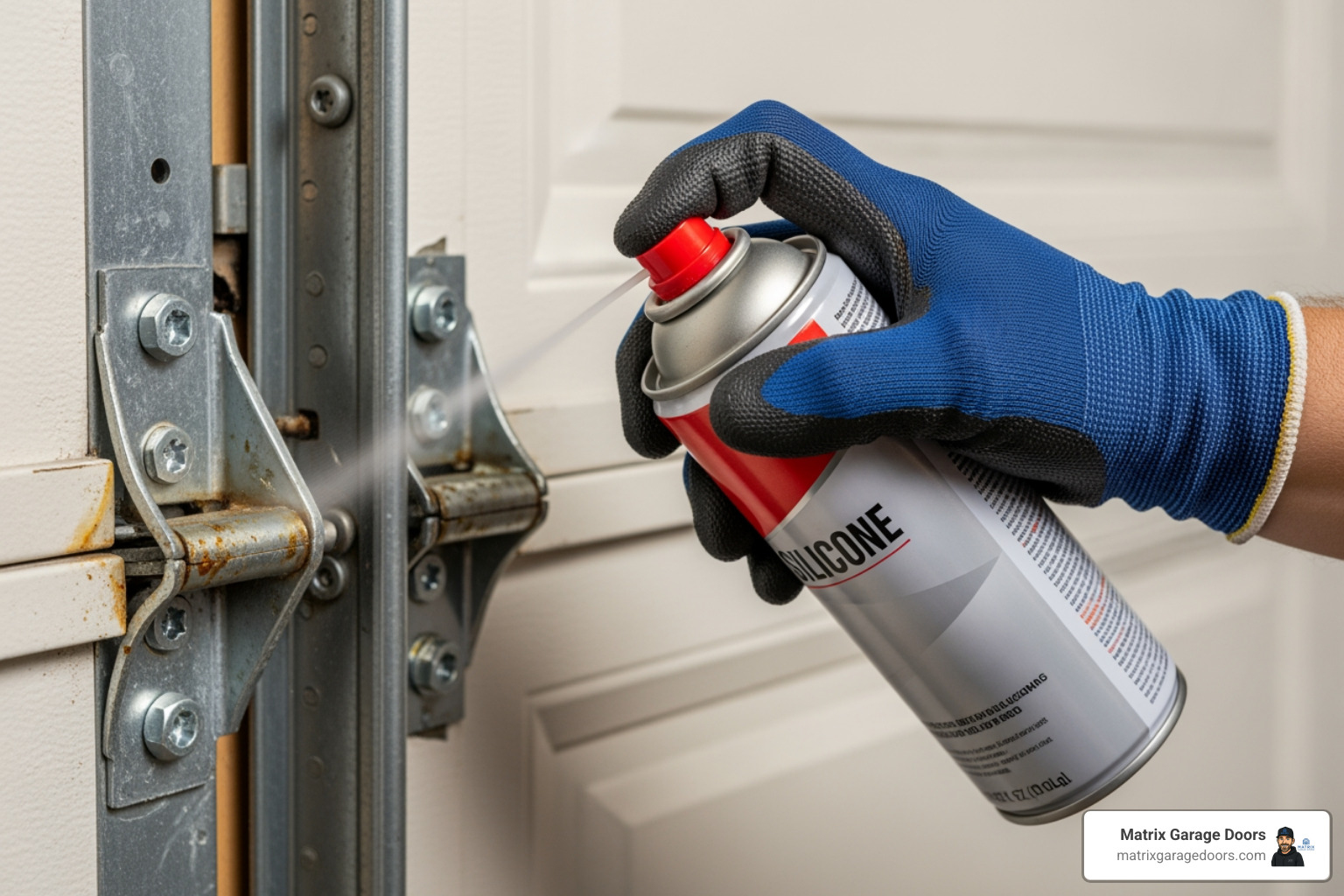
Recommended Lubricants: We recommend using a specialized garage door lubricant. These are typically:
- Silicone-based spray: This type penetrates as a liquid and dries to a non-tacky film. It’s excellent for reducing friction and won’t attract dust and dirt, which can gum up moving parts.
- White lithium grease: This is also a great option, especially for screw-drive openers and some metal-on-metal contact points. It provides a durable, long-lasting lubrication.
What to Avoid: It’s crucial to avoid general lubricants like WD-40. While WD-40 is great for loosening rusted parts, it’s a solvent, not a long-term lubricant. It can actually strip away existing grease, dry out components, and attract more dirt, making your noise problem worse in the long run. Oil or spray lithium grease might seem like good alternatives, but they can also attract dust and debris, creating a messy, sticky build-up.
Lubrication Points: To ensure comprehensive coverage, we should lubricate all moving parts every six months to reduce wear and keep the door quiet.
- Hinges: Spray each hinge where the pivot points are.
- Rollers: If your rollers have unsealed bearings, lubricate the bearings and the stem that slides into the hinge. For nylon rollers with sealed bearings, you generally don’t need to lubricate the bearings themselves, but ensure the stem is lubricated.
- Springs: Both torsion (mounted above the door) and extension springs (running along the tracks) benefit from a light coat of lubricant. This reduces friction as they expand and contract.
- Tracks: While the tracks themselves don’t typically need lubrication (the rollers do the moving), ensure they are clean and free of debris. For screw-drive openers, apply white lithium grease to the screw drive. For chain-drive openers, a light spray on the chain can help.
For even more in-depth tips on keeping your garage door in top shape, check out our More info about Garage Door Maintenance Tips.
Tighten Up to Stop Rattles
Loose nuts and bolts are a surprisingly common cause of garage door noise. Over time, the constant vibration of the door moving can cause hardware to loosen, leading to annoying rattles and screeches.
We can easily fix noisy garage door rattling by:
- Gathering our tools: We’ll need a socket wrench and appropriate sockets (or an adjustable wrench, though a socket wrench provides better grip).
- Checking all nuts and bolts: Systematically inspect every nut and bolt on your garage door. Pay particular attention to:
- Track brackets: These connect the tracks to the garage wall.
- Hinges: The hinges connecting the door panels often have loose bolts.
- Roller shafts: Ensure the nuts holding the rollers in their brackets are snug.
- Tightening carefully: Snug up any loose hardware. The key here is to tighten them enough so they are secure and don’t rattle, but do not overtighten. Overtightening can strip the bolts or damage the door panels, creating bigger problems than a little noise. We want them tight enough for durability but still allowing for the door’s necessary flexibility.
Inspect and Replace Worn Parts
Sometimes, lubrication and tightening aren’t enough because parts are simply worn out. Faulty rollers and hinges are significant contributors to garage door noise.
-
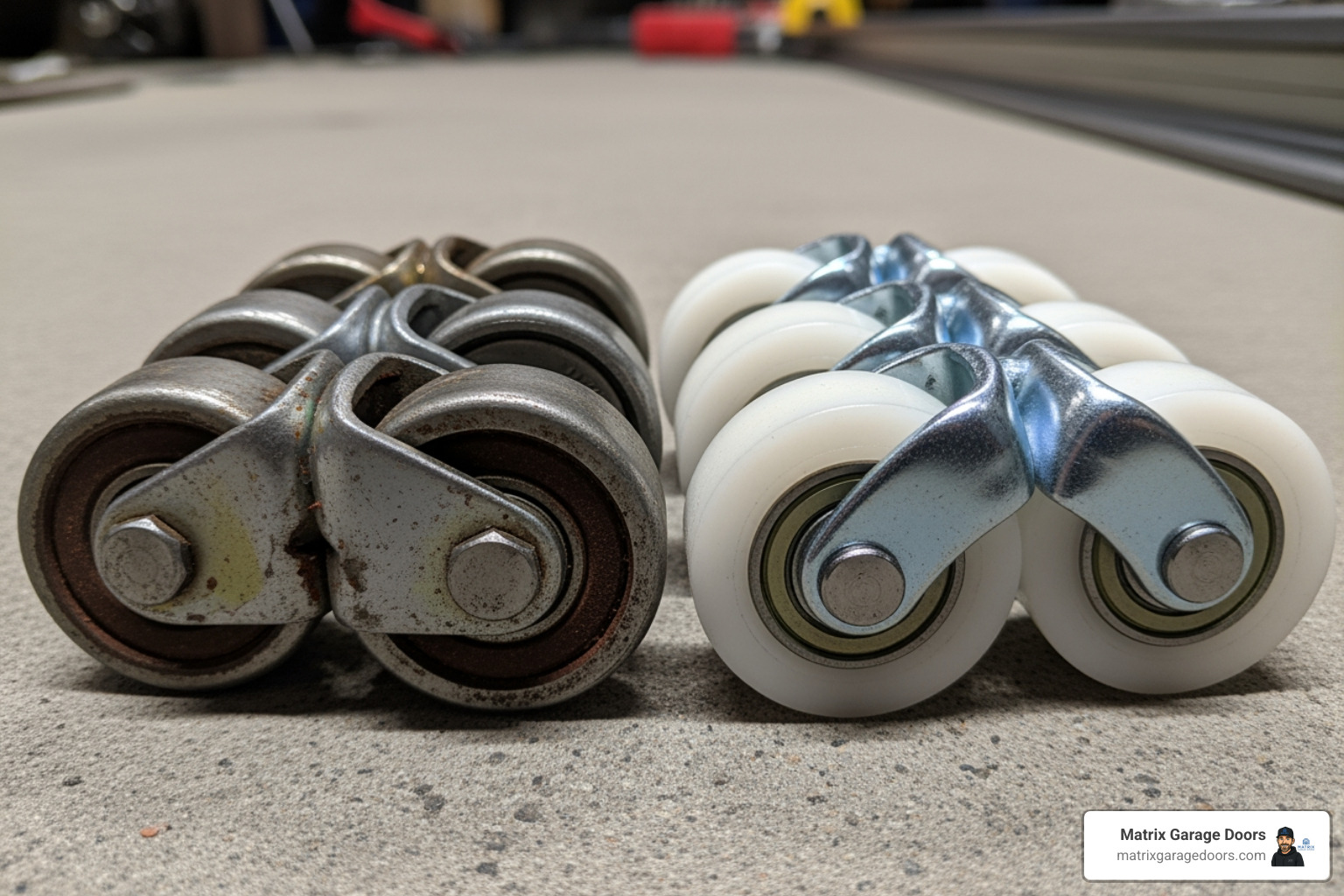
Worn rollers: If your garage door is old, the rollers can start to squeak or grind. As we mentioned, unsealed bearings in rollers are prone to self-destruction in dirty environments. We should inspect our rollers for signs of wear:
- Wobbly rollers: If a roller wobbles excessively in its bracket, it’s likely worn.
- Cracked or chipped wheels: Damaged roller wheels can cause jerky movement and grinding.
- Locked rollers: If a roller isn’t spinning freely, it will drag and create noise.
- Nylon vs. steel rollers: Many older doors come with steel rollers, which are durable but can be noisy and rust. Nylon rollers with sealed bearings are a fantastic upgrade. They are quieter, more durable, and generally don’t require periodic oiling, though they are more expensive than steel. They offer a much smoother and quieter operation.
- When to replace: If rollers are rusty, damaged, or struggle to spin around the shaft, it’s time for a replacement.
-
Worn hinges: Our garage door’s moving parts, like rollers and hinges, can wear out over time and create annoying noises. We should look for:
- Oblong holes: If the holes where the hinge pins attach become stretched or oblong, it indicates significant wear.
- Gray dust: The presence of gray dust and metal filings around a hinge pin is an early sign of wear, indicating metal-on-metal friction.
- Loose or bent hinges: Damaged or loose hinges can cause the door sections to bind, leading to grinding or squeaking.
If we find worn rollers or hinges, replacing them can significantly reduce noise and improve door operation. For more in-depth repair information, visit our page on More info about Garage Door Repair.
Advanced Checks: Balance, Openers, and Seasonal Care
Beyond the basic DIY fixes, proactive maintenance and understanding the nuances of our garage door system can help us prevent future noise issues and ensure long-term, quiet operation. Regular inspections are key to catching problems before they escalate.
The Balancing Act: How to Check if Your Door is Balanced
A properly balanced garage door is paramount for quiet operation and extends the life of your opener. An unbalanced door forces the opener to work harder, leading to strain and noise.
To check if your garage door is properly balanced, we can perform a simple test:
- Disconnect the opener: First and foremost, we must pull the emergency release cord (usually a red handle) to disconnect the garage door opener from the door. This allows us to move the door manually.
- Lift the door halfway: Carefully lift the garage door by hand until it’s about halfway open.
- Observe its movement:
- Door stays put: If the door remains stationary at the halfway point, it’s properly balanced. Give yourself a pat on the back!
- Door drifts up or down: If the door drifts upwards, the springs are too strong. If it drifts downwards, the springs are too weak. Both scenarios are a sign of imbalance.
An unbalanced door indicates that the springs are not correctly tensioned to counterbalance the weight of the door. This is a critical issue that requires professional attention because adjusting or replacing springs can be extremely dangerous due to the high tension they are under. For safety, if your door is not balanced, we strongly recommend calling a professional to inspect and adjust your springs. You can even book an inspection with us to ensure your door’s balance is perfect.
If you suspect your door is unbalanced or have any concerns, don’t hesitate to Contact Us for expert assistance.
Is Your Garage Door Opener the Culprit?
Sometimes, the door itself isn’t the primary source of noise; the opener is. Different types of garage door openers have distinct noise characteristics.
- Chain-drive noise: Chain-drive openers are known for being the loudest type. The metal chain moving along the rail can create rattling, clanking, and humming noises. If we have a chain-drive opener, we should ensure the chain tension is correct (refer to our owner’s manual) and lubricate the chain with a specialized garage door lubricant.
- Belt-drive quietness: Belt-drive openers are generally the quietest and smoothest option, making them ideal for garages attached to living spaces. If a belt-drive opener is noisy, it might indicate a slipping belt (especially in extreme temperatures) or worn components within the opener itself.
- Screw-drive maintenance: Screw-drive openers operate on a threaded rod. If they become noisy, it often means the screw mechanism needs lubrication with white lithium grease.
Additionally, we can check for:
- Loose chain tension: A loose opener chain can cause slapping sounds and jerky movements. Tightening it according to the owner’s manual can resolve this.
- Vibration dampeners: If the opener motor itself vibrates excessively, installing rubber vibration dampeners between the opener and its mounting brackets can significantly reduce noise transfer to the ceiling and surrounding structure.
- Worn opener components: If lubrication and tension adjustments don’t help, the gears or other internal components of the opener might be worn out, necessitating professional repair or replacement.
For comprehensive service and solutions related to your garage door opener, explore our More info about Garage Door Services.
How Seasonal Changes Affect Garage Door Noise
Our garage doors, like many things, react to the changing seasons, and these reactions can often manifest as increased noise. Understanding these environmental impacts helps us take preventative measures to fix noisy garage door issues before they start.
- Winter cold: When temperatures drop in the Columbus, OH area, metal parts of your garage door—such as springs, tracks, and rollers—contract. This contraction can lead to increased friction between moving components, resulting in louder squeaking, grinding, and groaning. It’s like everything is stiffening up.
- Increased friction: The tighter fit due to contraction means more rubbing, which translates directly to more noise.
- What to do: Pre-winter lubrication is crucial. Lubricating all moving parts before the cold sets in can significantly mitigate these effects, keeping your door quieter throughout the colder months.
- Summer heat: Conversely, hot summer temperatures can cause metal components to expand. While this generally causes fewer noise issues than contraction, it can sometimes lead to parts binding or rubbing in new ways.
- Expansion: Slight expansion can alter clearances, potentially causing new friction points.
- What to do: Post-winter and pre-summer inspections are good practice. Check for any signs of water damage or rust spots in spring, and adjust spring tension if needed due to summer heat expansion (though spring adjustments should always be done by a professional).
Regular, seasonal maintenance helps our garage door adapt to these changes and operate smoothly year-round.
Know Your Limits: When to Call a Professional
While many garage door noises can be fixed with simple DIY solutions, there are definite red flags that indicate it’s time to call in the experts. Attempting complex repairs, especially those involving high-tension components, can be extremely dangerous. The average cost of a garage door repair is $220, with most homeowners spending between $150 and $300. This investment is often worth it for your safety and the longevity of your door.
Red Flags for a Professional Call
We always encourage homeowners to try simple fixes, but some problems are beyond the scope of a typical DIY enthusiast. These are the moments when a professional is not just recommended, but essential:
- Loud bang or pop: As mentioned, a sudden, loud bang often signals a broken spring. This is a critical issue.
- Broken springs: Damaged or worn-out springs require expert replacement because the springs hold up your garage door. If these fail, your door may fall and cause damage or injury.
- Frayed or broken cables: The cables work in conjunction with the springs to lift and lower the door. Frayed or broken cables can cause the door to become unbalanced or even fall.
- Door is off-track: If one or both sides of the door have come off their tracks, it’s a complex and dangerous situation that requires specialized tools and expertise to realign.
- Door is unbalanced: If, after performing the balance test, your door drifts up or down, the springs need adjustment or replacement.
- Noise persists after DIY fixes: If you’ve lubricated, tightened, and inspected, and the loud noise still persists, it’s a sign of a deeper, more complex issue with the motor drive or other components that a professional can diagnose.
Damaged or worn-out springs require expert replacement because the springs hold up your garage door. If these fail, your door may fall and cause damage or injury. Doing this yourself can pose too much risk, making your garage unsafe to use over the long run. We prioritize your safety, and for these issues, it’s always best to call a professional. For more information on the dangers of DIY spring repair, refer to this safety guide: Damaged or worn-out springs require expert replacement.
The Dangers of DIY High-Tension Repairs
Some parts of a garage door system, particularly the springs, are under immense tension.
- Torsion springs: These are typically mounted above the garage door opening on a metal shaft. They store a tremendous amount of kinetic energy.
- High tension: Attempting to adjust or replace these springs without proper training and specialized tools can lead to severe injury, including broken bones, lacerations, or even death.
- Risk of injury: If the spring suddenly releases its tension, it can spin wildly, launching components or causing the door to slam down unexpectedly.
- Door may fall: Improper spring adjustment can cause the door to fall rapidly, risking damage to property or injury to anyone nearby.
- Specialized tools: Professionals use specific winding bars and safety procedures to safely manipulate these high-tension components.
At Matrix Garage Doors, we have the experience and specialized tools to handle these complex and dangerous repairs safely and efficiently. For all your garage door service and repair needs, we’re here to help: More info about Garage Door Services and Repairs.
Frequently Asked Questions about Fixing a Noisy Garage Door
We often hear similar questions from homeowners in the Columbus, OH area about their noisy garage doors. Here are some of the most common concerns and our expert answers.
Why is my garage door so much louder in the winter?
Cold weather causes metal parts like springs, rollers, and tracks to contract. This contraction increases friction between moving parts, leading to louder squeaking, grinding, and groaning. Imagine metal shrinking slightly, making everything fit a little tighter and rub more. Regular lubrication is especially important before winter to combat these effects, keeping the components moving smoothly despite the cold. Annual professional maintenance, especially before winter, ensures smooth operation and helps prevent these cold-weather noises.
What is the best lubricant to use on a garage door?
You should use a lubricant specifically designed for garage doors, which is typically a silicone- or lithium-based spray. These products are formulated to penetrate moving parts and dry to a non-tacky film that doesn’t attract dirt and dust. This prevents the build-up of grime that can gum up your system and cause more noise. Avoid using WD-40, as it’s a solvent, not a long-term lubricant, and can strip away existing grease, potentially making your noise problem worse over time.
Can a noisy garage door damage the opener?
Yes. A noisy door is often a sign of increased friction or imbalance within the system. This forces the garage door opener to work harder than it should to lift and lower the door. Over time, this excessive strain can lead to premature wear and tear on the opener’s motor, gears, and other internal components. This extra effort shortens the opener’s lifespan and can eventually lead to a costly failure. Addressing noise promptly protects your opener and extends its life.
Your Partner for a Peaceful and Quiet Garage
We understand that a noisy garage door isn’t just an annoyance; it can be a sign of underlying issues that, if left unaddressed, could lead to more significant problems and costly repairs. Our goal is to help you maintain a quiet, safe, and efficient garage door system.
Here are our key takeaways to fix noisy garage door problems and keep your system running smoothly:
- Lubrication is key: Regular lubrication every six months with the right product (silicone or lithium-based spray) is your first line of defense against most squeaks and grinds.
- Tighten hardware: Loose nuts and bolts are a simple fix that can eliminate many rattles and screeches.
- Inspect and upgrade: Don’t underestimate the impact of worn rollers and hinges. Upgrading to nylon rollers can provide a significant noise reduction.
- Know your limits: While many DIY fixes are straightforward, high-tension components like springs and frayed cables require professional attention for safety reasons.
- Safety first: Always disconnect power to your opener before attempting any repairs.
For complex issues like spring replacement, frayed cables, doors off track, or persistent noises that you can’t resolve yourself, especially in the Columbus, OH area and surrounding communities like Bexley, Dublin, Westerville, and Hilliard, the experienced team at Matrix Garage Doors is here to provide prompt and professional service. We’re dedicated to ensuring your garage door operates safely and quietly, giving you peace of mind.
Don’t let a noisy garage door disrupt your home any longer. Schedule your professional garage door repair today!