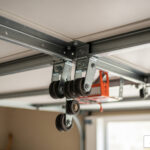
Preventative Garage Door Maintenance: Ultimate 2025 Guide
Why Regular Maintenance is Non-Negotiable
Your garage door opens and closes over 1,500 times per year, making it one of the hardest-working mechanical systems in your home. Yet, it’s often ignored until something breaks.
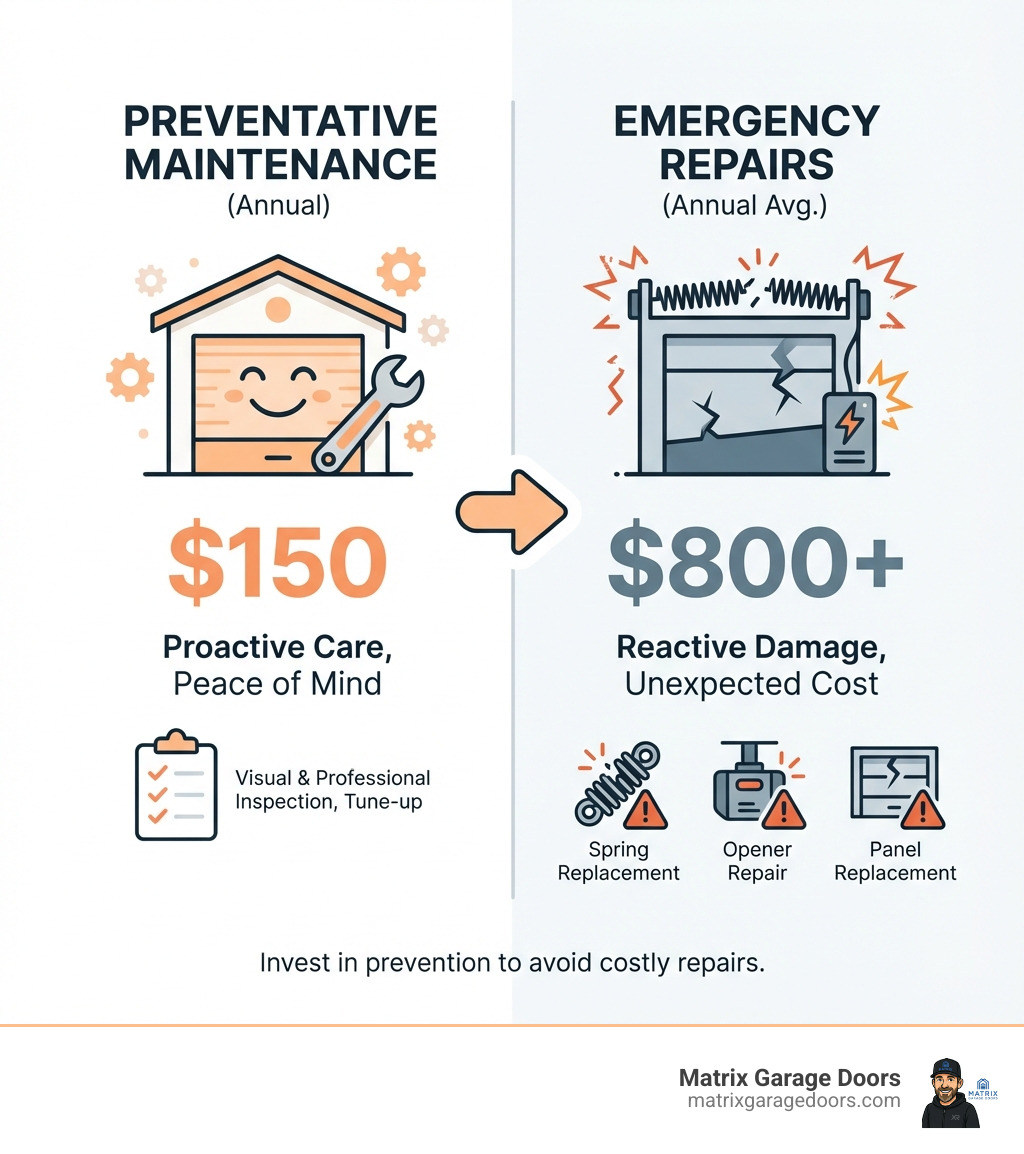
Regular preventative garage door maintenance is the key to keeping your door operating safely and quietly while avoiding costly emergency repairs. A well-maintained door can last 20 to 25 years, but neglect can cut that lifespan in half. The difference comes down to simple tasks that take less than 30 minutes twice a year.
Quick Maintenance Schedule:
- Monthly: Visually inspect the door and listen for unusual noises.
- Twice a Year: Clean tracks, lubricate moving parts, and test safety features.
- Annually: Schedule a professional inspection and tune-up.
Without maintenance, you risk broken springs, snapped cables, and opener failure—problems that create safety hazards. An unbalanced door can fall unexpectedly, and a malfunctioning auto-reverse can be dangerous. In Columbus, weather swings also take a toll, with temperature changes loosening hardware and humidity causing rust.
I’m Andrew Hopson from Matrix Garage Doors, and I’ve helped hundreds of Columbus homeowners extend the life of their garage doors. This guide will show you what to check and when.
Signs Your Garage Door Needs Attention
Be proactive by looking for these tell-tale signs:
- Squeaking or Grinding Noises: Persistent loud noises often indicate friction or worn-out parts like rollers or springs that need lubrication or replacement.
- Jerky or Slow Movement: If your door hesitates or moves at an inconsistent pace, it could signal an unbalanced door, opener issues, or track obstructions.
- Door Imbalance: Disconnect the opener. If the door flies up or slams down when lifted halfway, it’s unbalanced and needs professional spring adjustment to avoid straining the opener.
- Visible Wear and Tear: Look for frayed cables, bent tracks, cracked weatherstripping, or rust. These parts need attention before they fail completely.
Common Problems You Can Avoid
Staying on top of maintenance helps prevent these frustrating and expensive issues:
- Broken Springs: Springs wear out and can snap suddenly, trapping your car. Regular inspection helps you anticipate and replace them before they fail.
- Snapped Cables: Frayed cables are a serious safety hazard and can cause the door to crash down.
- Worn-Out Rollers: Worn rollers cause noisy, jerky operation and can lead to the door coming off its tracks. They typically need replacement every 5-7 years.
- Opener Failure: An unbalanced or poorly lubricated door forces your opener to work harder, leading to premature motor failure.
- Misaligned Tracks: Bent or dirty tracks can cause the door to bind and jump off its rails.
- Unnecessary Noise: Most squeaks and groans can be silenced with simple cleaning and lubrication. For persistent noise, our guide can help: Squeaky Garage Door Fix: How to Quiet a Noisy Garage Door and When to Call a Pro
Your Essential DIY Preventative Garage Door Maintenance Checklist
Ready to give your garage door the attention it deserves? Most preventative garage door maintenance tasks are simple and can be done in under an hour with basic tools.
Safety First: Always unplug your automatic garage door opener before starting. If the door is open, secure it with locking pliers on the track to prevent it from falling.
For more detailed tips, check out our Garage Door Maintenance Tips and this resource: How To Give Your Garage Door a Tune Up .
Step 1: Inspect and Tighten Hardware
The constant vibration from opening and closing your door can loosen hardware.
- Visual Inspection: Look at all roller brackets, rail bolts, and panel hinges for anything loose or bent.
- Tighten: Use a socket wrench and screwdriver to gently tighten all visible nuts and bolts. Aim for snug, not strained, to avoid stripping threads. A quick visual check monthly is a great habit.
Step 2: Clean and Clear Components
Dirt and debris cause premature wear. Keeping components clean is vital for smooth operation.
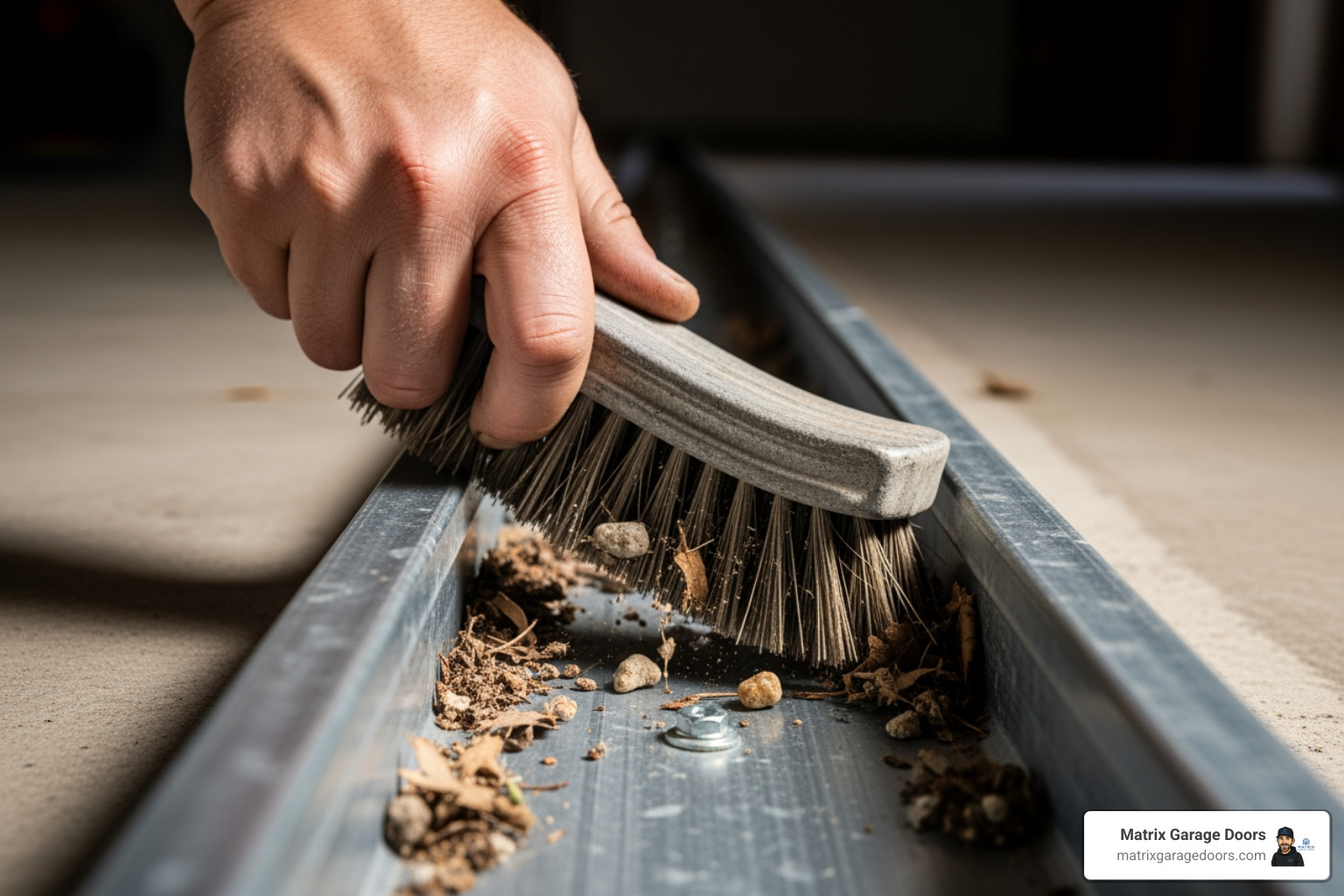
- Tracks: Vacuum out loose debris, then wipe the tracks with a damp cloth. Ensure they are free of bends or dents.
- Rollers: Wipe rollers clean and inspect them for cracks, chips, or wear.
- Photo-Eye Sensors: These safety sensors are near the bottom of the tracks. Wipe the lenses with a soft cloth and ensure they are aligned and unobstructed.
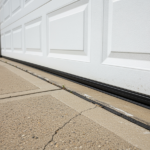
- Weatherstripping: Inspect the rubber seal along the bottom and sides of the door for cracks or gaps. Clean it with a mild detergent and replace it if it’s damaged.
- Door Surface: Wash the door with a mild detergent to boost curb appeal and protect the material. For steel doors, address any rust spots by wiping them with white vinegar, priming, and repainting.
Step 3: Lubricate All Moving Parts
Lubrication is critical for reducing friction and ensuring quiet, smooth operation.
- What to Lubricate: Apply a spray lubricant to the springs, the pivot points of metal hinges, and the bearings of metal rollers. For chain-drive openers, apply a thin coat to the chain.
- What to Use: Use white lithium grease or a silicone-based spray specifically designed for garage doors. These won’t attract dirt.
- What to Avoid: Never use WD-40 as a lubricant. It can strip existing grease and attract dirt, causing parts to wear faster.
- Application: Apply lubricant sparingly. Open and close the door a few times to distribute it evenly. For more tips, see this resource: Try applying lubricant on the squeaky spots first to help better identify the cause Frequent lubrication to your opener springs, chain and tracks is key to smooth operation for your garage door opener.Try applying lubricant on the squeaky spots first to help better identify the cause. Once all parts are lubricated open the door several times to ensure the door is functioning proper…
Step 4: Test All Safety Features
This is the most critical part of your routine. Federal law has mandated safety features on openers since 1993; if your opener is older, consider an upgrade.
- Door Balance Test:
- With the opener unplugged, use the red emergency release handle to disconnect the door.
- Manually lift the door halfway.
- A properly balanced door should stay in place. If it flies up or drifts down, the springs need professional adjustment.
- Auto-Reverse Mechanism Test:
- Place a 2×4 piece of wood flat on the floor in the door’s path.
- Close the door.
- It should contact the wood and immediately reverse. If it doesn’t, the mechanism needs immediate professional repair. Do not use the door.
- Photo-Eye Sensor Test:
- Start closing the open door.
- Wave your leg through the path of the sensors.
- The door should immediately stop and reverse. If not, check for obstructions and alignment. If the problem persists, call a professional.
Essential Tools and Materials for Garage Door Upkeep
You don’t need a professional workshop for basic preventative garage door maintenance. Most items are likely already in your toolbox or easily found at a hardware store.
Here’s our essential list:
- Socket wrench set: For tightening nuts and bolts.
- Screwdrivers: Phillips and flathead.
- Rags: For cleaning and wiping away excess lubricant.
- Step ladder: To safely reach springs and the opener unit.
- Safety glasses: Always protect your eyes.
- Garage door lubricant: White lithium grease or a silicone-based spray (no WD-40!).
- Mild all-purpose cleaner: For cleaning tracks and weatherstripping.
- Bucket with soap and water: For general cleaning of the door surface.
- Weatherstripping (if needed): Have replacements on hand if your current seals are damaged.
Many of these items can be found conveniently packaged in kits. We’ve found that white lithium grease is often the best option for lubricating metal parts.
DIY vs. Professional Service: Knowing Your Limits
Empowering homeowners with DIY skills is important, but there’s a critical line between what’s safe to tackle and what requires a trained professional. When it comes to garage doors, knowing your limits is about safety.
Many components, particularly springs and cables, are under extreme tension. Attempting to adjust these without proper training and tools can lead to severe injury. When in doubt, always call a professional. For any major repairs, our team at Matrix Garage Doors is ready to help: Garage Door Repair.
Simple DIY Maintenance Tasks
These tasks are low-risk and highly effective for preventing common issues:
- Lubrication: Applying the correct lubricant to hinges, rollers, and springs.
- Tightening Hardware: Snugging up loose nuts and bolts on brackets and hinges.
- Cleaning: Wiping down tracks, clearing debris, and cleaning photo-eye sensor lenses.
- Replacing Weatherstripping: A manageable project that improves insulation.
- Testing Safety Features: Checking the door’s balance, auto-reverse, and photo-eyes.
- Replacing Remote Batteries: A simple fix for a non-responsive remote.
Advanced Preventative Garage Door Maintenance: When to Call a Pro
For your safety, these tasks involving high-tension components must be left to professionals. Never attempt these yourself:
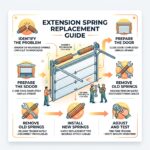
- Broken Torsion Springs: Springs contain immense energy. Replacing them requires specialized tools to safely manage the tension.
- Frayed or Broken Cables: These are also under high tension and can snap with explosive force.
- Major Track Adjustments: Significant bends or misalignments require a professional to safely realign the tracks.
- Roller Replacement (bottom bracket): The bottom roller bracket is attached to the high-tension lift cable and is extremely dangerous to remove.
- Unbalanced Door Adjustment: If your door fails the balance test, the springs need adjusting—a job for a pro.
- Any Task You’re Uncomfortable With: If you feel uncertain or unsafe, stop and call us. Your safety is paramount. We offer comprehensive Garage Door Services and Repairs for all these complex issues.
Frequently Asked Questions about Garage Door Care
Here are answers to some of the most common inquiries we receive from homeowners in the Columbus, OH area.
How often should I perform garage door maintenance?
We recommend a multi-tiered approach:
- Monthly: Perform a quick visual and auditory inspection. Watch and listen as the door operates to catch issues early.
- Twice a year: Complete a full DIY routine, including cleaning, lubricating, and testing all safety features. Spring and fall are ideal times.
- Annually: Schedule a professional service. A technician can spot subtle issues, perform complex adjustments, and ensure your warranty remains valid.
What is the best lubricant for a garage door?
The right product is crucial for effective maintenance.
- Best Choice: Use white lithium grease or a silicone-based spray made specifically for garage doors. These reduce friction without attracting dirt.
- What to Avoid: Do not use standard WD-40. It is not a long-term lubricant and can strip away existing grease, attracting dust and causing parts to dry out.
Can I replace a garage door spring myself?
No, you should never attempt to replace a garage door spring yourself.
- Extreme Danger: Garage door springs are under immense tension to lift the door’s weight. If handled improperly, they can release with violent force, causing severe injury or even death.
- Professional Job: This task requires specialized training and tools to be done safely. Always leave spring replacement to a qualified technician.
For more answers, please visit our FAQs page.
Keep Your Garage Door Running Smoothly
We’ve covered a lot about preventative garage door maintenance, and we hope you feel more confident about keeping your system in top shape. By regularly inspecting, cleaning, lubricating, and testing your garage door, you’re investing in its:
- Safety: Protecting your family and property from unexpected malfunctions.
- Longevity: Extending the lifespan of your door system, potentially for decades.
- Cost Savings: Avoiding expensive emergency repairs and premature replacements.
Proactive care truly is key. It transforms your garage door from a forgotten workhorse into a reliable, quiet, and efficient part of your home.
While many maintenance tasks are manageable for homeowners, some components, particularly springs and cables, are under extreme tension and require professional handling. For comprehensive checks, complex adjustments, or any repairs in the Columbus, OH area (including Bexley, Blacklick, Canal Winchester, Dublin, Etna, Galena, Grandview Heights, Grove City, Groveport, Hilliard, New Albany, Pickerington, Powell, Reynoldsburg, Upper Arlington, Westerville, and Worthington), trust our experts at Matrix Garage Doors. We’re a family-owned company with two decades of experience, dedicated to keeping your door in peak condition with prompt, professional service. Schedule Your Garage Door Service Today.