Garage Door Not Closing: Top 5 Simple Fixes
Why Won’t My Garage Door Close? Start with These Simple Checks
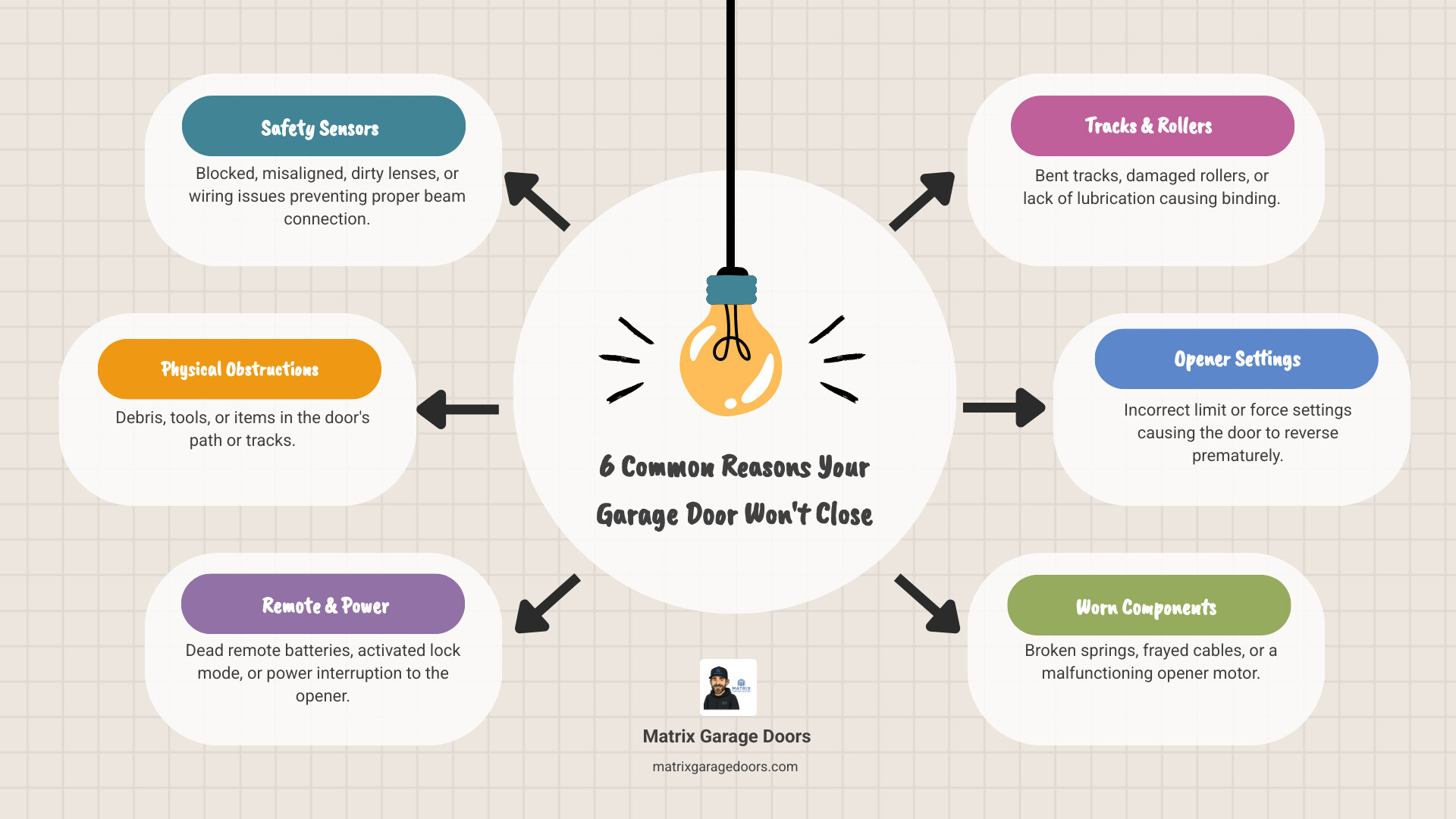
A garage door not closing is a security risk, leaving your home and belongings vulnerable. Most failures stem from common causes you can often diagnose yourself in under 10 minutes.
Quick troubleshooting checklist for a garage door that won’t close:
- Check safety sensors – Look for blinking LED lights, obstructions, dirt on lenses, or misalignment
- Inspect for physical obstructions – Clear debris from tracks, floor, and door path
- Test your remote and wall switch – Replace batteries, check lock mode, verify power to opener
- Examine tracks and rollers – Look for bends, damage, or lack of lubrication
- Adjust opener limit settings – Ensure close-limit isn’t set too high or too low
- Listen for unusual sounds – Grinding, banging, or buzzing may indicate broken springs or worn components
Understanding these common culprits can save you time and money. Some fixes are quick, while others require professional expertise—especially when dealing with high-tension springs or electrical components.
I’m Andrew Hopson, owner of Matrix Garage Doors, and I’ve helped hundreds of Columbus homeowners diagnose and fix garage door not closing issues. Whether it’s a quick sensor realignment or a complex opener problem, I’ll walk you through the steps to get your door working safely again.
When your garage door refuses to close, it’s a headache, but the solution is often simpler than you think. Let’s explore the most common reasons your garage door not closing might be causing trouble and how to get it back on track.
The Eyes Have It: Troubleshooting Your Safety Sensors
The most frequent culprit for a non-closing garage door is a problem with its safety sensors (photo-eyes). These critical safety features prevent the door from closing if anything is in its path. In fact, these sensors became mandatory in the United States in 1991 to prevent injuries.
Installed near the floor on each side of the door, one sensor emits an infrared beam to the other. If this beam is broken, the opener’s logic board sees an obstruction and prevents the door from closing.
Here’s what to look for:
- Obstructions: Even a small leaf, toy, or garden tool can break the beam. We’ve seen everything from cobwebs to pet food bags cause issues. Check the area between the sensors thoroughly.
- Misalignment: The sensors must be perfectly aligned. If one gets bumped, the connection is lost. A steady LED light (often green or yellow) means they’re aligned. If one is blinking or off, they’re misaligned. Gently adjust them until both lights are solid, then tighten them. If the yellow light doesn’t turn on, you may need to replace the safety sensors because they are defective.
- Dirty Lenses: Sensor lenses can get smudged with dirt or dust. A quick wipe with a soft, clean cloth can often resolve this.
- Blinking Lights: Flashing lights on your opener are often an error code signaling a safety sensor issue, like misalignment or a wiring problem. Consult your opener’s manual to decode the flashes; for instance, some openers blink 1, 2, or 4 times for sensor-related issues.
- Sensor Wiring: The problem could be the wiring. Check for visible damage, fraying, or loose connections. Inspect what you can see and repair any broken wires. If one or both sensor lights are off, you might need to replace the safety sensors because they’re defective.
- Sunlight Interference: Direct sunlight can sometimes trick the sensors. If your door only fails to close during the day, this could be the cause. Installing sun shields over the safety sensors is an inexpensive, effective solution.
Clear the Path: Checking for Physical Obstructions
It might sound obvious, but a simple object is often the culprit for a garage door not closing. Before diving into complex diagnostics, scan the entire path of your garage door.
- Debris in the Tracks: Small stones, dirt, or leaves can get lodged in the tracks, preventing the rollers from moving smoothly. Give the tracks a good clean with a rag or brush.
- Objects on the Floor: A broom, recycling bin, or bicycle can block the door’s path. The safety sensors are designed to detect these, causing the door to reverse.
- Weather Stripping: The rubber weather stripping on the bottom of your door can become dislodged or bent, triggering the safety sensors or causing the door to bind.
- Snow and Ice: In Columbus, OH winters, snow and ice can accumulate on the floor and act as an obstruction. Always clear the door’s path.
A thorough visual inspection is always a great first step.
Is It the Remote? Ruling Out Signal and Power Issues
Sometimes, the problem isn’t the door itself, but the remote or wall switch.
- Dead Batteries: If your remote stops working, check the battery first. If the door closes with the wall button but not the remote, it’s likely the remote’s battery or programming.
- Lock Mode or Vacation Switch: Many openers have a “lock” feature on the wall switch that disables remotes. Check your wall console to see if this feature is engaged.
- Reprogramming Remote: Power surges can sometimes cause a remote to lose its programming. If new batteries don’t work, you might need to reprogram it. Consult your opener’s manual for instructions.
- Opener Power Source: If the opener is unresponsive, it might not have power.
- Check the Outlet: Ensure the opener is plugged into a working outlet. Test the outlet with another appliance.
- Circuit Breaker/GFCI: Check your home’s electrical panel for a tripped breaker. If the opener uses a GFCI outlet, check if it needs to be reset.
- Loose Wiring: Inspect the wiring connecting the opener to its power source or wall switch for loose connections.
Inspecting the Door’s Path: Tracks, Rollers, and Springs
If your garage door is stubborn, the issue might be mechanical. Physical resistance, uneven movement, or loud noises are tell-tale signs of a hardware problem.
Are Your Tracks and Rollers Out of Whack?
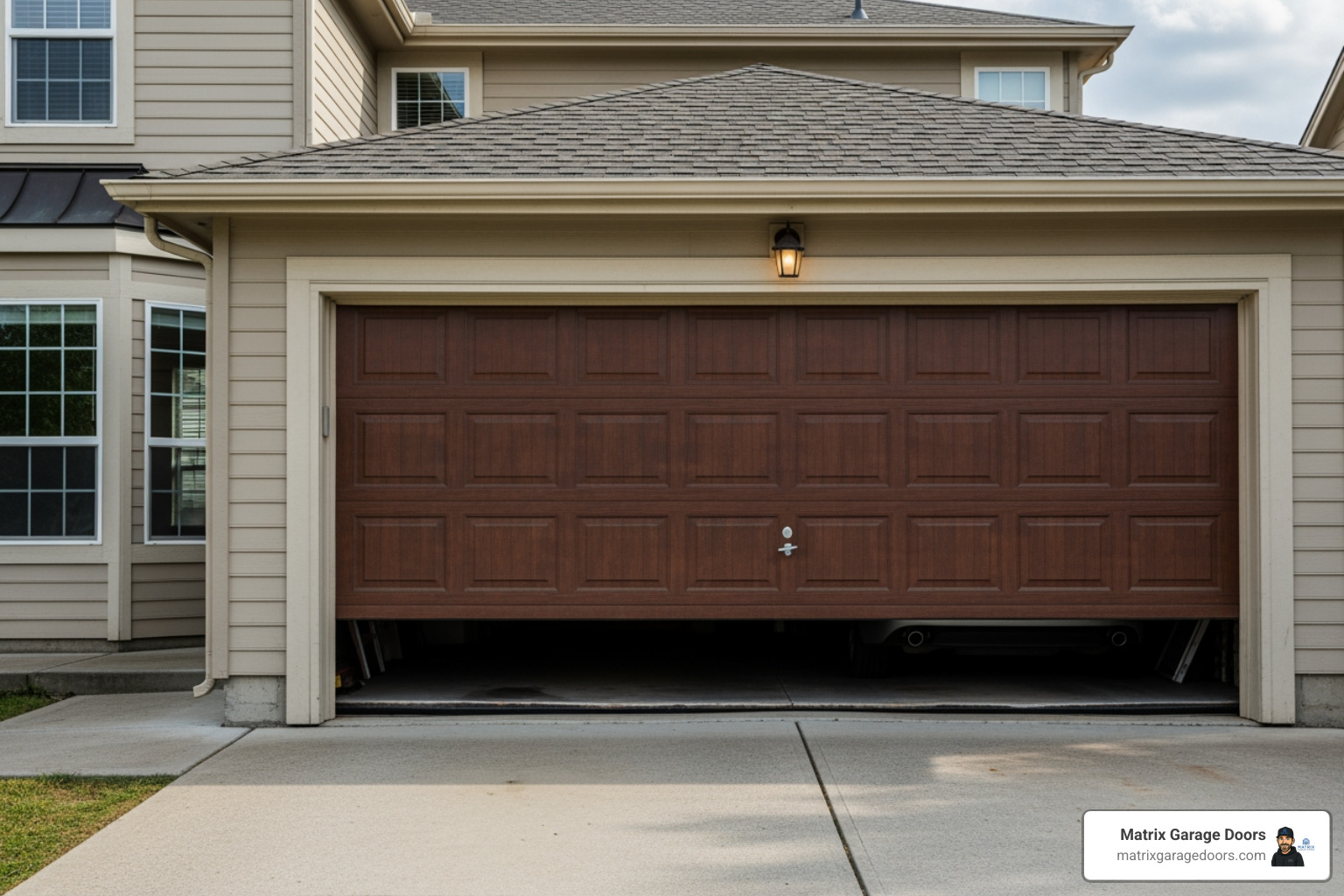
Smooth operation relies on tracks and rollers. If these components aren’t in good shape, your garage door not closing can become a reality.
- Misaligned or Bent Tracks: The tracks guide your garage door. If they become misaligned or bent, the door can bind or get stuck. Inspect the tracks for visible bends or gaps. You might gently tap a slightly bent track with a rubber mallet, but significant damage requires professional attention.
- Damaged or Worn Rollers: Rollers, made of steel or nylon, can wear out, crack, or break. Worn rollers can cause noisy operation (grinding or popping) or get the door stuck. They typically need replacement every 10-15 years. A popping sound often points to worn rollers.
- Lack of Lubrication: Moving parts need regular lubrication. If dry, they create friction, leading to uneven movement and a noisy door. We recommend lubricating moving parts with white lithium grease or a silicone-based lubricant every six months. Never lubricate the tracks, as this attracts dirt. For more tips, check our guide on Squeaky Garage Door Fix: How to Quiet a Noisy Garage Door and When to Call a Pro.
The Heavy Lifters: Identifying Worn or Broken Springs and Cables
The springs and cables counterbalance the door’s immense weight. These components are under extreme high tension, making them incredibly dangerous to handle without professional training.
There are two main types of garage door springs:
- Torsion Springs: Located horizontally above the garage door opening.
- Extension Springs: Run parallel to the horizontal tracks on either side.
Here are the critical signs to watch for:
- Loud Bang: A sudden, loud bang, often like a gunshot, is a strong indicator of a broken spring.
- Door is Extremely Heavy or Won’t Move: A broken spring means the opener is trying to lift the door’s full weight. The door will feel incredibly heavy to lift manually or may not move at all.
- Door Hangs Crooked: If one spring or cable is broken, the door might hang unevenly. Damaged cables can also cause the door to get stuck or refuse to move.
- Visible Gap in Spring: For torsion springs, a clear gap in the coils is a definitive sign of a break. For extension springs, you might see the spring separated or dangling.
Why Professional Help is Non-Negotiable:
Due to the immense tension, mishandling broken springs or frayed cables can cause severe injury or death. We strongly advise against repairing or replacing these components yourself. Do not move the garage door if a spring is broken; wait for a repair expert. Repairs for broken springs and cables should always be performed by a professional.
If you suspect a broken spring or damaged cable in the Columbus area, please contact us immediately. We offer expert Garage Door Repair Services to address these critical issues safely.
Adjusting the Opener: A Common Culprit for a Garage Door Not Closing
The garage door opener, the “brain” of your system, controls the door’s movement. Issues with the opener can definitely lead to a garage door not closing.
Fine-Tuning the Travel: How to Adjust Settings When Your Garage Door is Not Closing
Garage door openers have “limit settings” and “force settings” that tell the door how far to open and close. If these settings are off, your door might not close completely or could reverse unexpectedly.
- Limit Settings: These determine the door’s fully open and closed positions.
- Door reverses after hitting the floor: If your door closes and then immediately reverses, your “close limit” setting is likely too low. The opener thinks it’s hitting an obstruction (the floor) and triggers the auto-reverse safety feature.
- Door doesn’t close completely: If the close limit is set too high, the door might stop short of the ground, leaving a gap.
- Adjustment: Most openers have adjustment screws or buttons. Use a flat-head screwdriver to turn the “down” screw in small increments (e.g., quarter-turns) until the door closes fully without reversing. Always consult your opener’s manual for precise instructions, as models vary. Incorrect garage door limit settings will prevent the door from functioning correctly.
- Force Settings: These dictate the force the opener uses. If set too low, the door might reverse at minor resistance. If too high, it could bypass safety features. Adjusting force is less common for a closing issue but is important to be aware of.
Incorrect travel down settings can lead to inconsistent closures, either by not shutting all the way or by pushing too far and reversing.
Signs of a Malfunctioning Garage Door Opener Motor
Sometimes, a malfunctioning opener motor is the problem, which can prevent your garage door from closing.
- Motor Runs but Door Doesn’t Move: If you hear the motor running but the door isn’t moving, it could indicate a stripped gear inside the opener, which is common as plastic gears wear out.
- Grinding or Buzzing Noises: Unusual grinding or buzzing from the opener suggests internal mechanical issues, like worn gears or a failing motor.
- Trolley Carriage Issues: The trolley connects the opener’s drive system to the door. If it’s in “bypass” mode (activated by the emergency release cord), the motor will run, but the door won’t move. Ensure the emergency release is properly re-engaged.
- Emergency Release Cord: You can always pull the emergency release cord (a red rope) to disconnect the door from the opener and operate it manually. This helps determine if the problem is with the opener or the door itself. Find more tips in our Garage door won’t move: motor and travel troubleshooting video.
Know Your Limits: When to Call a Professional for Garage Door Repair
While many issues causing a garage door not closing are DIY-friendly, some require a pro. Knowing when to call an expert is crucial for your safety and your door’s longevity.
The Dangers of a Faulty Garage Door
A garage door that won’t close properly poses several risks:
- Home Security Risk: An open garage is an invitation for theft, making your home and valuables vulnerable.
- Weather Damage: An unsealed garage exposes your property to rain, snow, and wind, which can cause damage.
- Personal Injury: Garage doors are heavy, and their springs and cables are under extreme tension. Attempting to fix these without proper training can lead to severe injury. This risk is why professional repair is essential for certain issues.
DIY vs. Pro Repair: Solving a garage door not closing issue safely
Here’s a breakdown of what you can do versus when to call a pro:
DIY-Friendly Tasks (Safe for Homeowners):
- Cleaning Sensors and Tracks: Wiping lenses, removing debris.
- Replacing Remote Batteries: A simple, quick fix.
- Removing Minor Obstructions: Clearing items from the door’s path.
- Resetting Circuit Breakers: Basic electrical checks.
- Basic Lubrication: Applying grease to rollers and hinges (not tracks).
- Adjusting Limit Settings: Carefully following your opener’s manual.
Professional-Only Tasks (Call a Garage Door Expert):
- Replacing Broken Springs or Cables: These are under dangerous tension. Do not attempt this yourself.
- Major Track Alignment or Repair: Severely bent tracks require specialized tools.
- Electrical Wiring Issues: For problems beyond a tripped breaker, we recommend calling a licensed electrician to safely solve the issue.
- Opener Motor Replacement: A failing motor or stripped gears is a complex repair best left to professionals.
- Diagnosing Complex Logic Board Failures: A pro can diagnose peculiar opener behavior or error codes.
At Matrix Garage Doors, we understand the frustration of a malfunctioning garage door. We offer 24/7 emergency repair services throughout Columbus, OH, and surrounding areas. For expert Garage Door Repair in Columbus, OH, don’t hesitate to reach out. When in doubt, it’s always safer to trust the experts.
An Ounce of Prevention: Maintenance to Avoid Future Problems
The best way to deal with a garage door not closing is to prevent it. Regular preventative maintenance can save you headaches and costly repairs, ensuring your door operates safely for years.
- Regular Inspection: Periodically inspect your system for wear and tear, like frayed cables, bent tracks, or loose hardware. Catching issues early prevents major problems.
- Lubrication Schedule: Keep moving parts (rollers, hinges, bearings) well-lubricated every six months. Use white lithium grease or a silicone-based spray. Do not lubricate the tracks.
- Hardware Tightening: Vibrations can loosen hardware over time. Use a wrench to gently tighten any loose nuts, bolts, and screws.
- Sensor Cleaning: Regularly wipe your safety sensor lenses to remove dust and grime.
- Balance Test: Disengage the opener and lift the door halfway. If it stays put, it’s balanced. If it falls or rises, the springs need professional adjustment.
- Professional Tune-Ups: Consider annual professional maintenance. Our team can perform inspections, adjustments, and lubrication to extend your door’s lifespan. For more tips, see our Garage Door Maintenance Tips guide.
Frequently Asked Questions About Garage Door Closing Issues
Why does my garage door close part-way and then go back up?
This classic symptom means the safety sensors are blocked or misaligned. The opener detects an obstruction and reverses for safety. To fix it, clear any objects from the door’s path, clean the sensor lenses, and check the LED lights on both sensors. If they are blinking, gently adjust them until the lights become solid.
What do the flashing lights on my garage door opener mean?
Flashing lights are an error code from the opener, usually pointing to a safety sensor problem (misalignment, obstruction, or wiring). The number of flashes indicates a specific issue. Blinking lights can also signal other faults. To understand the code for your model, consult your owner’s manual for its troubleshooting guide.
Why does my garage door reverse after it hits the floor?
This happens when the “close limit” setting is too low. The opener thinks the floor is an obstruction and reverses for safety. To fix this, you’ll need to adjust the “down” limit screw on your opener unit. Make small, gradual adjustments until the door closes snugly against the floor without reversing. Always refer to your opener’s manual for specific instructions.
Secure Your Home with a Fully Functional Garage Door
A garage door not closing is a critical security and safety issue. While many problems are simple DIY fixes—like cleaning sensors or clearing obstructions—recognize when professional expertise is required. Issues involving high-tension springs, complex wiring, or significant mechanical damage should always be handled by trained technicians to prevent serious injury and ensure proper function.
At Matrix Garage Doors, we’re a family-owned company dedicated to keeping your home secure. With two decades of experience serving Columbus, OH, and surrounding communities—including Bexley, Dublin, Hilliard, New Albany, Pickerington, Powell, Westerville, and Worthington—we’re here for you. We provide prompt, professional service, including 24/7 emergency repairs, installation, and maintenance for all garage door types.
Don’t let a stubborn garage door compromise your peace of mind. For reliable solutions and guaranteed customer satisfaction, let our experts take care of it. Get professional garage door services.